TABLE OF CONTENTS:
Pregnant Woman CPR: The Vital Technique That Could Save Two Lives
Performing CPR on a pregnant woman is a critical skill that could save two lives—the mother and her unborn child. Cardiac arrest during pregnancy, although rare, requires immediate action with specialized techniques to ensure the best possible outcome. Knowing how to perform CPR for pregnant women is essential for bystanders, medical professionals, and even family members, as the standard approach may not be practical due to physiological changes during pregnancy. These changes include an increased heart rate, lifted diaphragm, and pressure on major blood vessels from the growing uterus. Appropriately modified CPR increases the chances of survival and reduces potential complications. Understanding these unique considerations can make the difference between life and death. By learning the correct techniques, you can act swiftly and confidently in an emergency. Your knowledge could be the deciding factor that saves two lives.

Understanding CPR and Its Importance
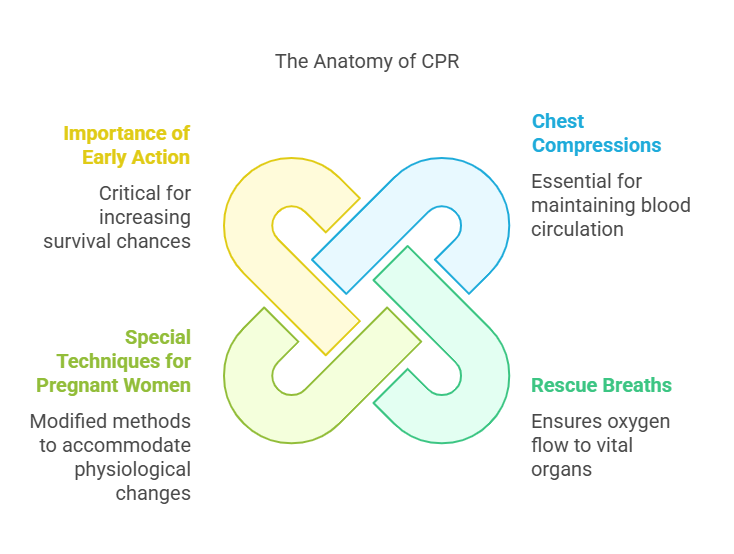
Cardiopulmonary resuscitation (CPR) is used during cardiac emergencies when the heart stops beating. It involves chest compressions and rescue breaths such that blood circulation is consistent and oxygen flow to vital organs, especially the brain. Otherwise brain damage can occur within minutes, making CPR a critical
first aid measure. Studies show that early CPR doubles or triples the chances of survival after cardiac arrest. CPR preserves organ function by maintaining blood flow until advanced medical care is available. CPR is crucial not only for adults but also for special populations, including pregnant women, where modified techniques are necessary. Knowing how to perform CPR ensures you are prepared to help in emergencies at home, work, or public places. It empowers you to make a life-saving difference when seconds count.
Why Pregnant Women Need Special CPR Techniques?
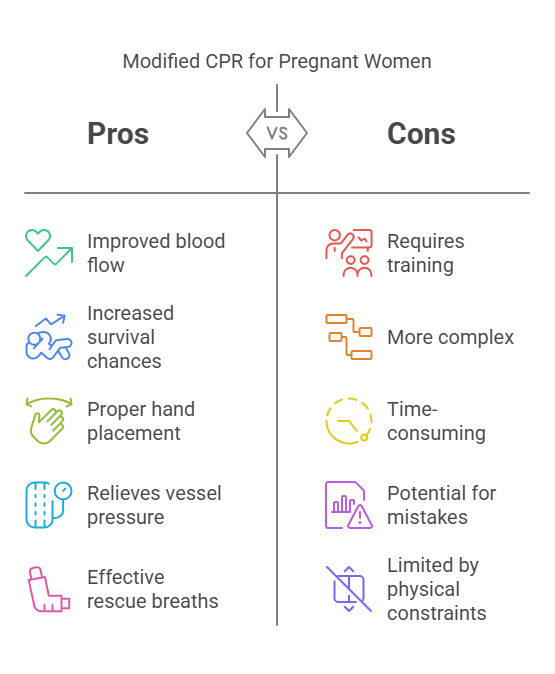
CPR for pregnant women requires unique modifications due to physiological changes during pregnancy. As the uterus expands, it can compress major blood vessels, minimizing blood flow to vital organs and affecting the effectiveness of standard chest compressions.
Additionally, the lifted diaphragm may impact lung capacity, influencing the delivery of rescue breaths. If standard CPR is used, it may not generate enough circulation to sustain both the mother and the fetus. To counteract these challenges, rescuers should perform a left uterine displacement by gently pushing the uterus to the left side. This relieves pressure on the blood vessels and improves blood flow.
Proper hand placement for chest compressions is also crucial, slightly higher than usual due to the shifted internal anatomy. Using these specialized techniques significantly increases the chances of survival for both the mother and her baby.
SUMMARY: CPR for pregnant women requires special modifications due to physiological changes like pressure from the growing uterus. Adjustments such as left uterine displacement and proper chest compression placement are essential for increasing survival chances for both mother and baby. Learning these techniques can save two lives in an emergency.
Recognizing a Pregnant Woman in Cardiac Arrest
To provide effective
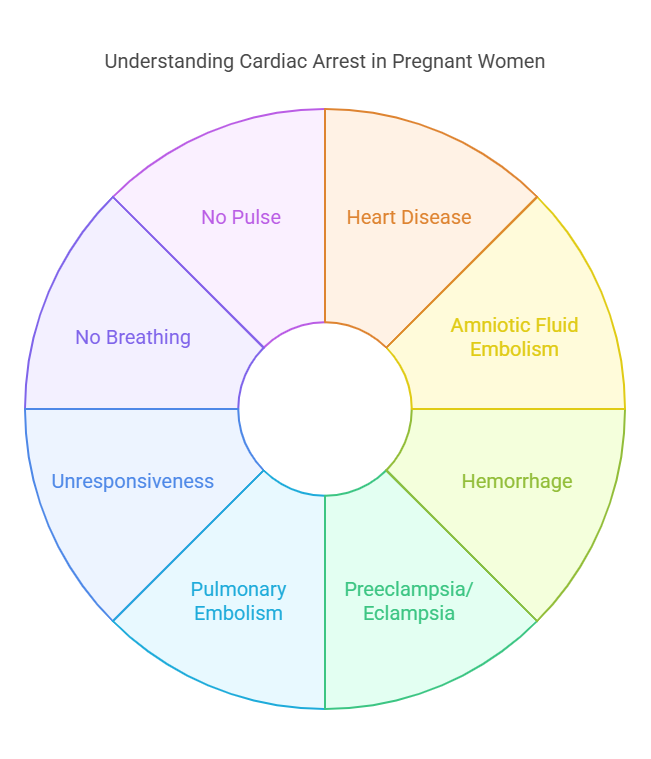
CPR on a pregnant woman, it is vital to recognize the signs of cardiac arrest quickly. The most common causes of cardiac arrest during pregnancy include:
- Heart disease: Pre-existing conditions or pregnancy-induced cardiovascular changes.
- Amniotic fluid embolism: It is a rare but serious complication where amniotic fluid enters the bloodstream.
- Hemorrhage: Severe blood loss from complications such as placenta previa or placental abruption.
- Preeclampsia or eclampsia: High blood pressure disorders leading to seizures or stroke.
- Pulmonary embolism: When a blood clot hampers blood flow to the lungs, it is termed as such.
Signs to Look For
- Unresponsiveness: The woman does not respond to touch or sound.
- No breathing or abnormal breathing: Gasping or complete absence of breath.
- No pulse: Check the carotid pulse on the neck.
- Cyanosis: Bluish discoloration of lips and fingertips due to lack of oxygen.
Immediate action is crucial. If a pregnant woman shows these signs, call emergency services immediately and begin modified CPR techniques, including left uterine displacement and chest compressions slightly above the usual spot. Recognizing and responding to these symptoms promptly increases the likelihood of survival for both mother and baby.
Step-by-Step Guide to Performing CPR on a Pregnant Woman
The following are the steps to perform CPR on a pregnant woman correctly:
1. Call for emergency help
The first step in performing pregnant woman CPR is seeking emergency medical assistance immediately. Inform the dispatcher about the pregnancy, as specialized medical care will be required. If others are present, delegate someone to call while you begin CPR. Rapid emergency response increases the chances of survival for both the mother and baby.
2. Adjust the positioning
Proper positioning is crucial when performing CPR on a pregnant woman. The recommended CPR pregnant woman position involves a left uterine displacement to relieve pressure on major blood vessels. This is done by gently pushing the uterus to the left side or placing a rolled towel under the woman’s right hip, tilting her body 15 to 30 degrees. This adjustment improves blood flow and uplifts the effectiveness of chest compressions.
3. Chest compressions
For chest compressions, place your hands slightly higher on the breastbone than usual due to the upward shift of internal organs during pregnancy. Push hard and fast at 100 to 120 compressions per minute, with a depth of about two inches. Allow complete chest recoil between compressions to maximize circulation.
4. Airway and breathing
Open the airway through head-tilt, chin-lift method. Deliver two rescue breaths at a regular interval of 30 chest compressions. Ensure each breath makes the chest rise visibly. If the airway is obstructed, consider the possibility of aspiration and take appropriate measures to clear it.
5. Using an AED
If available,
use an AED immediately. AEDs are safe for pregnant women and do not harm the fetus. Attach the pads as instructed, ensuring they avoid breast tissue. Continue CPR until medical professionals arrive. Knowing how to do CPR on a pregnant woman can be life-saving in critical situations.
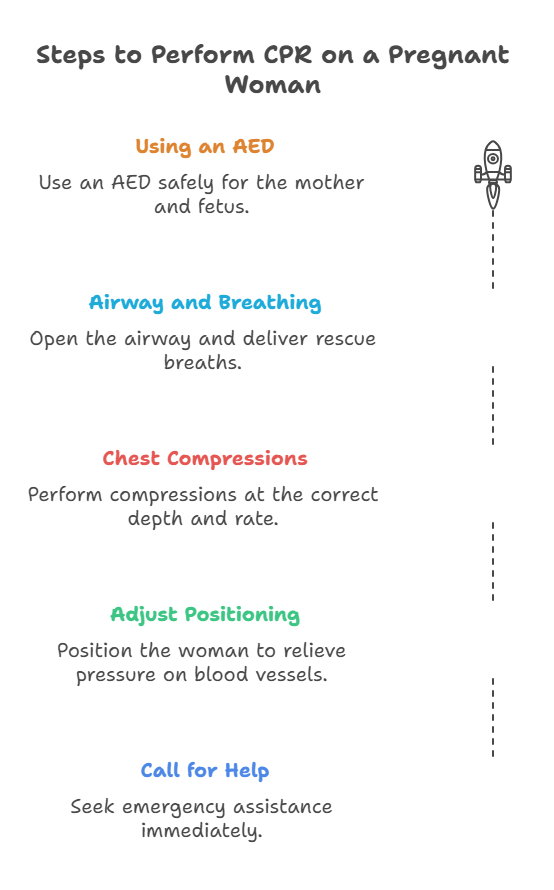 SUMMARY: Recognize cardiac arrest in pregnancy by unresponsiveness, no pulse, and cyanosis. Perform CPR with left uterine tilt, chest compressions slightly higher, and rescue breaths. Use an AED if available and call emergency services immediately
Modifications to Traditional CPR for Pregnant Women
There are several adjustments to traditional methods which are required when performing CPR on pregnant women:
Adjusting hand placement
When performing CPR on pregnant women, it is essential to adjust hand placement for chest compressions. Due to the upward shift of internal organs caused by the growing uterus, hands should be placed slightly higher on the breastbone than the standard position. This adjustment ensures effective compressions that maintain blood circulation for the mother and baby.
Importance of left lateral tilt
One of the most critical modifications is the CPR pregnant woman position, the left lateral tilt. This involves tilting the pregnant woman about 15 to 30 degrees to the left. It can be achieved by placing a rolled towel or a similar object under her right hip. This tilt reduces pressure on the inferior vena cava, a major blood vessel that supplies blood to the heart. Without this adjustment, blood flow may be compromised, decreasing the effectiveness of chest compressions.
SUMMARY: Adjust hand placement slightly higher on the breastbone due to organ shifts. Use a left lateral tilt (15-30 degrees) by placing a towel under the right hip to relieve pressure on major blood vessels and improve circulation.
Dealing with obstruction risks
Pregnant women are at a higher risk of airway obstruction due to increased abdominal pressure and the possibility of aspiration. It is crucial to assess and clear any obstructions quickly. When delivering rescue breaths, avoid excessive ventilation, as it may increase the risk of aspiration.
The Role of AED in Saving Pregnant Women
Let us learn how AED is crucial in saving pregnant women through correct usage:
How to use an AED safely
An Automated External Defibrillator (AED) is a crucial device for resuscitating a pregnant woman experiencing cardiac arrest. AEDs are safe to use on pregnant women and do not harm the fetus. When using an AED, place the pads as instructed, typically on the upper right chest and lower left side, avoiding breast tissue. Dry the chest thoroughly to ensure proper pad adhesion and effective shock delivery if the chest is wet. Continue performing pregnant woman CPR between shocks as advised by the AED prompts.
Considerations for Shock Delivery
AEDs analyze the heart’s rhythm and deliver a shock only if necessary. In pregnant women, the priority is to restore maternal circulation, which indirectly benefits the fetus by maintaining placental blood flow. It is crucial not to delay defibrillation, as each minute without intervention decreases survival chances significantly. The electrical shock will unlikely affect the fetus, as the amniotic fluid acts as an insulator.
Ongoing care and monitoring
Right after shock delivery, immediately resume chest compressions. Ensure the CPR pregnant woman position is maintained with a left lateral tilt to optimize blood flow. Continue the cycle of compressions and shocks until advanced medical help arrives. Using an AED effectively, combined with proper CPR techniques, increases the chances of survival for both the mother and baby. Understanding how to do CPR on a pregnant woman with an AED is vital for anyone assisting in such emergencies.
SUMMARY: Clear airway obstructions promptly and avoid excessive ventilation. AEDs are safe for pregnant women—place pads correctly, dry the chest, and continue CPR between shocks. Prioritize restoring maternal circulation, resume compressions immediately after shock, and maintain a left lateral tilt for optimal blood flow.
Common Myths and Misconceptions About Pregnant CPR
One common myth about CPR for pregnant women is that it harms the baby. However, CPR is crucial for both the mother and the fetus during emergencies. The primary concern is to restore circulation and oxygen to the heart and brain, which benefits both. Another misconception is that automated external defibrillators (AEDs) shouldn’t be used on pregnant women. This is false- AEDs are safe to use during pregnancy, and their use can be lifesaving. Debugging these myths ensures bystanders act confidently and correctly in emergencies.
Emergency Response: What Bystanders Need to Know
When witnessing a pregnant woman collapse, bystanders must act quickly. Call emergency services immediately and begin CPR without hesitation. Early action is crucial in improving outcomes for both the mother and the fetus. Bystanders are legally protected from liability in many regions under Good Samaritan laws when providing emergency assistance in good faith. It’s essential to perform CPR and use an AED if available. Every second counts and proper immediate action can save lives, reducing the risk of long-term complications for both mother and baby.
CPR for Pregnant Women vs. Standard CPR: Key Differences
CPR for pregnant women involves some key modifications to standard CPR techniques. The primary difference is that you should position the hands higher on the sternum when performing chest compressions and provide extra support. If the pregnancy is in later stages, tilting the woman slightly to the left can reduce pressure on the vena cava. In addition, when giving breaths, ensure the airway is open and transparent, as pregnancy can complicate airway management. Always remember that performing CPR correctly and quickly remains the priority.
Complications and Risks of CPR During Pregnancy
CPR during pregnancy can pose some risks, including potential injury to the mother and fetus. Chest compressions may cause rib fractures, particularly in the later stages of pregnancy, but the necessity of restoring circulation often outweighs these injuries. Fetal distress may also occur if the blood flow to the placenta is interrupted. However, the CPR benefits outweigh the risks in cases of cardiac arrest. Immediate intervention is crucial for both the mother’s and the baby’s survival, as delays in care can lead to irreversible harm or death.
Post-Resuscitation Care for Pregnant Women
After successful resuscitation of a pregnant woman, she will require intensive monitoring in a hospital setting. The mother’s vital signs must be stabilized, and fetal monitoring is crucial to assess the baby’s well-being. Doctors will determine potential complications, such as uterine rupture or hemorrhage, and ensure proper circulation. In some cases, an emergency cesarean section may be necessary to protect the fetus if the mother’s condition remains unstable. Continuous observation of both the mother and fetus will help guide further care decisions, aiming to stabilize both in the best possible condition.
Training and Certification for Pregnant Woman CPR
Proper training in CPR for pregnant women is essential for those who might encounter such emergencies. Many organizations, such as the
American Heart Association (AHA) and Red Cross, offer specialized CPR courses that cover the unique needs of pregnant women. These courses teach techniques for performing CPR safely on pregnant individuals and using AEDs appropriately. Certification ensures that first responders, caregivers, and bystanders know how to respond confidently during a cardiac emergency. This training is critical in improving outcomes for the mother and baby in emergencies.
SUMMARY: CPR and AEDs are safe and lifesaving. Act immediately—call for help, start CPR, and use an AED. Adjust compressions and tilt left if needed. Risks exist but are outweighed by the benefits. Post-resuscitation monitoring is crucial, and proper training improves survival chances.
FAQ:
Can CPR harm the baby during resuscitation?
CPR may pose some risks, like rib fractures, but the benefits of restoring circulation to both the mother and fetus outweigh these potential injuries. Immediate resuscitation is essential to save both lives, as delays in CPR can result in more severe harm to both the mother and baby.
What is the most essential modification when giving CPR to a pregnant woman?
The most significant modification is to tilt the pregnant woman slightly to the left to reduce pressure on the vena cava, improving blood flow. Additionally, ensure you perform chest compressions higher on the sternum and adjust your hand placement to accommodate the pregnancy.
Can I use an AED on a pregnant woman?
Yes, an AED is useful for pregnant woman. The device functions the same way, regardless of pregnancy, and can be life-saving for both the mother and the baby. There is no harm in using an AED during pregnancy if necessary.
What are the leading causes of cardiac arrest in pregnant women?
The leading causes of cardiac arrest in pregnant women include complications like hemorrhage, preeclampsia, heart disease, and pulmonary embolism. These conditions can lead to severe complications, affecting both the mother and baby. Prompt intervention and CPR are essential in improving survival rates.
Should I perform mouth-to-mouth resuscitation on a pregnant woman?
Yes, mouth-to-mouth resuscitation should be performed on a pregnant woman in case they are not breathing. The technique is the same as for non-pregnant individuals. However, if available, mouth-to-mask or bag-valve resuscitation is preferred as it may be more effective and safer.
Do I need special CPR training to help a pregnant woman?
While basic CPR training applies, special training for pregnant women is beneficial. This training covers key differences, such as positioning, hand placement, and using AEDs safely. It ensures proper technique and understanding of the risks and benefits, improving outcomes for both the mother and the fetus.
Summing Up
Performing CPR on a pregnant woman requires careful attention to ensure both the mother’s and baby’s safety. While there are some modifications, such as tilting the woman to the left and adjusting hand placement, the key goal remains the same—restoring life-saving circulation. Bystanders must act swiftly and confidently, knowing that using an AED and performing CPR can save both lives. The risks, such as potential injury to the mother, are far outweighed by the immediate need for resuscitation. Proper training in pregnant CPR is essential to respond effectively in emergencies.
Take the first step today- enroll in a Simple CPR course to get the training you need to save lives confidently. Learn CPR for pregnant women and other life-saving techniques with expert instruction.