


Category Archives: Uncategorized

When Should You Clear the Victim While Using an AED? A Life-Saving Guide

An automated external defibrillator (AED) is crucial for saving lives during sudden cardiac arrest. It analyzes the heart’s rhythm and, if necessary, can give an electric shock to restore a normal heartbeat. However, using an AED correctly is essential to keep both rescuer and the victim safe.

One key question in AED use is: When should the rescuer operating the AED clear the victim? Clearing the victim means ensuring no one touches them during specific moments in the rescue process. This is critical to prevent accidental shocks to bystanders and to allow the AED to function correctly.

The most important time to clear the victim is after an AED delivers a shock and before performing CPR again. Following the AED’s voice prompts carefully can make the difference between life and death. Understanding when to clear the victim ensures a safer, more effective rescue process.

When Should You Clear the Victim While Using an AED? A Life-Saving Guide

Understanding AEDs

An automated external defibrillator (AED) is a life-saving device used during sudden cardiac arrest. It analyzes the heart’s rhythm and delivers an electric shock to restore a normal heartbeat. Knowing when to use an AED is crucial: it should be used when a person is unresponsive and not breathing normally.

Before delivering a shock, rescuers must ensure safety by following the command “defibrillator clear” to prevent accidental injury. Everyone must stand clear before pressing the shock button. Proper AED use, along with CPR, significantly increases the chances of survival in cardiac emergencies.

Basic Steps of Using an AED

Using an automated external defibrillator (AED) correctly can save a life during sudden cardiac arrest. Follow these essential steps to ensure proper use:

  • Assess the victim: Check if the person is unresponsive and not breathing normally. When should an AED be used? It should be used immediately to restore heart rhythm in such cases.
  • Call 911 and get an AED: If others are present, have someone call emergency services and retrieve an AED.
  • Turn on the AED: Follow the voice prompts for step-by-step instructions.
  • Attach electrode pads: Place the pads on the victim’s bare chest as shown on the AED diagrams.
  • Analyze the heart rhythm: The AED will determine if a shock is needed. Before pushing the shock button on an AED, you should ensure no one is touching the victim.
  • Clear the victim: The AED may say, “Defibrillator clear.” Make sure everyone is clear to avoid accidental shocks.
  • Deliver the shock: If advised, press the shock button. After an AED delivers a shock, immediately begin CPR and follow the AED’s prompts.
  • Continue CPR: One have to give chest compressions and rescue breaths until emergency responders arrive or the victim shows signs of life.

Basic Steps of Using an AED

What Does “Clearing the Victim” Mean?

“Clearing the victim” is ensuring that noone touches the person before the AED analyzes the heart rhythm or delivers a shock. This step is critical for the safety of both rescuers and bystanders, as accidental contact during a shock could result in injury.

When should an AED be used? It should be used when a person is unresponsive and not breathing normally. Once the AED pads are attached to the person, the device will assess their heart rhythm. Before the AED delivers a shock, rescuers must loudly state, “Clear!” to ensure no one is touching the victim.

After an AED delivers a shock, what next? Immediately begin CPR, following the AED’s voice prompts. The device will continue to guide rescuers, advising whether another shock is needed. Proper cleaning techniques ensure the AED functions correctly and increase the chances of survival.

When Should You Clear the Victim?

Clearing the victim is essential at two key moments during AED use: before rhythm analysis and before shock delivery.

  • Before rhythm analysis: After the AED pads are attached to the person, the device assesses their heart rhythm. To avoid interference with the analysis, no one should touch the victim.
  • Before delivering a shock, The AED will instruct rescuers to clear the victim. At this point, loudly state, “Everyone clear!” and visually confirm that no one touches the person.
  • After AED shock, what next? Begin CPR immediately, as the heart may need additional support to regain normal function. The AED will guide rescuers on whether another shock is necessary, ensuring the best chance of survival.

When Should You Clear The Victim?

Dangers of Not Clearing the Victim

Failing to clear the victim before an AED analyzes their heart rhythm or delivers a shock can lead to serious risks. One of the most significant dangers is an accidental electrical shock to bystanders or rescuers. If someone is touching the victim during shock delivery, they may receive a shock themselves, which can cause injury or even incapacitate the rescuer.

Another significant risk is interference with the AED’s function. What should be done while an AED is being analyzed? Ensure that no one is touching the victim. Movement can disrupt the device’s ability to correctly assess the heart rhythm, potentially leading to an unnecessary or missed shock. Proper AED function is crucial for increasing the victim’s chances of survival.

Additionally, ignoring the “clear” command can create confusion and delay treatment. A well-trained rescuer will always loudly announce, “Everyone clear!” and visually confirm that no one is in contact with the victim. Prioritizing safety and following AED prompts properly ensures effective and life-saving device use.

Common Mistakes When Using an AED

Using an AED correctly is vital in a cardiac emergency, but mistakes can happen. One standard error is not turning on the AED immediately. The device provides step-by-step guidance, so activating it as soon as possible saves valuable time.

Another frequent mistake is improper pad placement. The electrode pads must be attached to the victim’s bare chest in the correct positions such that the AED to analyze the heart rhythm accurately. What are some considerations when you are using an AED? Ensure the chest is dry and free of excessive hair, as these factors can interfere with pad adhesion and effectiveness.

A critical error is failing to clear the victim. As the AED analyzes or prepares to deliver a shock, rescuers must make sure no one is touching the person. What should be done while an AED is being analyzed? Stand clear and instruct others to do the same to prevent interference.

Lastly, stopping CPR too soon is another mistake. Even after a shock is given, CPR should resume immediately until the AED instructs otherwise or emergency responders take over. Avoiding these errors can significantly improve the victim’s chance of survival.

Who Should Use an AED?

Anyone can use an AED, even without medical training. Modern AEDs provide clear voice prompts that guide rescuers step by step. Good Samaritan laws protect bystanders who use an AED in good faith during an emergency, reducing concerns about legal liability and encouraging prompt action in cardiac emergencies.

While training improves confidence, an untrained person can still use an AED effectively by following the device’s instructions. In an emergency, calling 911 and using an AED can make all the difference. Fast action significantly increases the victim’s chances of survival.

Who Should Use an AED?

AED Safety Precautions

To ensure a safe defibrillation process, always follow AED instructions carefully. Make sure the victim is laid down on a dry, firm surface and that their chest is dry before attaching the pads. Before delivering a shock, loudly announce “Clear!” and check that no one touches the victim.

Avoid using an AED near flammable materials, such as gasoline or oxygen tanks, as sparks could ignite fires. Always check for medical patches and implanted devices before applying electrode pads. Proper precautions ensure the AED functions effectively and safely during a cardiac emergency.

Special Considerations

Certain situations require extra care when using an AED. If the victim is on a wet surface, move them to a dry area and wipe their chest before placing pads. If on metal, ensure no one else is touching the surface.

For children, use pediatric pads if available- otherwise, place adult pads carefully without overlapping. If the victim has an implanted device (such as a pacemaker), avoid placing pads directly over it. These considerations help ensure safe and effective defibrillation.

How to Train for Proper AED Use

CPR and AED training are essential for individuals and workplaces to ensure quick and effective response during cardiac emergencies. Formal training programs teach participants how to recognize cardiac arrest, perform CPR, and use an AED correctly. They also emphasize when should the rescuer operating the AED clear the victim to prevent accidental shocks and interference with heart rhythm analysis.

Workplaces, schools, and community centers often offer CPR and AED certification courses. These trainings help build confidence and ensure that bystanders take immediate action in an emergency. Many programs also provide hands-on practice with AED simulators, reinforcing the importance of following voice prompts.

Regular training ensures rescuers know precisely what to do, improving response times and increasing the victim’s chances of survival. Employers should encourage AED training as part of workplace safety, ensuring multiple employees are prepared to act during a cardiac emergency.

The Role of AEDs in Public Places

AEDs are available in different public places like airports, malls, offices, and gyms. Their placement in high-traffic areas ensures rapid access in the event of sudden cardiac arrest. AEDs significantly increase the chances of survival, as immediate defibrillation can restore a normal heart rhythm before emergency responders arrive.

Clear signage helps bystanders locate AEDs quickly. These devices are designed for ease of use, with voice instructions guiding rescuers step by step. When should the rescuer operating the AED clear the victim? They must do so before rhythm analysis and shock delivery to ensure an accurate reading and prevent injury.

Public awareness campaigns continue to emphasize the importance of AED accessibility. Encouraging businesses and organizations to install AEDs in key locations can save lives, making these devices crucial to community health and safety.

How AEDs Improve Survival Rates

AEDs increases the survival rates in case of sudden cardiac arrest. Studies show that defibrillation within the first few minutes can improve survival rates to 70% or higher. Without an AED, survival rates drop significantly with each passing minute.

Real-life success stories highlight the life-saving impact of AEDs. Many cases involve bystanders who, despite having no prior training, successfully used an AED to save someone’s life by following its voice prompts. One key factor is knowing when the rescuer operating the AED should clear the victim—this ensures the device works correctly and delivers the necessary shock.

Public access to AEDs and increased training efforts continue to improve outcomes. The more people trained and aware of AED locations, the greater the chances of survival in cardiac emergencies.

How AEDs Improve Survival Rates

FAQ

Why do you need to clear the victim before using an AED?

Clearing the victim ensures no one touches them during rhythm analysis or shock delivery, preventing interference and accidental shocks to bystanders. This helps the AED function properly and safely.

What happens if you touch the victim while the AED is analyzing or shocking?

Touching the victim during analysis can cause inaccurate readings, and touching them during a shock could result in electrical injury. Always ensure everyone is clear before proceeding.

Can you use an AED if the victim is wet or lying on a metal surface?

Yes, but precautions are necessary. Dry the chest before applying AED pads, and ensure no one else is in contact with the wet surface or metal to avoid unintended conduction.

Is it safe to use an AED on a child?

Yes, AEDs can be used on children. Pediatric pads should be used for children under eight, but if unavailable, adult pads can be used with proper placement.

Do you need medical training to use an AED?

No, AEDs are designed for anyone, with clear voice prompts guiding the rescuer. However, CPR and AED training improve confidence and effectiveness.

What legal protections exist for people using an AED in an emergency?

Good Samaritan laws protect individuals who use an AED in good faith during an emergency, reducing liability concerns and encouraging immediate life-saving action.

Wrapping up

Using an AED correctly make all the difference between life and death in a cardiac emergency. One crucial step is knowing when the rescuer operating the AED should clear the victim—before rhythm analysis and shock delivery—to ensure safety and proper function. AEDs are designed for anyone to use, and quick action significantly improves survival rates.

Simple CPR offers expert-led CPR and AED training to help you respond confidently in emergencies. Get certified today to gain the skills needed to save a life. Visit Simple CPR to enroll in a course and be prepared for emergencies.

When does CPR Certification Expire? What You Need to Know Before It’s Too Late

CPR certification is essential for anyone needing to respond to a medical emergency, but many wonder: Does CPR certification expire? The answer is yes. Most CPR certifications are valid for two years, after which they must be renewed to ensure skills remain current.

Renewing CPR certification is crucial because guidelines and techniques can change over time. Without a valid certification, you may not be qualified to perform CPR in workplaces that require it, such as healthcare facilities, schools, and specific job sites. Letting your certification expire could also mean losing valuable life-saving knowledge.

Understanding when and how to renew your CPR certification helps you stay prepared. Whether you’re a healthcare professional, teacher, or concerned citizen, keeping your certification current ensures you can act confidently in an emergency. This article covers everything you need to know about expiration dates, renewal options, and why staying certified is necessary.

When does CPR Certification Expire? What You Need to Know Before It’s Too Late

Understanding CPR Certification

CPR certification verifies that you have been trained in cardiopulmonary resuscitation (CPR) and can perform it correctly in emergencies. It is issued by organizations like the American Heart Association (AHA) and the Red Cross after completing a all the stages of the skills test.

CPR certification is vital because it prepares you to act quickly during life-threatening situations, such as cardiac arrest or drowning. Many workplaces, including healthcare facilities, schools, and fitness centers, require employees to be certified. However, a common question people ask is: When does CPR certification expire?

Most certifications are valid for two years, meaning you must renew them before they lapse. Renewing CPR certification ensures you stay updated on the latest techniques and guidelines. If your certification expires, you may need to retake the course instead of a shorter renewal class. Keeping your certification current helps you stay confident and ready to save lives.

How Long Does CPR Certification Last?

A common question people ask is: How long does CPR certification last? Most CPR certifications, including those from the American Heart Association (AHA) and Red Cross, are valid for two years. Some industry-specific certifications, such as those required by OSHA, may have additional renewal requirements.

To stay compliant, you must complete a renewal course before your certification expires. If it lapses, you may need to retake the entire training. Knowing how to renew your CPR certification helps ensure you remain qualified to perform life-saving measures when required. Checking your expiration date regularly can help you plan for renewal in advance.

How Long Does CPR Certification Last?

Why Does CPR Certification Expire?

CPR certification ensures that individuals maintain their skills and stay updated. Over time, people may forget key steps and industry standards often change based on new research.

Expiration also ensures legal compliance, as many workplaces require current certification. If your certification expires, you may not be eligible to perform CPR in professional settings. Understanding how to renew CPR certification is essential for staying prepared. A renewal course before expiration helps refresh your knowledge and keeps you confident in an emergency.

How to Check Your CPR Certification Expiry Date

Many people ask: Does CPR certification expire? Yes, and checking your certification status regularly ensures you stay compliant. Most certification providers, such as the American Heart Association (AHA) and Red Cross, offer online lookup tools where you can verify your expiration date.

You can also check your certification card or contact the organization that issued it. Employers may keep records of employee certifications, so you can ask your HR department if needed. Staying aware of your expiration date helps you plan and avoid the need to retake an entire course instead of a shorter renewal class.

How to Check Your CPR Certification Expiry Date

Consequences of an Expired CPR Certification

Letting your CPR certification expire can lead to serious consequences. Many jobs, especially in healthcare and education, require a valid certification to meet workplace safety standards. An expired certification could result in job suspension or loss of employment.

Beyond workplace implications, an outdated certification could lead to liability risks in an emergency. If you perform CPR incorrectly due to forgotten skills, you may not be legally protected under Good Samaritan laws. Keeping your certification current prevents skill degradation and ensures you’re always ready to respond effectively in a life-threatening situation.

How to Renew Your CPR Certification

Knowing how to renew your CPR certification is essential for maintaining your qualifications. Many providers, including the AHA, Red Cross, and OSHA-approved programs, offer online and in-person renewal courses.

Online courses provide flexibility, but some may require in-person skills tests. In-person classes offer hands-on practice with trained instructors. To renew, you must complete a refresher course before your certification expires. You may need to retake the full training if it has already lapsed. Renewing on time ensures you comply with workplace requirements and remain confident in your CPR skills.

Cost of CPR Certification Renewal

The cost of renewing CPR certification varies based on the provider and course format. Typically, renewal courses range from $40 to $100, with in-person classes often costing more than online options.

If you’re asking, How long does Basic Life Support (BLS) certification last?—it’s generally two years, similar to standard CPR certification. Many employers cover renewal fees for required certifications, and some organizations offer financial assistance or discounted group rates. Checking with your employer or local training centers can help you find affordable options. Investing in renewal ensures you remain prepared to respond in emergencies.

Differences Between Initial Certification and Renewal

You may notice differences from the initial course when renewing your CPR certification. Renewal courses are typically shorter because they focus on refreshing your skills rather than teaching everything from the beginning. While first-time certifications cover detailed instruction, renewals emphasize updated guidelines and hands-on practice.

A common question is: Does CPR certification expire? Taking a renewal course before expiration can save time and money. If your certification lapses, you may need to retake the course instead of a shorter refresher class. Staying current ensures you are always prepared for emergencies.

Differences Between Initial Certification and Renewal

Can You Work With an Expired CPR Certification?

Many jobs, especially in healthcare, education, and fitness, require a valid CPR certification. If your certification expires, you may be ineligible to work until you renew it. Employers often check certification status to ensure compliance with state regulations and workplace policies.

If you’re wondering how to renew your CPR certification, most providers offer quick refresher courses to help you regain compliance. However, if your certification has been expired for too long, you may need to complete the entire training again. Checking your expiration date regularly helps avoid job-related disruptions.

Fast-Track CPR Renewal Options

If your certification is about to expire, fast-track renewal options can help you recertify quickly. Many providers offer expedited courses, which are shorter than standard training sessions. Some workplaces also provide on-the-job recertification, allowing employees to renew during work hours

For those asking, How long does Basic Life Support (BLS) certification last?—it’s typically two years, similar to standard CPR certification. Specific programs allow refresher training if your certification has expired instead of retaking the entire course. Checking with your provider can help you find the fastest renewal option available.

Online vs. In-Person CPR Renewal: Pros & Cons

When considering renewing your CPR certification, you can choose between online and in-person courses. Online courses have flexibility and can be completed at your will but some may require an in-person skills test for full accreditation.

In-person classes provide hands-on practice with trained instructors, crucial for mastering CPR techniques. Employers and licensing agencies may prefer in-person training for credibility. If you’re wondering how long the Basic Life Support (BLS) certification lasts, it’s typically two years, so choosing the best renewal option ensures you stay compliant and prepared.

Special CPR Certifications

Beyond standard CPR certification, healthcare professionals are required to have specialized certifications like Advanced Cardiovascular Life Support (ACLS), Basic Life Support (BLS), and Pediatric Advanced Life Support (PALS). If you’re wondering, how long does Basic Life Support (BLS) certification last? It typically expires after two years, just like ACLS and PALS.

Does CPR certification expire for these advanced courses? Yes, and renewal is crucial to maintaining competency in high-risk medical settings. How to renew CPR certification for BLS, ACLS, or PALS depends on your provider, but renewal courses typically involve online learning and in-person skills testing.

CPR Certification for Healthcare Professionals vs. General Public

CPR certification varies by profession. Healthcare professionals need BLS certification, which includes high-quality CPR, AED use, and team-based resuscitation. General public courses cover hands-on CPR and essential emergency response.

How long does Basic Life Support (BLS) certification last? It expires every two years and requires renewal to stay valid. If you’re asking how to renew CPR certification for healthcare roles, you’ll likely need an in-person skills test. General public courses may offer full online renewal options for convenience.

CPR Certification for Healthcare Professionals vs. General Public

CPR Certification for Employers & Workplace Compliance

Many industries require CPR certification to meet OSHA standards and workplace safety policies. Employers must ensure workers are trained and certified to respond to emergencies. If you’re wondering If CPR certification expires, employers must track expiration dates to maintain compliance.

How to renew CPR certification for workplace compliance depends on your industry. Some employers offer on-site training or group renewal courses to keep employees up to date. Checking workplace policies ensures you renew on time and comply with OSHA regulations. Keeping certification current helps prevent legal risks and ensures workplace safety.

Staying Certified: Tips for Keeping CPR Skills Sharp

Renewing your CPR certification is essential, but practicing regularly helps keep your skills sharp. Attending refresher courses between renewals can prevent skill degradation and ensure you’re ready in an emergency.

If you’re asking, How long does Basic Life Support (BLS) certification last?—it’s two years, but regular practice improves retention. Following the latest CPR guidelines from the American Heart Association (AHA) ensures you stay updated on best practices. Checking expiration dates, participating in mock drills, and reviewing CPR steps periodically can help you maintain confidence in life-saving situations.

FAQ:

1. How do I know when my CPR certification expires?

You can check your CPR certification card, which lists the expiration date. Many organizations, like the American Heart Association (AHA) and Red Cross, offer online lookup tools to verify your status. Contact your certification provider or employer to confirm your renewal deadline if unsure.

2. What happens if my CPR certification expires?

If your CPR certification expires, you may be ineligible to work in jobs that require it, such as healthcare or education. Additionally, you may need to retake the entire course instead of a shorter renewal class. Expired certification can also lead to liability risks in an emergency.

3. Can I renew my CPR certification online?

Yes, many providers offer online CPR renewal courses, but some may require an in-person skills test for full certification. Organizations like the AHA and Red Cross provide blended learning options, allowing you to complete coursework online and attend a short hands-on session to demonstrate CPR skills.

4. How much does CPR certification renewal cost?

CPR certification renewal costs vary by provider, typically from $40 to $100. Online courses are more accessible than in-person training. Some employers may cover renewal costs, and discounts or financial assistance programs may be available for those needing work or community service certification.

5. How long does it take to renew CPR certification?

Renewal courses are usually shorter than initial certification and take 1 to 3 hours to complete. Online courses can get completed at your own pace, while in-person renewal classes typically last a few hours. Some workplaces offer on-site training for quick and convenient recertification.

6. Can I renew my CPR certification after it expires?

Yes, but if your certification has expired for too long, you may need to retake the full course instead of a shorter renewal class. To avoid extra time and costs, check with your provider about how to renew your CPR certification and complete the process before your expiration date.

Does Canadian Lifesaving Certification Work in the U.S.? Here’s What You Need to Know

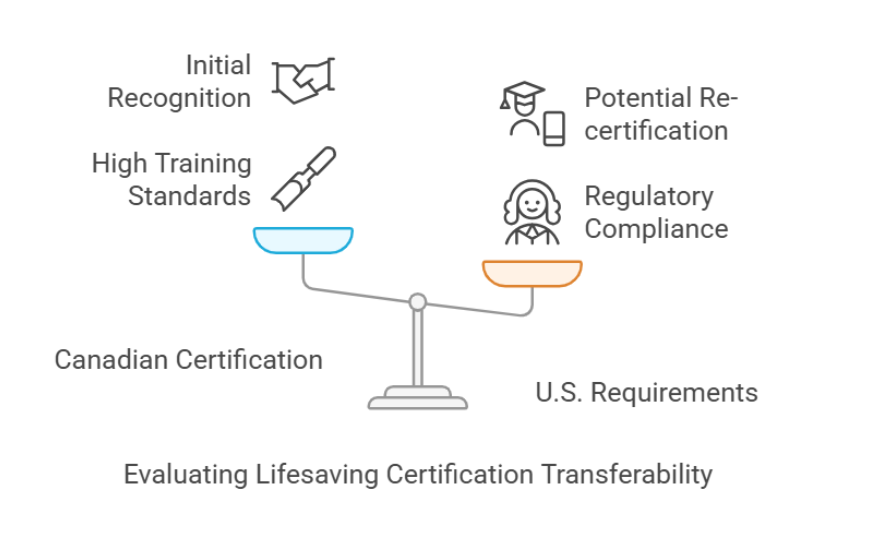
When considering a career in lifesaving or aquatic safety in the United States, one critical question often arises for those trained in Canada: “Does Canadian lifesaving certification work in the US?” This query touches on the compatibility and recognition of lifesaving qualifications across borders, which is vital for professionals planning to work in different countries. Canadian lifesaving certifications, endorsed by reputable organizations like the Lifesaving Society of Canada, are highly regarded due to their rigorous training standards. However, transferring these certifications to the U.S. involves understanding specific regulatory requirements and potential re-certification processes. This article goes in-depth on the validity of Canadian lifesaving certifications in the U.S., detailing the necessary steps and considerations for those seeking to leverage their Canadian credentials in American aquatic environments.

Does Canadian Lifesaving Certification Work in the U.S.? Here’s What You Need to Know

Does Canadian Life-Saving Certification Work in the US?

For Canadian lifeguards, first responders, and medical professionals looking to work or volunteer in the United States, the question of whether their Canadian life-saving certification is recognized is crucial. The Lifesaving Society of Canada, a leader in the field, ensures that its training programs adhere to high standards. However, the recognition of these certifications across the border isn’t automatic. In the U.S., life-saving standards and regulations can vary significantly from state to state and even between different regions within a state. This variability means that Canadian certifications might not meet all local requirements, and additional training or certification could be necessary. Understanding how these credentials translate is essential for those planning to operate in U.S. waters or healthcare settings. This section will go in-depth into the recognition, equivalency issues, and necessary steps for Canadians to validate or uplift their credentials for use in the United States, providing clarity and direction for these vital professionals.

Understanding Canadian Life-Saving Certification

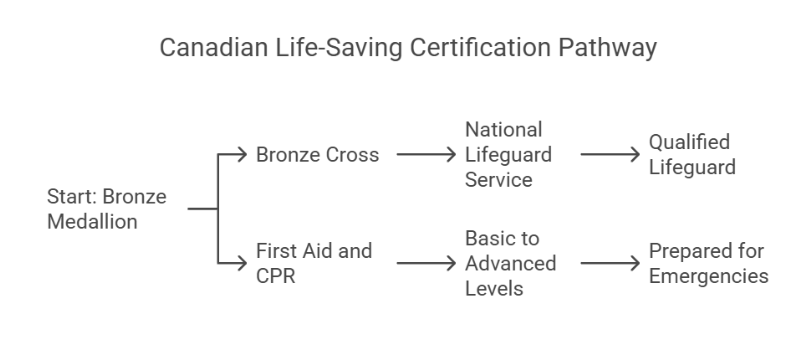
Canadian life-saving certifications are comprehensive and designed to equip individuals with the skills to perform rescues and administer first aid in various emergencies. These certifications are offered through recognized bodies such as the Lifesaving Society, the Canadian Red Cross, and St. John Ambulance, each providing training programs tailored to different needs and environments. Here’s a closer look at some key certifications:

Bronze Cross

The Bronze Cross certification is a prerequisite for the National Lifeguard (NLS) certification and is aimed at individuals who have already completed the Bronze Medallion. It focuses on advanced rescue techniques, preparing lifeguards to handle complex rescue scenarios, and introduces the principles of emergency procedures and teamwork in lifesaving.

National Lifeguard Service (NLS)

NLS is a professional certification for lifeguards in Canada. It covers a comprehensive set of skills, including surveillance, rescue, first aid, and the management of spinal injuries. NLS holders are considered qualified to lifeguard pools, waterfronts, waterparks, and special events featuring water activities.

First Aid and CPR

First Aid and CPR certifications are crucial for the general public and healthcare and emergency response professionals. These certifications range from basic to advanced levels, including CPR for infants, children, and adults and the use of automated external defibrillators (AEDs). Training often includes managing airway, breathing, and circulation emergencies and providing care until medical help arrives.

First Aid and CPR

Life-Saving Certification Requirements in the US

Navigating the requirements for life-saving certifications in the United States involves understanding the roles of key organizations such as the American Red Cross, the American Lifeguard Association (ALA), and the Occupational Safety and Health Administration (OSHA). Each organization sets specific standards that address the question: “Does Canadian life-saving certification work in the US?”

American Red Cross

The American Red Cross offers various certifications crucial for lifeguards, first responders, and healthcare providers. These include Lifeguarding and Water Safety, CPR/AED for Professional Rescuers, and Advanced First Aid. Their programs are widely recognized nationwide and often serve as the benchmark for aquatic safety and emergency response training.

American Lifeguard Association

The ALA focuses on providing lifeguarding certification that meets national standards. This certification includes training in water rescue techniques, first aid, spinal injury management, and CPR, tailored to meet the requirements of pools, lakes, and coastal environments.

Occupational Safety and Health Administration (OSHA)

OSHA doesn’t directly certify lifeguards but sets workplace health and safety guidelines, including emergency services and first aid requirements. Compliance with OSHA guidelines is crucial for life-saving professionals working in industrial or public settings.

Overview of Certifications

In the U.S., certifications such as the Lifeguarding certificate, CPR for Healthcare Providers, and Advanced First Aid are essential. These certifications must be renewed periodically to maintain proficiency and compliance with the latest health and safety standards. The U.S. has no direct equivalent to Canada’s Bronze Cross, but the skills it covers are part of the training programs provided by U.S. organizations.

For Canadian professionals seeking to validate their life-saving credentials in the U.S., understanding these requirements and possibly undergoing additional training or re-certification is necessary to ensure their qualifications are recognized and applicable in various American jurisdictions.

Recognition of Canadian Certifications in the US

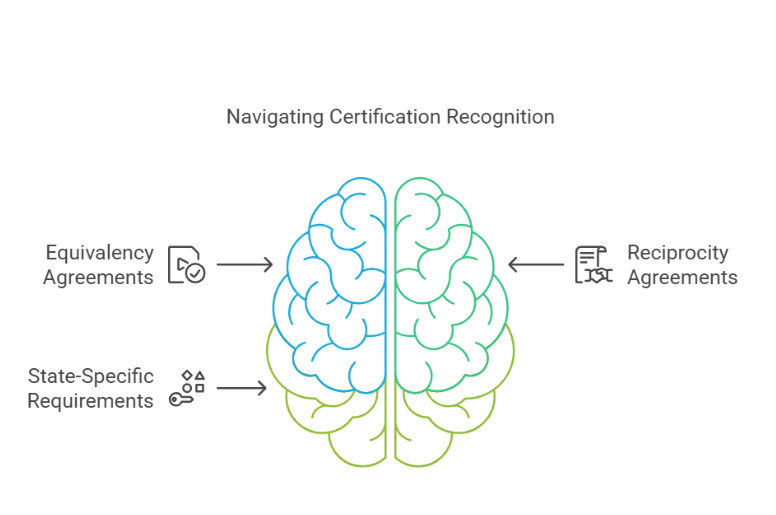
Whether the US recognizes Canadian lifeguarding, first aid, or CPR certifications is complex and varies by state and governing bodies. Understanding the equivalency and reciprocity agreements and state-specific requirements is essential for Canadian-certified individuals planning to work or volunteer in the U.S.

Equivalency and Reciprocity Agreements

While no universal agreements between Canada and the U.S. automatically recognize lifesaving certifications, some U.S. states and organizations may have specific agreements with Canadian certifying bodies. These agreements typically require verification of training standards and may sometimes necessitate additional testing or courses to bridge any gaps in training procedures or content.

State-Specific Requirements

Recognizing Canadian certifications in the U.S. can significantly differ from state to state. For instance, with their extensive coastlines and numerous aquatic facilities, California and Florida may require additional water rescue skills and environmental training that align with their local conditions. Meanwhile, New York and Texas might emphasize urban and controlled aquatic environments, focusing more on crowd management and emergency response in diverse scenarios.

Recognition of Canadian Certifications in the US

Steps to Work as a Lifeguard in the US with a Canadian Certification

For Canadian lifeguards aiming to work in the United States, navigating the process involves several steps, from document verification to potentially undergoing requalification exams. Understanding the conversion process for Canadian certificates and any additional training or exams required is crucial to streamline transition and compliance with U.S. regulations.

Document Verification and Requalification Exams

Initial steps include verifying your Canadian certifications with relevant U.S. bodies, such as the American Red Cross or the American Lifeguard Association. This might involve submitting your credentials for evaluation to determine their equivalency to U.S. standards. If discrepancies are found or updates are needed to meet the local regulations, requalification exams may be necessary to demonstrate proficiency and secure U.S. lifeguard certification.

Conversion Process for Canadian Certificates

To convert Canadian lifeguard certifications to be recognized in the U.S., individuals must typically engage with state-specific lifeguarding boards or national certifying agencies. This process includes submitting original Canadian certificates, completing application forms, and paying applicable fees. Some states or organizations may require a practical assessment or orientation to local laws and environmental conditions.

Additional Training or Exams Needed

Additional training or exams might be required depending on the state and the specific type of lifeguarding role. For instance, Canadian lifeguards may need to take supplementary courses on ocean rescue techniques if they plan to work on U.S. beaches or advanced life support courses if they work at facilities that require a higher level of medical preparedness. These courses ensure that all lifeguards meet the comprehensive safety standards expected in different U.S. jurisdictions

Jobs You Can Apply for in the US with Canadian Certification

With Canadian life-saving certifications, several roles become accessible in the US, though the exact nature of the job and its requirements can vary by state and employer. Lifeguarding positions are common, particularly at pools, beaches, and resorts, where there is a constant need for qualified personnel to ensure swimmer safety. First responder roles, like emergency medical technicians (EMTs) or paramedics, often require additional certification, but having a Canadian life-saving background provides a strong foundation. Swimming instructor positions are also viable, as these roles typically require proof of proficiency in swim techniques and safety protocols covered under Canadian training programs. However, it’s essential to check local regulations and potential employers about the need for any supplementary certifications or training specific to the U.S.

Differences Between Canadian and US Life-Saving Standards

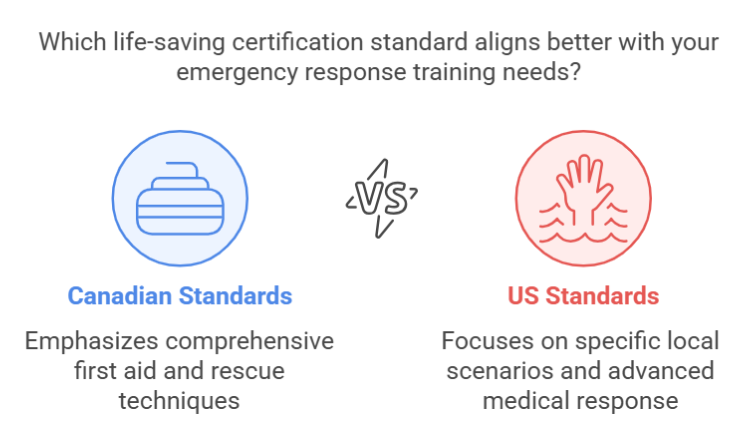
While Canadian and US life-saving standards aim to prepare individuals for emergency response, there are notable differences in training and procedures. The Canadian system often emphasizes a comprehensive approach to first aid and rescue techniques suited for a variety of environments, including icy waters, which are less common in the U.S. U.S. standards, on the other hand, might focus more on specific scenarios relevant to local conditions, such as rip current rescue operations in coastal areas or advanced medical response techniques in urban settings. Additionally, the regulatory framework and oversight can differ significantly- the U.S. has a more decentralized approach with standards varying widely between states, whereas Canada generally maintains a consistent standard nationwide. Understanding these differences is crucial for Canadians seeking life-saving roles in the U.S., as it may necessitate additional training or adjustments to their existing qualifications.

Differences Between Canadian and US Life-Saving Standards

How to Strengthen Your Job Application as a Certified Lifeguard

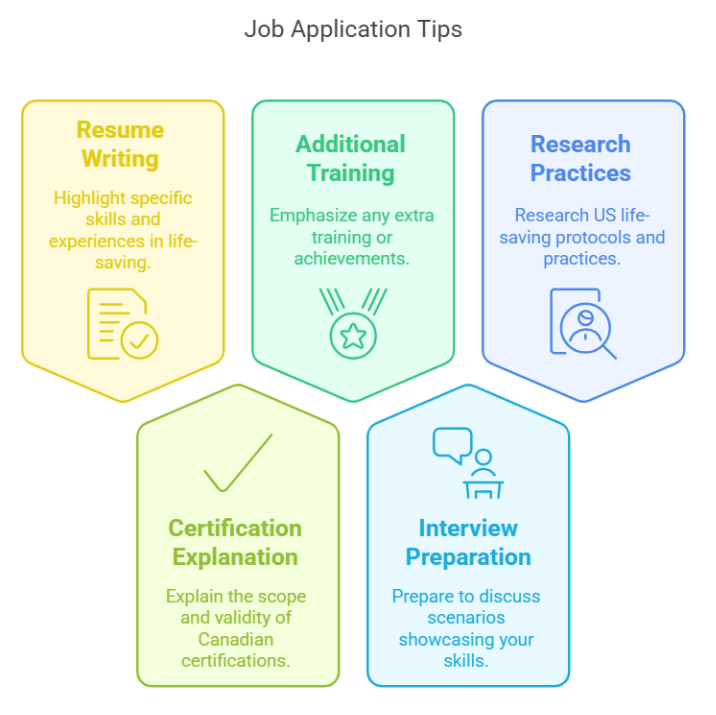
To uplift your job application as a certified lifeguard, especially when questioning if your Canadian life-saving certification is applicable in the US, start by writing the resume such that it highlight your specific skills and experiences in life-saving and first aid. Clearly explain the scope and validity of your Canadian certifications and how they relate to US standards. In the resume and cover letter, emphasize any additional training or achievements, such as handling eemergenciesor special certifications like AED or CPR. Prepare for interviews by being ready to discuss specific scenarios where you’ve successfully applied your skills. Research standard life-saving practices and recent changes in US life-saving protocols to demonstrate your commitment and adaptability to prospective employers.

How to Strengthen Your Job Application as a Certified Lifeguard

Cost and Time Involved in Certification Transfer

Transferring Canadian life-saving certifications to US equivalents can involve significant costs and time. Fees for evaluating and processing Canadian certifications can vary, often depending on the state and the certifying body involved. The time frame for transferring certifications typically ranges from a few weeks to several months, depending on the complexity of the verification process and the need for additional training or exams. Applicants should prepare for this by budgeting for monetary costs and the potential wait times, ensuring all documents get accurately prepared and submitted to avoid delays.

Alternative Pathways if Your Certification Isn’t Recognized

If your Canadian life-saving certification is not recognized in the US, consider fast-track certification options available through major US organizations like the American Red Cross or the American Lifeguard Association. These programs often offer accelerated courses that cover lifeguard training, CPR, and first aid, specifically tailored to meet US standards and fill any gaps in international certifications. These courses can often be completed in a few days to weeks, providing a swift pathway to gaining recognized qualifications and improving employability in various aquatic environments across the United States.

FAQs

  1. Do US employers accept Canadian lifeguard certification?
    Some US employers may accept Canadian certifications, but additional local certification may often be required.
  2. How can I convert my Canadian certification to a US-recognized one?
    Conversion typically involves taking supplemental courses or exams through US organizations like the American Red Cross.
  3. Do I need a visa to work as a lifeguard in the US?
    Yes, non-US citizens need a work visa to be employed as a lifeguard in the United States.
  4. Are Canadian first-aid certifications valid in the US?
    Canadian first-aid certifications are generally recognized, but some states or employers may require additional US-specific certification.
  5. Can I apply for lifeguard jobs in all US states with Canadian certification?
    You can apply, but some states may require additional certifications or state-specific training.
  6. What is the cost of transferring a Canadian certification to the US?
    Costs vary but can include fees for evaluation, exams, and courses, potentially totaling several hundred dollars.

Final Thought

While Canadian lifeguarding, first aid, and CPR certifications are respected for their rigor and comprehensiveness, transferring these credentials for use in the United States can require additional steps, including verification, supplemental training, and possibly re-certification, depending on state-specific requirements. Whether you plan to work as a lifeguard, a first responder, or in a healthcare setting, understanding and navigating the certification landscape are crucial. If you need to update or supplement your Canadian certifications to meet U.S. standards, consider contacting Simple CPR. They have various courses tailored to help professionals like you quickly achieve American accreditation. Visit Simple CPR today to learn about their training options and ensure you meet all the qualifications to work in the US.