


Category Archives: Uncategorized

What does HCP stand for?

Understanding the term HCP is essential for anyone in or interacting with the medical field. If you’ve ever asked, “What does HCP stand for?”, the answer is simple: HCP stands for Healthcare Personnel. This term refers to all individuals delivering health services to patients, either directly or indirectly. Whether you’re a nurse, physician, paramedic, technician, or even administrative staff in a clinical setting, you fall under the category of Healthcare Personnel. The HCP meaning goes beyond just those who provide hands-on care—it also includes individuals who support care delivery through essential roles in healthcare environments. Understanding who qualifies as an HCP is vital for correctly applying workplace policies, safety protocols, and public health guidelines. This article will explain what HCP means and why it’s a critical classification in everyday healthcare operations and emergency response planning.

HCP in Healthcare: Definition & Scope

Understanding the scope of Healthcare Personnel (HCP) helps clarify how healthcare systems function effectively. According to the CDC, HCP includes all individuals working in healthcare settings who have potential exposure to patients or infectious materials. This broad HCP definition includes those who deliver direct patient care and those who support healthcare services. With over 22 million people employed in U.S. healthcare, the sector is the nation’s largest employer, highlighting the massive scale of the healthcare workforce. Recognizing who qualifies as an HCP is essential for implementing health and safety regulations across various roles and settings.

Who qualifies as an HCP?

Knowing who falls under this category is essential when asking what HCP stands for. Healthcare Personnel include a wide range of roles. These individuals may have clinical, technical, or supportive responsibilities in healthcare environments.

Healthcare Personnel (HCPs) include many professionals who contribute to patient care and medical operations. Key groups include physicians and surgeons, registered nurses, nurse practitioners, and physician assistants (PAs) who provide direct clinical care. Therapists—such as physical, respiratory, occupational, and speech therapists—offer essential rehabilitative services. Pharmacists and pharmacy technicians ensure proper medication management, while medical and nursing assistants support daily patient care tasks. Dentists and dental hygienists focus on oral health. Laboratory and radiologic technologists handle diagnostics, and administrative and support staff maintain efficient healthcare operations. Together, they form the backbone of the healthcare workforce.

With approximately 817,920 physicians and surgeons in the U.S. as of May 2023, this group represents a significant segment of the broader HCP population.

Roles & responsibilities of HCPs

The HCP responsibilities span multiple care and support areas, ensuring the healthcare system remains functional and responsive. Preventive duties include administering vaccines, educating patients on health risks, and performing routine screenings. Curative tasks involve diagnosing illnesses, performing procedures, and managing treatment plans. Beyond clinical care, healthcare personnel are also expected to communicate, provide emotional support, and educate patients and their families about health.

Compliance is another key aspect of HCP roles. They must follow guidelines for infection control, patient confidentiality, documentation standards, and ethical medical practices. These responsibilities are critical for patient safety and public health. With over 22 million individuals in the healthcare workforce, each HCP must contribute to a consistent standard of care.

Understanding the HCP definition helps recognize the wide range of duties involved and supports better policy development, staffing strategies, and healthcare delivery outcomes.

HCP in Pharma: Engagement & Importance

Pharmaceutical companies rely heavily on Healthcare Personnel (HCPs) to advance medical knowledge, ensure safe medication use, and improve patient outcomes. Understanding what HCPs stand for in this context is vital—they include physicians, pharmacists, nurse practitioners, and others who guide how medications are prescribed, dispensed, and monitored. Effective engagement between pharmaceutical companies and healthcare workers benefits clinical practice and public health.
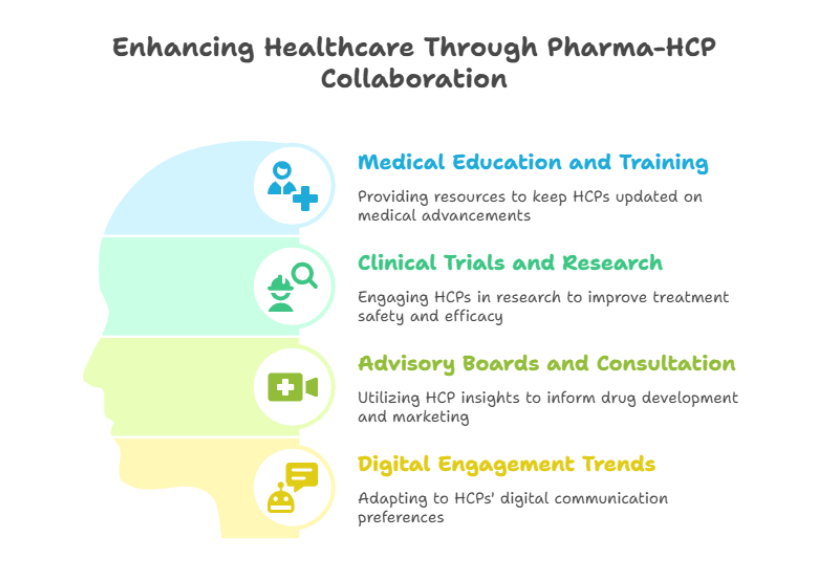
Medical education and training

Pharma companies often provide educational resources to HCPs through continuing medical education (CME) programs, webinars, and scientific materials. These initiatives ensure that Healthcare Personnel stay current on drug indications, side effects, and evolving treatment protocols. In a rapidly changing medical landscape, this kind of support helps maintain high standards of care.

Clinical trials and research collaboration

Pharmaceutical firms also engage HCPs in clinical trials to learn about the safety and efficiency of new treatments. HCPs play critical roles as investigators, coordinators, and advisors. Their insights during trial design and implementation improve study relevance and patient outcomes. This partnership is essential to the development of evidence-based treatments.

Advisory boards and consultation

HCPs are frequently invited to join advisory boards or serve as consultants. Their frontline experience helps pharma companies know patient needs, treatment barriers, and clinical workflows. These collaborations influence drug development strategies and marketing practices while keeping them grounded in real-world care environments.

Digital engagement trends

With changing communication preferences, digital channels have become key to pharma-HCP interaction. As of 2022, 63% of physicians are considered “digital omnivores”, using multiple platforms such as email, webinars, and mobile apps—up from just 31% in 2019 (Indegene Digital Savvy HCP Survey). This shift underscores the need for versatile digital engagement strategies that align with modern HCP responsibilities and work environments.

Pharma-HCP collaboration continues to play a vital role in uplifting health outcomes and shaping the future of medicine.

HCP in Other Contexts

While the term HCP is widely recognized in the healthcare industry to describe professionals such as nurses, pharmacists, and therapists, it also appears in different fields with distinct meanings. Understanding these variations is essential to avoid confusion, especially in technical discussions. Whether you’re working in materials science, information technology, or recreational activities, the acronym HCP can take on new definitions. The following sections will examine how HCP is used beyond healthcare, including in engineering, cloud services, and everyday terminology.

Hexagonal close-packed (Materials Science)

In materials science, HCP stands for hexagonal close-packed, a typical arrangement of atoms in metallic crystals. This structure is one of the most efficient atomic packing arrangements, with a packing efficiency of about 74%. It describes how atoms are densely packed in a repeating hexagonal pattern, contributing to the strength and stability of certain metals. Examples of metals with an HCP structure include titanium, magnesium, and zinc. These materials often exhibit high strength and corrosion resistance, making them valuable in aerospace, medical devices, and industrial applications.

Understanding HCP structures is essential for materials engineers and researchers developing metal alloys for specialized use. While unrelated to nurses, pharmacists, or therapists, this version of HCP plays a crucial role in manufacturing and design technologies that sometimes benefit the healthcare industry, such as surgical tools and implantable devices.

HashiCorp Cloud Platform

In cloud computing, HCP refers to the HashiCorp Cloud Platform, a managed services suite that simplifies infrastructure deployment and security. HCP enables organizations to run popular tools like Vault, Consul, and Terraform in a fully managed cloud environment. These services support consistent infrastructure management, identity protection, and service networking across cloud platforms. The platform helps IT teams deploy and scale applications securely while reducing operational overhead. Although this form of HCP operates outside the traditional healthcare industry, healthcare organizations increasingly rely on cloud-based services for electronic health records, data storage, and compliance. For nurses, pharmacists, and therapists working in modern healthcare settings, this cloud infrastructure ensures they can access secure patient data and medical tools quickly and reliably. As digital transformation grows, the HashiCorp Cloud Platform supports the broader healthcare innovation ecosystem.

Other uses

HCP also appears in everyday terms outside science and technology. In the card game bridge, HCP stands for High Card Points, a scoring method used to evaluate a player’s hand strength based on the value of face cards. In golf, Handicap is sometimes shortened to HCP, referring to the numerical measure of a player’s potential ability, helping level the playing field between competitors of different skill levels. In Australia, the Home Care Package (HCP) is a government-subsidized program that provides long-term support to older individuals who wish to remain at home. It includes personal care, domestic assistance, and nursing support tailored to each person’s needs. While these uses are unrelated to pharmacists, therapists, or nurses directly, they reflect the diverse meanings the acronym HCP can hold. In particular, the Home Care Package system closely intersects with the healthcare industry, highlighting the importance of accurate interpretation based on context.

Why Understanding HCP Matters?

Recognizing the correct meaning of HCP is essential across various professional settings—especially in the healthcare industry, where nurses, pharmacists, therapists, and other professionals work in high-stakes environments. Understanding what HCP stands for ensures consistent communication, better coordination, and improved outcomes for healthcare providers and patients.

Improved communication and coordination

In the healthcare workforce, clarity around the HCP definition supports smoother communication among multidisciplinary teams. Whether between nurses, physicians, pharmacists, or therapists, understanding who qualifies as an HCP helps define roles, responsibilities, and expectations. This clarity minimizes confusion, especially when implementing protocols, distributing tasks, or coordinating care plans.

Better compliance and safety

Accurately identifying Healthcare Personnel is also essential for legal and regulatory compliance. Guidelines from the CDC, OSHA, and other agencies often apply specifically to HCPs. This includes training requirements, infection control protocols, and vaccination mandates. Knowing who falls under this category ensures organizations meet compliance standards and keep their teams and patients safe.

Better patient outcomes

When HCP responsibilities are clearly defined, healthcare teams function more effectively. This leads to faster diagnosis, better medication management, and more accurate care delivery. For example, pharmacists can safely review prescriptions, therapists can focus on rehabilitation goals, and nurses can confidently monitor patient progress. The result is better patient care and improved outcomes.

Driving innovation and collaboration

A clear understanding of who HCPs are also helps industries beyond healthcare, including pharma and technology. Pharmaceutical companies engage HCPs for education, research, and clinical trials. Cloud services support HCPs with secure platforms for accessing data. When HCP roles are understood, these collaborations become more effective, fostering innovation that benefits patients and professionals.

Frequently Asked Questions

What is HCP in healthcare?

In healthcare, HCP stands for Healthcare Professional or Healthcare Personnel. It includes all paid or unpaid individuals who provide preventive, curative, or rehabilitative services. This term covers various roles such as physicians, nurses, therapists, pharmacists, EMTs, and social workers in the healthcare industry.

What does HCPs stand for in medical terms?

HCPs is the plural form of Healthcare Professionals. It refers to multiple individuals involved in patient care. It’s important not to confuse HCPs with HCPS, which stands for Hantavirus Cardiopulmonary Syndrome, a severe respiratory illness. The meaning depends on context, especially in medical communication.

Is a HCP a doctor?

A doctor is a type of HCP, but not all Healthcare Personnel are doctors. HCP is a broader term that includes nurses, pharmacists, therapists, physician assistants, dentists, and others involved in patient care within the healthcare workforce.

Further Resources & References

To better understand the role and responsibilities of healthcare personnel (HCPs), several trusted organizations and resources offer valuable guidance. Key industry bodies include the Centers for Disease Control and Prevention (CDC), which provides definitions and infection control protocols specific to HCPs. The World Health Organization (WHO) also outlines global standards for nurses, pharmacists, therapists, and other healthcare workforce members. Regulatory agencies like OSHA and The Joint Commission set compliance requirements to ensure safety in healthcare settings. Surveys such as the Indegene Digital Savvy HCP Survey 2022 and data from the U.S. Bureau of Labor Statistics offer insights into workforce trends and digital engagement.

For reliable, easy-to-understand content about CPR, healthcare practices, and public health education, Simple CPR is here to help. We encourage readers to check out our resources or share this post to support awareness and informed decision-making in the healthcare community.
CPR vs BLS: Understanding the Key Differences

Knowing how to differentiate between life and death in a medical emergency. Two commonly mentioned terms in emergency response training are CPR (Cardiopulmonary Resuscitation) and BLS (Basic Life Support). While often used interchangeably, they refer to different levels of training and care. Understanding the key differences between CPR and BLS is essential for healthcare professionals and the general public.

As per Sudden Cardiac Arrest Foundation, nearly 400,000 out-of-hospital heart attack happen annually in the U.S. This statistic underscores the prevalence of cardiac emergencies and the importance of being prepared. Whether you’re a bystander looking to assist or a medical professional delivering care, knowing when to apply CPR or BLS can save lives.

This article explains what sets CPR apart from BLS, who needs which training, and how each contributes to better emergency outcomes.

What is CPR?

Understanding CPR is the first step in recognizing how it differs from more advanced emergency care techniques like BLS. In the CPR vs BLS comparison, CPR refers to a foundational life-saving procedure anyone can learn and perform. While BLS includes CPR, the two serve different purposes depending on training level and situation. This section will help you understand the scope of cardiopulmonary resuscitation, when it should be used, and how it is performed.

Definition of CPR

Cardiopulmonary resuscitation (CPR) is done if a person’s heart stops beating or they stop breathing. It is a combination of chest compressions with rescue breaths that enable blood and oxygen circulating to vital organs. In the BLS versus CPR discussion, CPR is the core technique taught to laypersons and professionals. Learning CPR is critical because quick action can save lives. CPR statistics show its importance in increasing survival chances.

When to use CPR

CPR is performed if a person is unresponsive, not breathing, or only gasping. These situations often include drowning, sudden cardiac arrest, or choking. Lay rescuers are typically the first on scene, so knowing when to act is essential. In the CPR vs. BLS debate, most bystanders perform CPR before help arrives. Bystander CPR can double or triple survival chances—a powerful reason for the public to learn this vital skill.

Types of CPR

CPR includes chest compressions and rescue breaths (30:2 ratio), and hands-only CPR, which involves chest compressions only. Hands-only CPR is recommended for untrained bystanders. While both types are effective, choosing the right one depends on the rescuer’s training and comfort level. Many CPR myths suggest breaths aren’t needed, but conventional CPR remains essential for infants and children in respiratory arrest.

CPR steps for laypersons

Laypersons should follow the 30:2 compression-to-ventilation cycle: 30 chest compressions that get followed with two rescue breaths. Start by checking responsiveness and breathing, then call 911 or ask someone to do so. Start chest compressions strongly and fast in the center of the chest, followed by breaths if trained. Repeat the cycle until help arrives. Despite clear steps, less than 20% of Americans are trained to perform CPR, showing a significant gap in preparedness.

What is BLS?

While CPR is widely taught to the general public, Basic Life Support (BLS) is designed for healthcare professionals and trained responders. In the CPR vs BLS comparison, BLS represents a more advanced and comprehensive skill set. It includes CPR as one of its elements but incorporates tools and techniques that improve patient outcomes. This section explains how BLS versus CPR training differs and what makes BLS essential in clinical and emergency settings.

Definition of BLS

Basic Life Support (BLS) refers to the level of medical care used to sustain life in emergencies until complete medical treatment can be given. It includes recognizing cardiac arrest, initiating high-quality CPR, and using equipment like an automated external defibrillator (AED). In the context of BLS versus CPR, BLS is more advanced and is part of professional emergency care. It equips responders to handle complex scenarios requiring quick, skilled intervention.

Components of BLS training

BLS components include several critical procedures: AED use, airway management, rescue breathing, and using a bag-valve-mask. These tools allow BLS providers to assist patients more effectively than CPR alone. Airway management and proper ventilation are emphasized, helping ensure oxygen delivery to the brain. The BLS provider course prepares professionals to perform these tasks confidently, often in high-pressure environments. These core components are what differentiate basic life support from layperson CPR.

BLS providers

BLS providers include healthcare workers such as nurses, EMTs, paramedics, doctors, and trained first responders. They are expected to perform CPR using advanced tools and techniques not typically used by the general public. In the CPR vs. BLS framework, BLS providers have the training to manage more complex emergencies.

Certification names

Two leading organizations offer basic life support certification: the American Heart Association’s AHA BLS Provider and the Red Cross BLS certification. While both cover similar content, they may differ in teaching format and assessment methods. Both are widely recognized in healthcare settings and meet professional training requirements. Anyone pursuing a BLS provider course should ensure the certification aligns with workplace needs and regulatory standards.

Key Differences Between CPR and BLS

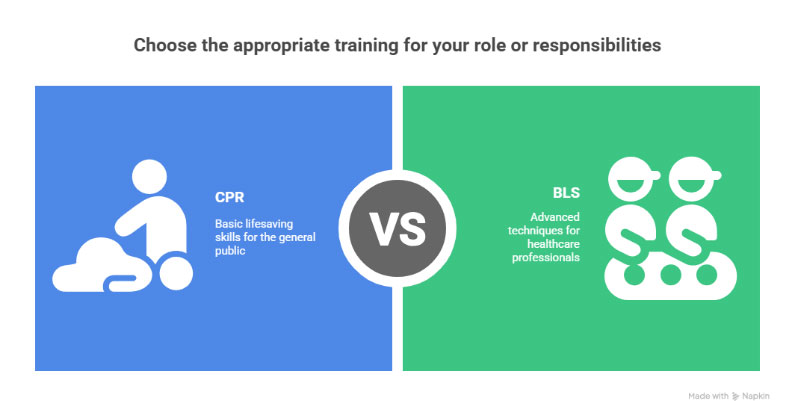
Although CPR and BLS share a common goal—saving lives during cardiac and respiratory emergencies—they are not identical. Understanding the difference between BLS and CPR is essential when choosing the proper training for your role or responsibilities. Questions like “Is CPR certification the same as BLS?” or “Is BLS the same as CPR?” often arise. This section breaks down the distinctions in audience, techniques, equipment, and protocols to clarify the comparison between CPR and BLS.

Primary audience

CPR is designed for the general public, including teachers, coaches, and family members who may witness a sudden emergency. In contrast, BLS is intended for trained healthcare professionals. In the BLS versus CPR comparison, audience differences are apparent: BLS requires a higher medical understanding. Whether you’re comparing ACLS vs BLS or PALS vs BLS, each builds on BLS fundamentals tailored to specific populations or roles.

Scope of training & techniques

CPR training focuses on basic lifesaving actions such as chest compressions and rescue breaths, typically for a single-rescuer situation. BLS goes further, training responders for team-based care, coordinated roles, and advanced decision-making. This difference between BLS and CPR makes BLS better suited for hospital or emergency response environments. If you’re considering training options, the scope of CPR vs BLS can help guide your decision based on your responsibilities.

Equipment & airway management

In standard CPR courses, laypersons learn to use an AED (automated external defibrillator) and perform mouth-to-mouth breaths. BLS includes this but adds tools like the bag-valve-mask (BVM) and advanced airway devices. These additions enable more effective oxygenation and ventilation. The difference between BLS and CPR is clear in clinical settings where equipment plays a crucial role. For professionals, BLS bridges the gap between CPR and more advanced care like ACLS.

Assessment protocols

CPR emphasizes checking for responsiveness and normal breathing. BLS, however, includes more detailed assessments such as checking for a carotid pulse, monitoring vital signs, and using structured protocols to determine the next steps. This reflects a deeper understanding of patient conditions and clinical decision-making. When asking, “Is CPR certification the same as BLS?” remember that BLS training covers far more than just basic assessments—another reason it’s essential for medical personnel.

Similarities Between CPR and BLS

Despite their differences, CPR and BLS share many significant similarities. Both are designed to save lives by responding quickly and effectively during emergencies. The core procedures in each—chest compressions, rescue breathing, and use of an AED—are based on the same evidence-based guidelines from the American Heart Association (AHA). Whether performed by a layperson or a trained medical professional, the goal is to restore circulation and breathing as soon as possible.

Another key similarity is the emphasis on the Chain of Survival, which outlines the steps needed to improve survival rates after cardiac arrest. These include early recognition, immediate CPR, rapid defibrillation, effective advanced care, and post-resuscitation support. Both CPR and BLS stress the importance of each link in this chain.

Furthermore, both training programs work to correct CPR myths, such as the idea that mouth-to-mouth is always required or that you could harm someone by doing CPR incorrectly. Both certifications also teach the importance of scene safety, activating emergency services, and staying calm under pressure.

In short, while CPR vs BLS training may differ in complexity, they are united by the same life-saving mission and standardized practices vital in any emergency.

Recertification requirements for CPR and BLS

Both CPR and BLS certifications come with expiration dates, emphasizing the need for regular renewal to maintain readiness and confidence. For most providers, CPR certification is valid for two years, and recertification involves taking a refresher course or a whole class, depending on the certifying organization’s policies. This ensures that rescuers stay up to date with current CPR statistics and updated guidelines.

BLS certification also typically remains valid for two years, but may have stricter recertification requirements, especially in medical and clinical settings. To renew BLS, participants must complete a BLS provider course or a recognized refresher program. Healthcare facilities often require BLS certification to be current and may not accept expired credentials, highlighting the importance of timely renewal.

Recertification also reminds us that protocols and best practices can change. With advancements in resuscitation science, organizations like the AHA and Red Cross BLS programs periodically update CPR and BLS guidelines.

In both cases, continuing education plays a crucial role. Whether you’re a layperson or a professional, staying certified keeps your skills sharp and ensures you’re ready to act when every second counts.

Choosing the proper certification: CPR vs BLS

When deciding between CPR vs BLS certification, your career path, job requirements, and personal readiness should guide your choice. Standard CPR training is sufficient if you’re a teacher, coach, parent, or community volunteer. It prepares you to handle emergencies like choking or sudden cardiac arrest until professional help arrives. CPR courses are designed to be accessible, often completed in a few hours, and do not require prior medical knowledge.

On the other hand, if you’re entering or already working in healthcare—as a nurse, EMT, or hospital technician—you’ll need Basic Life Support (BLS) certification. The BLS provider course goes beyond standard CPR by teaching team-based response strategies, airway management, and advanced equipment use. BLS is a job requirement in many clinical environments and is the foundation for further training, like ACLS vs BLS or PALS vs BLS certifications.

It’s also important to consider how comfortable you feel in emergencies. BLS offers more comprehensive instruction if you’re confident and want to deepen your skills. When comparing BLS versus CPR, the key is choosing the certification which is best suited for your role and the level of responsibility you’re prepared to take on during a crisis.

Beyond BLS: Advanced Life Support Certifications

Once you’ve mastered the fundamentals of CPR and BLS, advanced certifications are available for healthcare professionals who need to manage more complex emergencies. These courses help with learning Basic Life Support (BLS) and focus on specialized care in critical situations. Suppose you’re comparing ACLS vs BLS or PALS vs BLS. In that case, it’s essential to understand that advanced certifications are designed for professionals involved in direct patient care in hospitals or emergency settings. They require a solid foundation in BLS and clinical decision-making.

ACLS (Advanced Cardiovascular Life Support)

Advanced Cardiovascular Life Support (ACLS) training program is for healthcare professionals who handle cardiac and respiratory emergencies in adults. It covers advanced airway management, reading electrocardiograms (ECGs), and administering emergency medications. Unlike BLS, which focuses on immediate response, ACLS emphasizes diagnosis, treatment protocols, and team dynamics in critical care. This certification is required for paramedics, physicians, and ICU nurses. ACLS vs BLS highlights the move from basic response to clinical decision-making and leadership in resuscitation efforts, making it essential for those working in emergency departments or critical care units.

PALS (Pediatric Advanced Life Support)

Pediatric Advanced Life Support (PALS) focuses on emergency care for infants and children. It is designed for pediatricians, emergency nurses, and other healthcare providers who treat young patients. PALS training includes pediatric assessment, airway and breathing support, rhythm recognition, and managing shock and cardiac arrest in children. This course builds on BLS by addressing the unique needs of pediatric patients. In the PALS vs BLS comparison, PALS offers more specialized training and is often required in pediatric intensive care units and emergency settings where timely, child-specific care is essential.

Wrapping up

Understanding the difference between CPR and BLS is crucial when choosing the proper life-saving certification. While CPR equips laypersons to respond effectively in emergencies, BLS is designed for professionals who require advanced training and teamwork skills. Both play a vital role in improving survival outcomes during cardiac events. Whether you need CPR for basic preparedness or BLS for a healthcare role, timely training can save lives.

Take the first step today—enroll in a Simple CPR course to get certified or renew your credentials. Be prepared, stay confident, and help make a life-saving difference in your community.

FAQ

Is BLS the same as CPR?

No, BLS is not the same as CPR. BLS (Basic Life Support) includes all CPR skills but covers advanced techniques like team-based care, airway management, and equipment such as bag-valve masks. It is designed specifically for healthcare providers and first responders.

Do I need a CPR certification if I have a BLS?

You do not need a separate CPR certification if you hold a valid BLS certification. BLS covers all the necessary CPR skills and is accepted by most employers and institutions as meeting CPR training requirements for both lay and professional settings.

What is higher than BLS certification?

Certifications like ACLS (Advanced Cardiovascular Life Support) and PALS (Pediatric Advanced Life Support) go beyond BLS. These advanced courses are designed for healthcare professionals managing complex emergencies, including cardiac arrest in adults (ACLS) and children (PALS), and require a current BLS certification.

What does BLS stand for?

BLS stands for Basic Life Support. The certification course teaches healthcare providers how to recognize life-threatening emergencies, perform high-quality CPR, use an AED, and manage airways—all critical during cardiac and respiratory arrest.

What are the two types of BLS?

The two main techniques under BLS protocols are hands-only CPR. They involve chest compressions only, and conventional CPR, which includes compressions and rescue breaths. The choice depends on the rescuer’s training and the situation, especially in adult versus pediatric emergencies.

What are the five steps of BLS?

The five basic steps of BLS are to ensure scene safety, check for responsiveness and breathing, activate emergency medical services (EMS) and get an AED, check for a pulse (if trained), and begin high-quality CPR with the correct compression depth and rate to maintain circulation.

A Guide to How One Can Achieve a High Chest Compression Fraction

Chest compression fraction (CCF) is a critical measure of CPR quality. It refers to the percentage of time during a cardiac arrest in which chest compressions are actively being delivered. A high CCF improves blood flow to vital organs, especially the heart and brain, which add to the chances of survival and better outcomes for the victim.

Experts recommend opting for a CCF of at least 60%, with higher percentages linked to improved results. But how do you achieve a high chest compression fraction during a real emergency? It starts with minimizing interruptions, working efficiently as a team, and staying focused on maintaining continuous compressions whenever possible.

Whether you’re a trained responder or part of a medical team, understanding how to keep CCF high can make a life-saving difference. This article explains why CCF matters and how to achieve a high chest compression fraction through simple, practical steps.

What Is Chest Compression Fraction (CCF)?

The chest compression fraction definition refers to the proportion of total resuscitation time during which chest compressions are actively delivered. Simply, it measures how much time is spent performing compressions versus time spent pausing. CCF calculation is straightforward: divide the total time compressions by the total duration of the cardiac arrest response. For example, if compressions are given for 6 minutes out of a 10-minute effort, the CCF is 60%.

According to American Heart Association, a high chest compression fraction is essential for quality CPR. They recommend a CCF of ≥60%, with the ideal target over 80%, combined with a compression rate of 100–120 per minute and a depth of at least 5 cm. However, studies show that the median CCF in many EMS systems is only about 50%, well below the target (Vaillancourt et al., 2006), underscoring the need to improve CPR quality metrics.

Why does a high chest compression fraction matter?

A high chest compression fraction is directly linked to higher chances of return of spontaneous circulation (ROSC) and survival in cardiac arrest victims. Several studies have shown that higher CCF levels lead to better blood flow to the heart and brain, which is essential for resuscitation success.

This quality standard also includes the targeted rate of 100–120 compressions per minute and minimum depth of at least 5 cm. Despite this, Vaillancourt et al. (2006) found that the median CCF in many EMS systems is only around 50%, falling short of recommended benchmarks.

This gap highlights the importance of reducing interruptions and maintaining focus during CPR. Understanding and improving CCF can lead to more effective resuscitation and higher survival rates.

Key Factors Influencing CCF

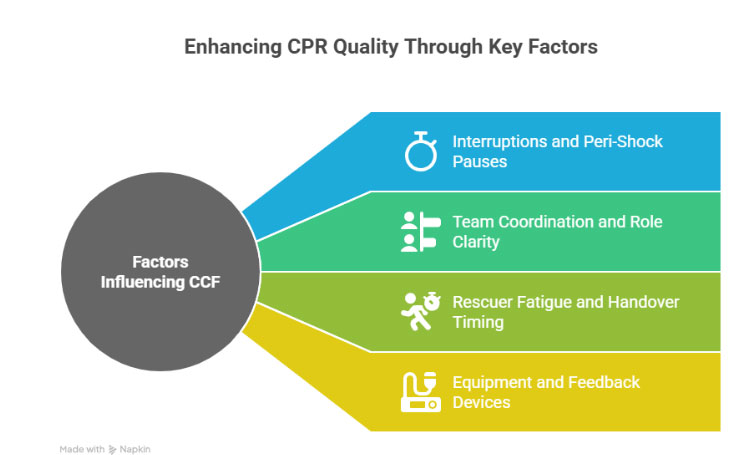
Understanding what affects chest compression fraction (CCF) is the first step in improving it. Several practical elements during resuscitation directly influence one’s ability to maintain a high CCF. Let’s examine the key factors impacting this critical CPR quality metric.

Interruptions and peri-shock pauses

Interruptions in compressions—especially around defibrillation—are major contributors to reduced CCF. Peri-shock pauses, which occur just before and after delivering a shock, often last several seconds. These delays can significantly reduce blood flow and lower the chance of spontaneous circulation (ROSC) return. To improve CCF, minimize all interruptions by preparing the defibrillator in advance, delivering shocks quickly, and resuming compressions immediately. The goal is to keep pauses under 10 seconds whenever possible to preserve adequate circulation.

Team coordination and role clarity

Clear roles and strong coordination among team members are essential for maintaining a high chest compression fraction. When everyone knows their responsibilities—such as who is compressing, ventilating, timing, and defibrillating—there’s less confusion and fewer delays. A well-coordinated team can rotate compressors efficiently and reduce unnecessary pauses. Assigning roles before starting CPR ensures that each action is performed with minimal disruption, directly supporting improved CPR quality metrics.

Rescuer fatigue and handover timing

CPR is physically demanding, and rescuer fatigue can lead to poor compression depth, rate, and increased pauses. Fatigue sets in after about two minutes of continuous compressions, so it’s essential to switch providers regularly. However, poorly timed handovers can cause interruptions that lower CCF. To avoid this, plan handovers ahead of time and execute them quickly—ideally during natural pauses like rhythm checks—to help sustain a high chest compression fraction throughout the resuscitation.

Equipment and feedback devices

Modern equipment can help maintain a high chest compression fraction by providing real-time feedback on compression depth, rate, and pauses. Devices with audiovisual prompts guide rescuers to stay within target parameters, helping improve overall CPR quality metrics. Additionally, automated defibrillators that reduce shock delivery time and allow for faster resumption of compressions can limit peri-shock pauses. Using the right equipment properly can make a measurable difference in CCF outcomes.

Step-by-Step Guide to Achieving High CCF

It’s important to follow a structured approach to improving chest compression fraction during resuscitation. The steps below focus on practical actions your team can take to limit pauses and consistently deliver high-quality CPR. With preparation and the right tools, achieving a high chest compression fraction becomes more realistic and sustainable.

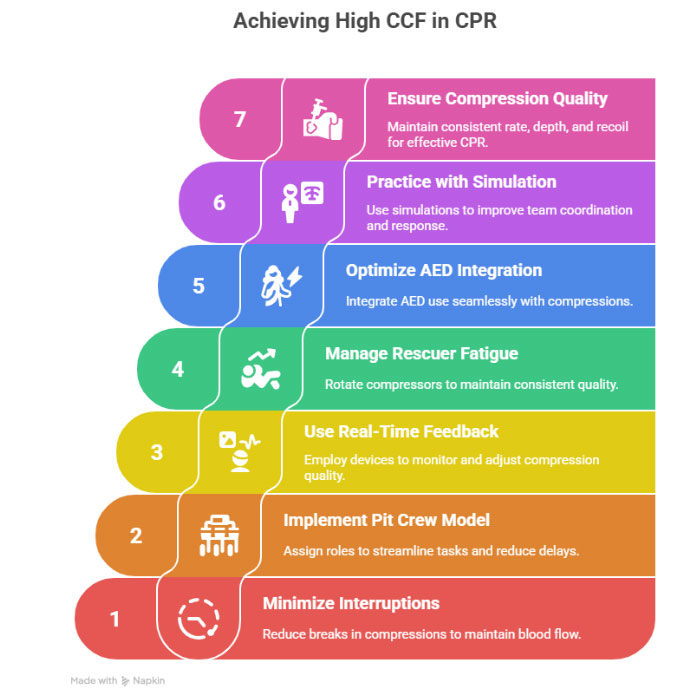
Minimize interruptions

Reducing breaks in compressions is essential for adequate blood circulation. Every second without compressions lowers the chance of survival. By planning, using CPR feedback devices, and assigning clear roles, you can limit delays caused by defibrillation, rescuer changes, or procedures. Let’s learn about key actions that help minimize interruptions and improve CPR outcomes.

Efficient rescuer swaps

Switching rescuers every two minutes prevents fatigue but must be done quickly—ideally in less than five seconds. Plan the swap just before the next rhythm check to avoid unnecessary pauses. Using CPR feedback devices helps monitor compression rate and depth, ensuring quality remains high even during handovers. Practice is essential for smooth transitions.

Pre-charge the defibrillator

Pre-charging the automated external defibrillator during the last 30 seconds of a compression cycle helps eliminate unnecessary delays. This allows an immediate shock delivery after rhythm analysis, reducing peri-shock pauses. Combine this with real-time audiovisual feedback to resume compressions quickly, keeping both compression rate and depth within optimal CPR performance targets.

Coordinate procedures

Tasks like airway management or IV access should never stop compressions. Instead, coordinate these procedures to happen simultaneously without interruption. Use CPR feedback devices to ensure compressions remain effective throughout. Maintaining a consistent compression rate and compression depth during these steps is key. Good communication allows procedures and compressions to proceed without delay.

Implement the Pit Crew Model

The Pit Crew Model assigns specific roles—compressor, airway manager, defibrillator operator, and team leader—to streamline tasks during resuscitation. This structure allows procedures to occur parallel rather than sequentially, reducing delays and improving chest compression fraction. Team members can focus on tasks without confusion, predominantly when guided by CPR feedback devices that monitor compression rate, compression depth, and timing in real time for better coordination and efficiency.

Use real-time feedback devices.

CPR feedback devices using accelerometers provide immediate data on compression rate, compression depth, chest recoil, and idle time. These tools deliver real-time audiovisual feedback, prompting rescuers to adjust their technique on the spot. Feedback helps teams maintain consistent quality and minimize interruptions, making it easier to meet CPR performance targets. The result is a higher chance of survival and a more consistent chest compression fraction during resuscitation.

Manage rescuer fatigue

Fatigue affects compression quality over time. To prevent performance decline, rotate compressors every two minutes and monitor their technique using CPR feedback devices. Some systems even include fatigue alerts, prompting team members to switch when compression quality drops. Maintaining target compression rate and compression depth becomes more manageable with regular handoffs, helping sustain a high chest compression fraction throughout CPR efforts.

Optimize AED integration

When using an automated external defibrillator, continue chest compressions while the device is charging to reduce peri-shock pauses. Deliver the shock as soon as possible and resume compressions immediately afterward. Some AEDs provide real-time audiovisual feedback, helping teams stay within CPR guidelines. Proper integration of the AED with ongoing compressions supports better blood flow and helps maintain consistent compression rate, compression depth, and overall CPR quality.

Practice with high-fidelity simulation

High-fidelity simulation using advanced manikins allows teams to practice real-life CPR scenarios and measure chest compression fraction, compression rate, and depth. These drills improve role clarity, communication, and response time. Simulation with CPR feedback devices provides actionable insights, allowing teams to refine their techniques based on measurable performance. Repeated practice in realistic settings builds confidence and consistency, which directly improves CPR outcomes in real emergencies.

Ensure proper compression quality.

Compression quality is defined by a compression rate of 100–120 per minute, a compression depth of at least 2 inches, and full chest recoil after each push. These standards maximize blood flow to vital organs. CPR feedback devices with real-time audiovisual feedback help rescuers stay within these targets. Consistently delivering high-quality compressions is essential to achieving and maintaining a substantial chest compression fraction and improving survival rates.

Tools and Technology to Boost CCF

The right tools can significantly improve chest compression fraction (CCF) and overall CPR quality. Automated external defibrillators (AEDs) with fast charging and real-time audiovisual feedback reduce peri-shock pauses and help rescuers resume compressions quickly.

Advanced CPR feedback devices monitor compression rate, depth, and recoil, providing instant prompts to guide real-time performance. These tools are essential in both training and real emergencies. Mechanical compression devices like LUCAS and AutoPulse provide consistent, uninterrupted compressions, especially during long resuscitations or patient transport.

They help eliminate rescuer fatigue and ensure CPR meets target metrics throughout the response. While these machines are beneficial, their setup time should be minimized to avoid delays. In high-performance CPR settings, combining AEDs, feedback tools, and mechanical devices allows teams to maintain a high chest compression fraction, reduce errors, and help with spontaneous circulation (ROSC) and survival with good neurological outcomes.

Training and simulation strategies

Consistent, high-quality training is critical for maintaining a high chest compression fraction during real-life cardiac arrests. Regular team-based drills reinforce clear role assignments and coordinated actions, reducing interruptions and confusion. High-fidelity simulation provides realistic scenarios where teams can practice under pressure and receive instant feedback on compression rate, compression depth, and total idle time.

These exercises often include CPR feedback devices that help participants adjust their technique based on measurable performance. Scenario-based learning helps teams respond more efficiently by practicing common challenges like peri-shock pauses, rescuer fatigue, and airway management without stopping compressions. Refresher courses are equally important, as skills can degrade over time.

Frequent, structured practice helps ensure every team member can deliver effective CPR, integrate equipment like automated external defibrillators, and maintain optimal CPR quality metrics. With regular simulation and evaluation, teams can build muscle memory and confidence to perform with minimal delays, improving outcomes in real emergencies.

Wrapping Up

Maintaining a high chest compression fraction is vital for improving survival in cardiac arrest. Focus on minimizing interruptions, performing efficient rescuer switches, and coordinating tasks without stopping compressions. Use CPR feedback devices, integrate automated external defibrillators properly, and ensure compressions meet the target rate and depth. Regular simulation and structured team roles help improve consistency and reduce idle time. Set clear goals: aim for a CCF of at least 60%, with a target of over 80%. Use tools and training to reach this standard. Your team can improve CPR quality metrics and patient outcomes by following these actionable steps.

Get certified and practice regularly

High-quality CPR starts with proper training. Enroll in an accredited CPR certification course to build foundational knowledge and hands-on skills. Practice using CPR feedback devices regularly and participate in team-based simulation drills to reinforce proper technique, compression rate, and compression depth. Simulation helps you respond faster and more effectively under pressure. Make it a goal to refresh your training every year to stay current with guidelines. The more you practice, the more confident and effective you’ll be during emergencies. Share this message with others and encourage them to get certified—because preparedness saves lives.

FAQ

How to achieve a higher chest compression fraction in a nursing setting?

In nursing, use rapid rescuer swaps in under 10 seconds, pre-charge the defibrillator during compressions, and perform airway and IV procedures without pausing. Limit ventilation to 10 breaths per minute. These steps help reduce interruptions and improve overall chest compression fraction (Christenson et al., 2009).

How can I increase my chest compression fraction?

Use a pit-crew model with assigned roles to increase your chest compression fraction, apply real-time feedback devices, and minimize peri-shock pauses. Train regularly with high-fidelity simulators to build teamwork, improve timing, and maintain consistent compression quality throughout the resuscitation effort.

How can you achieve a high compression fraction in BLS?

Begin compressions immediately, and use efficient 30:2 timing for single-rescuer CPR. When help arrives, perform swift handovers and apply AED pads during compressions. Pause only for rhythm analysis to keep hands-on time high and meet compression fraction targets in basic life support settings.

How can you achieve compression fraction?

Reduce idle time to achieve a strong compression fraction. Use efficient rescuer swaps, keep the AED charged and ready, and aim to deliver compressions for over 60% of the total time. Use CPR feedback devices to reach the ideal goal of more than 80% hands-on time.