Author Archives: Stephen Huffman

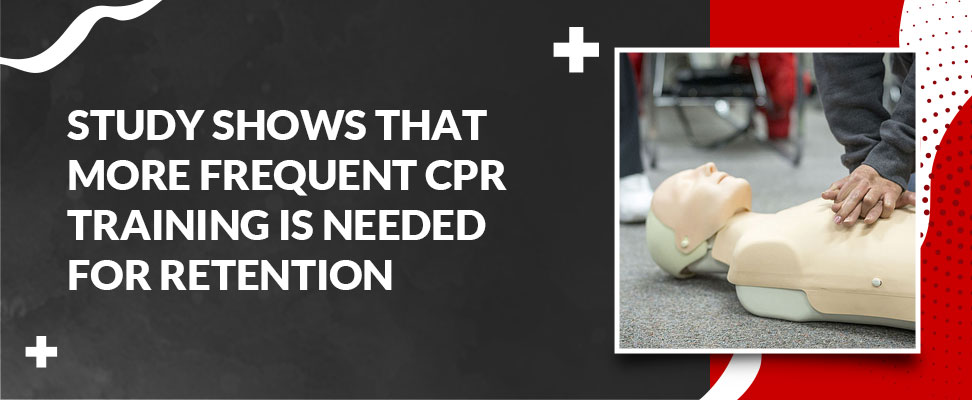
Study Shows that More Frequent CPR Training is Needed for Retention

A recent study published in the Clinical and Experimental Emergency Medicine Journal shows that more frequent CPR training is necessary for maximum retention. As a result of this study, different organizations are doing what they can to update their CPR training requirements. Specifically, at Indiana University Health, leaders changed their policy to require all of their 20,000 frontline caregivers to take a CPR training course at least once every two years in a classroom environment. However, even bigger changes are coming.

This updated policy is based on the study cited above which showed that CPR retention rates are not as good as people had once thought. The study proved that retention rates started dropping in as little as 3 to 6 months. Moreover, the results of the study illustrate that “conventional CPR training appears to be more effective for the retention of chest compression skills than hands-only CPR training; however, the retention of artificial ventilation skills after conventional CPR training is poor.”

Thus, regardless of whether one is practicing traditional CPR with rescue breaths or simply hands-only CPR, there are major issues with retention rates. In addition, certified CPR practitioners were asked to rate their level of confidence in performing CPR only three months after receiving their training, and the bulk reported a significant drop in their confidence level.

As a result of the findings in this study, IU Health decided to make changes to their CPR training policy for all frontline caregivers. They began in back 2017 by piloting a program called the Resuscitation Quality Improvement Program which was created by the American Heart Association. This program offers CPR training every quarter in order to keep skills fresh. Since 2015, approximately 750 hospitals in the United States have been offering this program to their workers.

IU Health has found great success with their new policies. Their initial pilot program found that all 200 of the participating nurses and paramedics retained their CPR skills every quarter. In addition, they even improved in some areas, such as chest compression quality.

The program consists of about 80 mannequin carts as well as online CPR training courses and is estimated to cost IU Health approximately $7 million over the next five years. However, despite the price tag, Dr. Jonathan Gottlieb, the health system’s chief medical officer, says that it’s actually a cost-effective investment. He emphasized that the flexibility of online learning allows their workers to gain the knowledge at their own pace and from anywhere, and thus, there was no need to backfill their positions while they received their training.

Due to the findings in this study and the efficacy of the Resuscitation Quality Improvement Program, online CPR courses have seen increased interest throughout the country. Because retention rates and confidence levels for CPR are surprisingly low after only 3 to 6 months, many organizations and individuals are seeing the importance of renewing their CPR certifications, and online programs are an easy way to keep their skills current.

The Resuscitation Quality Improvement Program is set to be implemented in all 16 of IU Health’s hospitals by mid-year, 2020.

Read more: http://www.digitaljournal.com/pr/4680501#ixzz6MHOQ2PeE
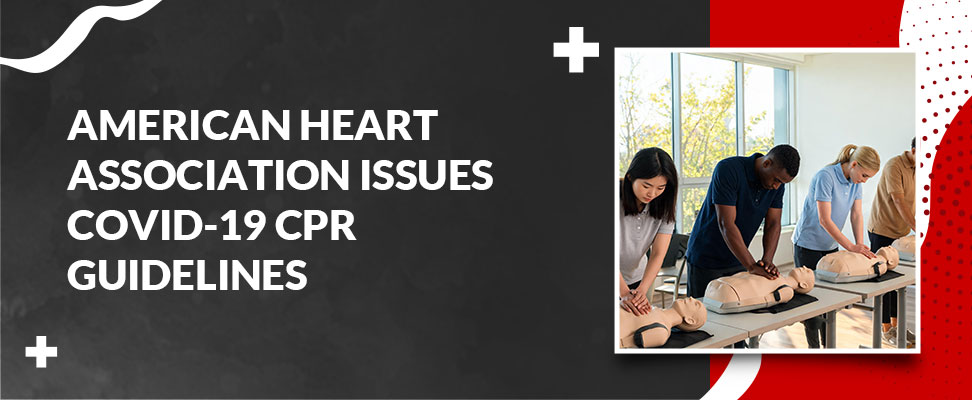
American Heart Association Issues COVID-19 CPR Guidelines

The American Heart Association (AHA) issued interim cardiopulmonary resuscitation (CPR) guidelines that apply during the COVID-19 pandemic. The AHA recommended bystanders and lay rescuers everywhere — from home caregivers to sailors learning CPR onboard ships — administer “hands only” CPR without mouth-to-mouth ventilation to limit exposures to the SARS-CoV-2 virus that causes COVID-19.

Style Snapshot

  • In response to the COVID-19 pandemic, the American Heart Association (AHA) issued new CPR guidelines emphasizing “hands-only” CPR for bystanders to reduce exposure to the virus. For healthcare workers and EMS personnel, the guidelines stress the importance of wearing PPE, using mechanical CPR devices, and employing additional precautions like video laryngoscopy to reduce the risk of infection during resuscitation efforts.

Those administering CPR as first aid also should consider covering their own and the cardiac arrest victim’s nose and mouth with a face mask or cloth to reduce the likelihood of disease transmission. Rescuers should use an automated external defibrillator (AED), if one is available, because defibrillation is not expected to generate aerosol particles. Staying current on these guidelines is easy with a SimpleCPR online certification course.

Learn CPR Online

The risks of infection can be even higher when administering CPR in a healthcare facility.

Healthcare workers already are at the highest risk of acquiring SARS-CoV-2, according to the AHA, and administering CPR creates additional risks:

  • CPR can involve a number of aerosol-generating procedures that include performing chest compressions, providing positive-pressure ventilation, and establishing an advanced airway through intubation;
  • Resuscitation can require providers to work in close proximity to one another and the patient; and
  • The urgency to resuscitate a patient in cardiac arrest can result in lapses in infection-control protocols.

The AHA recommended additional precautions for emergency medical services (EMS) technicians and healthcare workers. Both EMS personnel and healthcare workers should don personal protective equipment (PPE) to guard against contact with both airborne and droplet particles before entering a patient room or scene of a cardiac arrest. Only essential personnel should be allowed in the room or on the scene.

EMS personnel and healthcare workers should protect themselves and their colleagues from unnecessary exposure to confirmed or suspected COVID-19 infections, according to the AHA.

Healthcare facilities should consider replacing manual chest compressions with mechanical CPR devices to reduce the number of rescuers required in a room. Intubation involves a high risk of aerosolization, but a closed-loop ventilation system has a lower risk of aerosolization than other ventilation methods.

Healthcare workers should use a bag mask with a tight seal and an attached high-efficiency particulate air (HEPA) filter before intubation or if intubation must be delayed. Healthcare workers also should consider using video laryngoscopy to reduce exposure to aerosolized particles during intubation.

The AHA, in collaboration with the American Academy of Pediatrics, American Association for Respiratory Care, American College of Emergency Physicians, American Society of Anesthesiologists, and Society of Critical Care Anesthesiologists, with the support of the American Association of Critical Care Nurses and National EMS Physicians, compiled the interim guidelines.

The National Safety Council (NSC) announced its support for and recommendation of the interim CPR guidelines, reinforcing why first aid certification is important for students and workers alike who may need to respond in an emergency.

Occupational Safety and Health Administration (OSHA) standards require employers to provide medical services and first aid, and some include requirements for employee training in CPR.

OSHA’s general industry medical services and first-aid standard (29 CFR 1910.151) requires that employers have personnel trained in first aid but does not contain a specific requirement for CPR training. Voluntary guidelines recommend that employers have personnel trained in providing CPR and the use of AEDs, such as through a Healthcare Provider BLS certification course.

Other standards do have CPR training requirements. For example, the electric power generation, transmission, and distribution (1910.269); logging operations (1910.266); and permit-required confined spaces standards (1910.146) all have requirements for employee CPR training, underscoring the importance of taking BLS training for workers in high-risk occupations.

Article Source: https://ehsdailyadvisor.blr.com/2020/04/american-heart-association-issues-covid-19-cpr-guidelines/

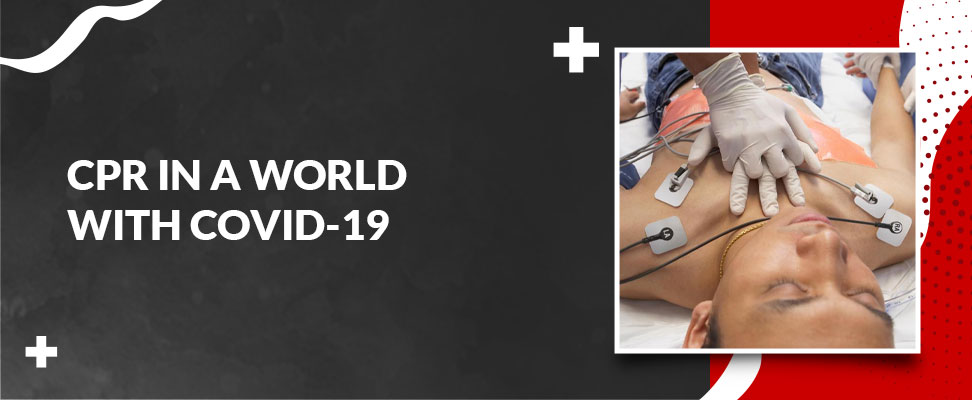
CPR in a World with COVID-19

Style Snapshot

  • Performing CPR during the COVID-19 era requires balancing life-saving action with infection risk reduction. SARS-CoV-2 spreads through the air, and CPR can generate aerosols. Following the AHA’s COVID-19 interim guidelines, rescuers should focus on safety—using personal protective equipment (PPE), minimizing exposure, and utilizing mechanical or filtered ventilation devices when possible. Standard CPR remains vital for non-COVID cases, but added precautions protect both rescuers and patients.

Cardiopulmonary resuscitation stands out as an inherently risky activity in the COVID-19 era: SARS-CoV-2 spreads from person to person through the air, and CPR involves many steps that could aerosolize the virus.

However, healthcare workers and bystanders can take precautions to protect themselves while helping others, as outlined in “interim guidance” recently published in Circulation — precautions worth understanding alongside the broader question of why learn CPR in the first place.

Prior to the pandemic, survival from cardiac arrest had steadily improved thanks to prompt use of measures like chest compression and defibrillation. COVID-19 now requires taking a fresh look at “established processes and practices,” Dana P. Edelson, MD (University of Chicago, IL), and colleagues say. “The challenge is to ensure that patients with or without COVID-19 who experience cardiac arrest get the best possible chance of survival without compromising the safety of rescuers, who will be needed to care for future patients.”

Their practical advice—covering adult, pediatric, and neonatal resuscitations in patients with suspected or confirmed COVID-19 infection, for both in-hospital and out-of-hospital cardiac arrest—arises from a team effort by the American Heart Association (AHA) in collaboration with the American Academy of Pediatrics, the American Association for Respiratory Care, the American College of Emergency Physicians, the Society of Critical Care Anesthesiologists, and the American Society of Anesthesiologists, with the support of both the American Association of Critical Care Nurses and National EMS Physicians.

“There’s a reason why we had eight organizations be a part of this. Part of that is because there’s a very small knowledge base right now for how to treat COVID patients and a lot of [that knowledge] is based on things that are literally being published hourly, coming out of China, Italy, France, and other countries,” Comilla Sasson, MD, PhD (University of Colorado Hospital, Denver), told TCTMD. Sasson, who co-authored the document along with 26 other experts, is an emergency medicine physician and the AHA’s vice president for emergency cardiovascular care science and innovation.

“What we tried to do was to take the best-available evidence, for which there is very limited data, combined with what we know from prior infectious disease outbreaks like SARS and MERS, and then really try to figure out [the] delicate balance of making sure that we are trying to optimize patient survival but at the same time being very mindful of exposure risks to providers as well,” she explained.

For the first time, CPR recommendations are calling for clinicians to take a pause and ensure safety before proceeding, Sasson pointed out. “Healthcare providers are a limited, scarce resource, and we have to make sure that their safety is paramount, especially in an infectious disease like this.”

Reduce Exposure, Limit Spread

The document emphasizes three main principles, explaining their rationale and offering specific strategies to achieve them: reduce provider exposure to SARS-CoV-2, prioritize oxygenation and ventilation methods that can lower aerosolization risk, and—for each unique patient and setting—weigh whether it is appropriate to start or continue CPR.

When COVID-19 is a concern, healthcare workers are encouraged to don personal protective equipment prior to initiating CPR and limit the number of personnel present when it occurs. Mechanical CPR devices also can reduce exposure. To limit aerosolization, the right tools can help, such as using a bag-mask device with a HEPA filter and a tight seal; the document also stresses intubation and ventilation of the patient.

Decisions over whether to pursue CPR must be done carefully, though “it is reasonable to consider age, comorbidities, and severity of illness,” according to the guidance.

“Cardiopulmonary resuscitation is a high-intensity team effort that diverts rescuer attention away from other patients. In the context of COVID-19, the risk to the clinical team is increased and resources can be profoundly more limited, particularly in regions that are experiencing a high burden of disease,” Edelson et al observe. “While the outcomes for cardiac arrest in COVID- 19 are as of yet unknown, the mortality for critically ill COVID-19 patients is high and rises with increasing age and comorbidities, particularly cardiovascular disease.”

Importantly, for patients who are COVID-19 negative or aren’t thought to have the disease, “cardiac arrest resuscitations should proceed according to the standard algorithms,” they stress.

Some good news: CPR training is available online. In these uncertain times, it is more important than ever to take measures to insure the safety of your loved ones.

For the entire article, please see the source: https://www.tctmd.com/news/cpr-covid-19-keep-safe-setting-cardiac-arrest