Author Archives: Stephen Huffman

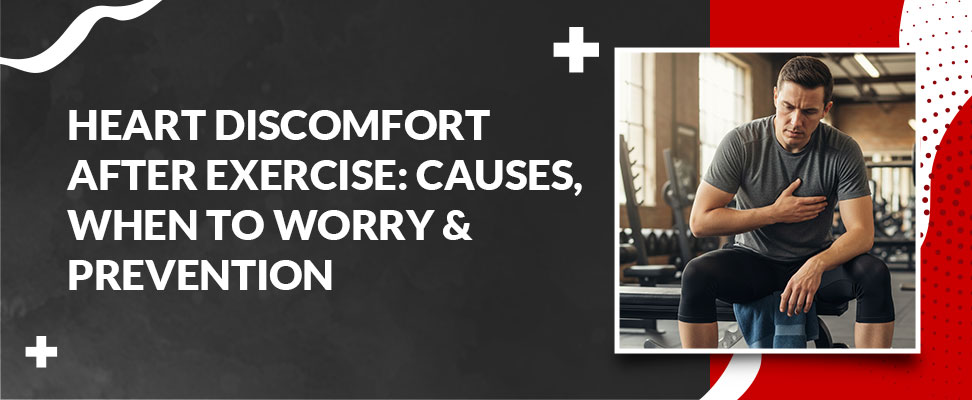
Heart Discomfort After Exercise: Causes, When to Worry & Prevention

You finish a workout feeling proud, then a strange sensation shows up in your chest. It might be a pinch, pressure, flutter, tightness, or a heartbeat that feels “off.” That moment can be unsettling, because the chest is where we instinctively worry about the heart. The good news is that many cases are explainable and not dangerous, especially when symptoms are brief and repeatable. The tricky part is knowing when it is a normal post-workout response and when it is a warning sign. Let us find out about the common causes, what “red flags” feel like, and how to reduce the chances of it happening again.

Key Takeaway

  • Heart discomfort after exercise is often caused by non-cardiac factors like muscle strain, dehydration, reflux, or anxiety. However, persistent pressure, radiating pain, irregular heartbeat, or symptoms paired with dizziness or shortness of breath may signal a cardiac issue and require immediate evaluation. Knowing the difference between common post-workout sensations and true red flags can help you respond appropriately and train safely.

What Is Post-Exercise Heart Discomfort?

Post-exercise heart discomfort can describe several sensations, including pain, heaviness, squeezing, burning, sharp stabs, or a “fluttery” feeling in the chest. You may also notice post-exercise chest tightness, an irregular skipped beat, or a rapid heartbeat after a workout that takes longer than expected to subside.

It helps to separate the two buckets. The first is cardiac, meaning the sensation originates from the heart or blood vessels, such as angina during exercise or an arrhythmia that occurs after exercise. The second is non-cardiac, meaning the chest feels uncomfortable, but the source is not the heart, such as musculoskeletal chest pain, reflux, or breathing-related problems. The challenge is that non-cardiac chest pain can mimic heart problems closely, which is why patterns, triggers, and associated symptoms matter.

Common Non-Cardiac Causes

Musculoskeletal Strain

Hard training can irritate the muscles, joints, and cartilage around the ribs and sternum. A heavy bench press session, dips, push-ups, or intense twisting can lead to chest wall muscle strain that hurts more when you move, press on the area, cough, or take a deep breath. This often presents as musculoskeletal chest pain that is localized and reproducible. Another common culprit is costochondritis, which is inflammation where the ribs meet cartilage near the breastbone. It can create sharp or aching exercise-induced chest pain that changes with posture, shoulder position, or touch. If your chest pain post-exercise worsens with specific movements or you can point to one exact spot, musculoskeletal causes move higher on the list.

GERD and Acid Reflux

Reflux is well known for mimicking heart pain. During intense effort, abdominal pressure rises, breathing gets heavier, and swallowed air can increase, pushing stomach contents upward. That can cause burning behind the breastbone, burping, a sour taste, or discomfort that worsens when bending forward. If symptoms appear after running, cycling, or workouts that include burpees, heavy squats, or intense bracing, acid reflux exercise becomes more likely. GERD chest pain can feel like pressure or tightness, not just classic heartburn, and it often relates to meal timing and acidic drinks.

Exercise-Induced Bronchoconstriction

Breathing issues can feel like heart issues because both create chest discomfort. With exercise-induced asthma, the airways tighten during or after exertion, causing wheezing, coughing, and post-exercise chest tightness. Cold air, pollution, dry indoor air, or high pollen counts can increase the likelihood.

Dehydration and Electrolyte Imbalance

When fluid levels drop, blood volume can decrease, and the heart may beat faster to maintain steady output. This can feel like exercise, accompanied by symptoms such as heart palpitations, lightheadedness, or a thumping heartbeat. Heavy sweating or low fluid intake can also contribute to an electrolyte imbalance, which may manifest as twitching, cramping, fatigue, and a fluttery pulse.

Anxiety and Panic Attacks

Anxiety can trigger chest tightness, tingling, fast breathing, stomach upset, and a pounding heart. After exercise, adrenaline levels remain high, allowing sensations to feel more intense. Anxiety can mimic chest pressure from exercise and cause a rapid heartbeat after a workout, especially when fear fuels the stress response.

Potential Cardiac Causes: When to Be Concerned

Stable Angina

Stable angina occurs when the heart muscle temporarily receives less oxygen-rich blood, often due to narrowed coronary arteries. Angina during exercise typically feels like pressure, heaviness, squeezing, or tightness in the center of the chest and improves with rest. It may also show up in the jaw, neck, shoulder, or left arm. A key clue is predictability, which appears at similar effort levels and then eases soon after stopping.

Heart Attack

A heart attack is an emergency and can start during or after exertion. Heart attack symptoms exercise often include crushing or heavy chest pressure that does not ease with rest, pain spreading to the arm, back, jaw, or neck, plus sweating, nausea, vomiting, faintness, or severe shortness of breath. If you suspect it, treat it as if it were chest pain and call 911 right away. Do not drive yourself or wait, and once the emergency has passed, following guidance on foods to eat and avoid during heart attack recovery can support your long-term healing.

Arrhythmias

An arrhythmia is an abnormal heart rhythm that can feel like skipped beats, fluttering, pounding, or sudden racing. Mild exercise-induced heart palpitations may be harmless, such as extra beats like PVCs after exercise or PACs after a workout, often triggered by fatigue, stress, dehydration, or stimulants. More concerning patterns include sustained fast or irregular rhythm, dizziness, chest discomfort, or breathlessness that feels disproportionate to the effort or recovery.
Pericarditis and Myocarditis

Inflammation around the heart can cause sharp chest pain that worsens with deep breaths, coughing, or lying flat. Pericarditis exercise discomfort may flare because a higher heart rate increases irritation, and many people feel better sitting up and leaning forward. Myocarditis after exercise is an inflammation of the heart muscle, sometimes following a viral illness, and may cause chest pain, fatigue, shortness of breath, and palpitations, requiring evaluation.

Hypertrophic Cardiomyopathy

Hypertrophic cardiomyopathy involves the abnormal thickening of the heart muscle and can increase the risk during intense exertion, especially in younger athletes. Hypertrophic cardiomyopathy exercise symptoms may include exertional chest pain, fainting or near-fainting, unexplained shortness of breath, or palpitations. Some people also notice reduced performance or dizziness during strenuous efforts. A family history of sudden death, fainting with exercise, or known cardiomyopathy increases urgency to seek medical testing.

Why Does My Heart Feel Weird After Exercise?

That “weird” feeling often comes down to three things: rhythm, recovery, and triggers. Rhythm-wise, brief extra beats, such as PVCs after exercise or PACs after a workout, can occur when adrenaline is high and your body is transitioning from effort to rest. Many people notice them most during the cool-down or when they suddenly sit down.

Recovery-wise, your resting heart rate post-run may take longer to normalize if you are underslept, underfueled, or overtrained, or fighting off illness. If your heart rate stays higher for longer than usual, it can feel like the heart is “working overtime,” even if the rhythm is regular.

Trigger-wise, caffeine, nicotine, pre-workout stimulants, dehydration, and stress can all make sensations louder. That is why hydration tips, exercise, and innovative use of stimulants matter. It is also worth noting that endurance athletes have been reported to have a 2–to 10-times higher risk of AFib compared with the general population. This does not mean that most runners will develop AFib, but it does explain why persistent rhythm symptoms in high-volume training deserve attention.

Can Your Heart Get Sore After Exercise?

Most of the time, the heart muscle itself does not get “sore” in the way your quads do. When someone says their heart feels sore, the sensation is usually coming from the chest wall. A chest wall muscle strain can ache for days after heavy pressing, intense intervals, or new movements. You may also experience tenderness along the ribs or sternum, especially with exercises that involve the costochondritis area.

That said, soreness-like chest discomfort can sometimes reflect inflammation, such as pericarditis, which is characterized by exercise pain that changes with position and breathing. It can also reflect reduced blood flow, such as angina during exercise, where discomfort feels like pressure rather than a pulled muscle. The easiest self-check is reproducibility. If pressing on a specific spot or moving your torso recreates the pain, musculoskeletal causes are likely at play. If discomfort is deep, pressure-like, or tied tightly to exertion and relief with rest, cardiac causes must be considered.

Why Does My Heart Feel Strained After Running?

Running pushes cardiac output high. Your heart rate increases, stroke volume rises, and breathing becomes rhythmic yet intense. A strained feeling can happen when your pace exceeds your conditioning, when you are dehydrated, or when breathing is restricted. If you started fast, ran hills, or trained in heat, the heart may feel like it is “working hard” even after you stop.
Dehydration make the blood more concentrated and reduce the circulating volume, contributing to a fluttering heart after running or a lingering rapid heartbeat after a workout. That is where dehydration, chest pain, and an electrolyte imbalance work out pattern sometimes overlap, especially if you also feel cramps or weakness.

Breathing limitations can also be the driver. If exercise-induced asthma flares, you may experience chest tightness and interpret it as heart strain, even though it is actually due to airway constriction. Finally, underlying conditions such as anemia, thyroid issues, or heart disease can make moderate runs feel unusually challenging. If your perceived effort jumps suddenly at paces that used to feel easy, it is worth evaluating.

What Does Exercise-Induced AFib Feel Like?

AFib often feels different from a single skipped beat. People describe it as a chaotic or fluttering rhythm that persists, with a heart rate that can be fast and irregular. You may experience exercise-induced heart palpitations that persist during the cool-down, accompanied by disproportionate shortness of breath, lightheadedness, chest discomfort, and a sudden decline in performance.

Some feel a vibrating sensation in the chest or throat. Others notice fatigue that hits quickly, as if their engine cannot find a steady gear. If your pulse feels irregular when you check it, or your watch shows a sudden, sustained jump that does not match effort, that is a clue. Remember the earlier point that endurance athletes have been reported to carry a 2 to 10× higher risk of AFib than the general population, which makes persistent symptoms in high-mileage training something to take seriously rather than ignore.

Red Flags and When to Seek Help

Treat specific patterns as emergencies, not something to “wait out.”
If you feel crushing pressure, a heavy squeezing sensation, or chest pressure that does not ease with rest, get help fast. The same is true if discomfort spreads to the arm, jaw, neck, or back, or is accompanied by sweating, nausea, vomiting, fainting, confusion, or severe shortness of breath.

That is clearly when to call 911 for chest pain. Seek urgent care if you develop new chest discomfort with minimal exertion, a racing heartbeat that stays fast and irregular, or exercise heart palpitations paired with dizziness or near-fainting. If the person becomes unresponsive while you wait for help, having taken an Adult CPR + AED course means you’ll be ready to start compressions immediately.

If symptoms are mild but recur frequently, especially when they coincide closely with physical exertion, schedule a medical evaluation.

Many cases end up being non-cardiac chest pain, like reflux, but the goal is to rule out dangerous causes first and then manage what is most likely.

Diagnosis and Next Steps

A clinician will start by mapping the details of your symptoms.
They will ask about the discomfort, including what it felt like, where it was located, how long it lasted, what triggered it, what relieved it, and whether it radiated.
They will also review risk factors, family history, medications, supplements, caffeine or pre-workout use, sleep patterns, and any recent illnesses.

Testing often begins with an ECG to evaluate the rhythm and possible strain, along with blood work if there is concern for heart injury or inflammation. An echocardiogram can be used to assess the structure and pumping function of the heart.

If symptoms occur with exertion, a stress test can help evaluate exercise-induced chest pain and blood flow during higher workloads.

When rhythm symptoms lead the story, a Holter or event monitor may capture arrhythmia after exercise episodes in daily life.

If breathing symptoms are noticeable, lung function testing may help assess exercise-induced asthma. If reflux seems likely, the plan may focus on timing meals and trialing acid control.

Prevention and Management Tips

Prevention is about making workouts predictable for your heart, lungs, and chest wall. Begin with a gradual warm-up to ensure your system ramps up smoothly, and it also helps to build daily habits around heart-healthy eating, such as using a grocery list for a healthy family to keep better food choices on hand.

Use warm-up tips, such as a few minutes of easy cardio followed by gentle mobility that opens the ribcage and shoulders, which can help reduce musculoskeletal chest pain and limit sudden heart-rate spikes.

Hydration is another cornerstone. Follow hydration tips that match your sweat rate and climate. For longer or hotter sessions, consider including electrolytes, especially if you are prone to cramps, experience heart palpitations, or exhibit signs of electrolyte imbalance during workouts. It’s also worth remembering how sugar is ruining your health in ways that go beyond exercise, so keeping sugary drinks and snacks in check benefits your heart over the long run.

If reflux is a pattern, avoid large meals close to training and limit acidic, carbonated, or very fatty foods before runs to reduce acid reflux exercise and GERD chest pain.

For runners, build volume gradually and avoid hard intervals when sick or unusually fatigued to prevent chest pain while running.

Finally, be cautious with stimulants, since caffeine and pre-workouts can amplify PVCs after exercise, PACs after workout, and a lingering rapid heartbeat after workout.

Wrapping Up

If you notice heart discomfort after a workout, treat it like data, not drama. Look for patterns, including what triggers it, what relieves it, and whether it comes with red flags such as radiating chest pain after exercise, sweating, faintness, or severe shortness of breath. When in doubt, get checked, because clarity beats guessing. And if you ever witness a collapse at the gym or on a run, knowing CPR can change the outcome. Take a minute to check out Simple CPR and learn the skills that help you act fast when seconds matter.

Heartsaver vs BLS- Which CPR Certification Is Right for You?

CPR training is a critical skill, especially to combat any emergency or unexpected situation. With nearly 356,000 out-of-hospital cardiac arrests occurring annually in the U.S., and a staggering ~90% fatality rate, the importance of CPR cannot be overstated (Heart Association, 2023). The difference between life and death often comes down to whether bystanders are trained to act quickly.

Key Takeaway

  • Heartsaver and BLS are both CPR certifications, but they serve different audiences. BLS (Basic Life Support) is designed for healthcare professionals and includes advanced skills like team-based resuscitation and bag-valve-mask use. Heartsaver is intended for lay rescuers, workplace staff, and community members, focusing on single-rescuer CPR, AED use, and optional first aid. Your job role and regulatory requirements determine which certification you need.

Bystander CPR was performed in just 44.7% of out-of-hospital cardiac arrests in 2021, underscoring the need for widespread Heartsaver training (Heart Association, 2024). Whether you’re a layperson or a healthcare professional, proper CPR certification is vital. This article will compare Heartsaver vs BLS, helping you decide which CPR course best suits your needs and goals. Understanding the distinctions between these certifications could be the key to saving a life in a critical moment.

What Is Cardiopulmonary Resuscitation (CPR)?

Cardiopulmonary Resuscitation (CPR) get performed if someone’s heart stops beating or they stop breathing. It combines chest compressions alongside rescue breaths to keep up blood circulation and oxygen supply until professional medical help arrives.

CPR plays a critical role in cardiac arrest situations, as immediate action can double or even triple the chances of survival. CPR helps prevent permanent damage during those crucial minutes before advanced care is available by keeping oxygen-rich blood flowing to vital organs like the brain and heart. Both trained professionals and bystanders can perform CPR, though training improves effectiveness.

Different certification levels, such as Heartsaver vs BLS, address specific audiences. Heartsaver courses are designed for the general public, while Basic Life Support (BLS) is tailored for healthcare providers who require advanced resuscitation skills — and since both are AHA programs, it’s also worth knowing how the American Red Cross compares to the American Heart Association. Regardless of the training level, CPR is a vital skill that empowers individuals to act swiftly in life-threatening emergencies.

Understanding BLS (Basic Life Support)

Before diving into the details, it’s essential to recognize that Basic Life Support (BLS) builds upon CPR certification by equipping healthcare professionals with advanced lifesaving techniques, teamwork strategies, and medical equipment use- skills that go beyond the scope of Heartsaver CPR or Heartsaver First Aid training.

Definition and Purpose

Basic Life Support (BLS) is an advanced form of CPR designed for healthcare environments. Unlike general CPR certification, BLS emphasizes rapid recognition of cardiac arrest, high-quality chest compressions, and effective use of devices like bag-valve masks. It ensures providers can deliver coordinated care during emergencies, highlighting the difference between the BLS vs Heartsaver cost in training.

Target Audience

BLS is essential for medical professionals and first responders. Physicians, nurses, paramedics, emergency medical technicians, dentists, and hospital staff are typically required to hold active Basic Life Support certification. Unlike Heartsaver CPR courses for the public, BLS is mandated explicitly in healthcare settings where advanced interventions are frequently needed.

Course Content

BLS course material includes adult, child, and infant CPR techniques, plus training in two-rescuer scenarios. Participants learn to use bag-valve-mask (BVM) devices, maintain airway management, and practice effective team dynamics. Compared to Heartsaver First Aid, BLS courses offer broader, advanced skills critical for handling complex emergencies in clinical environments.

Format & Duration

A typical Basic Life Support course lasts 3-4 hours, depending on the delivery format. Options include traditional in-person classes or blended learning that combines online modules with hands-on skills assessments. This flexibility allows busy professionals to pursue CPR certification while effectively managing their demanding healthcare schedules.

Certification & Renewal

BLS certification involves written testing and hands-on skills evaluation to ensure competency. Once earned, certification is generally valid for two years. Renewal requires recertification courses to stay current with the latest guidelines. Compared to Heartsaver CPR training, BLS is more intensive but crucial for maintaining clinical readiness.

Understanding Heartsaver Courses

Unlike Basic Life Support, which is tailored for healthcare providers, the American Heart Association’s Heartsaver programs are designed for everyday people. These courses provide accessible CPR certification and first aid skills, allowing non-medical individuals to step in during emergencies, with training aligned to workplace and community needs.

Definition and Purpose

The AHA’s Heartsaver suite focuses on equipping lay rescuers with essential emergency response skills. Covering Heartsaver CPR, AED use, and Heartsaver First Aid, the courses emphasize prompt action before professional help arrives. Unlike BLS, they focus on simplified techniques suitable for non-clinical environments, often at a lower BLS vs Heartsaver cost.

Target Audience

Heartsaver courses are ideal for teachers, coaches, childcare workers, corporate staff, fitness trainers, and anyone needing CPR certification for workplace compliance or personal preparedness. Unlike Basic Life Support programs for healthcare workers, Heartsaver CPR and First Aid are tailored for individuals without medical backgrounds who still wish to respond effectively in emergencies.

Course Variants

The AHA offers several Heartsaver course options- Heartsaver CPR AED, which focuses on resuscitation and defibrillator use Heartsaver First Aid. It covers injuries, medical emergencies, and environmental concerns. On the other hand, the combined Heartsaver First Aid CPR AED provides comprehensive training. Each course offers practical, simplified approaches compared to Basic Life Support, making lifesaving skills more widely accessible.

Format & Duration

Heartsaver training is flexible and available online, in-person, or in blended formats. Depending on the course, it usually takes 2–5 hours to complete. This versatility makes it convenient for individuals and organizations, offering easier access to CPR certification than the more intensive Basic Life Support courses required in clinical practice.

Certification & Renewal

Certification is awarded after successful skills testing and/or knowledge checks, with cards valid for two years. Renewal is required to maintain an active status and align with updated AHA guidelines. Compared to Basic Life Support, Heartsaver CPR and Heartsaver First Aid certifications are less intensive, but still vital for workplace readiness.

Key Differences Between BLS and Heartsaver

While both programs provide CPR certification, the choice between Basic Life Support and Heartsaver depends on who you are and where you plan to use these skills. Understanding differences in BLS course content, Heartsaver course duration, and healthcare CPR requirements ensures you select the proper training for your professional or personal needs.

Key Differences Between BLS and Heartsaver

Audience & Use Cases

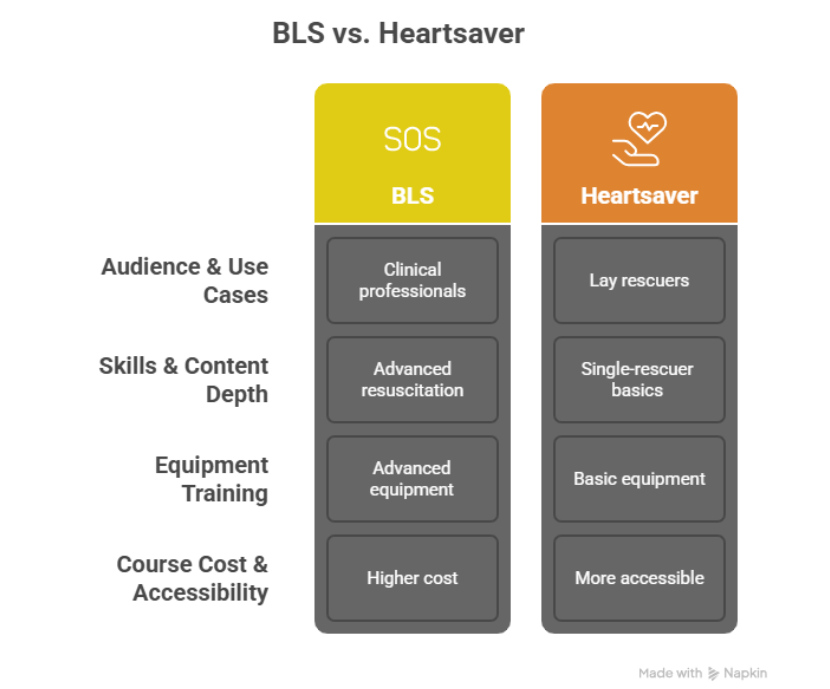
Basic Life Support is designed for medical professionals and first responders who must meet healthcare CPR requirements in hospitals, clinics, and emergency services. Heartsaver, on the other hand, targets lay rescuers such as teachers, corporate employees, coaches, or caregivers. The primary difference lies in audience and application. BLS is for clinical use, while Heartsaver for public or workplace emergencies.

Skills & Content Depth

BLS course content emphasizes advanced resuscitation skills, such as two-rescuer CPR, airway management, and team-based dynamics. It focuses on delivering high-performance CPR in complex clinical settings. Heartsaver courses, however, concentrate on single-rescuer basics—teaching how to recognize emergencies, perform chest compressions, and use an AED. The training depth differs, reflecting healthcare vs non-medical needs.

Equipment Training

BLS certification involves hands-on practice with advanced equipment such as bag-valve masks (BVMs), emphasizing airway control and coordinated team intervention. By contrast, Heartsaver primarily trains participants on barrier devices like face shields and pocket masks, combined with AED usage. These differences highlight the distinction between professional healthcare CPR requirements and community-focused readiness.

Course Cost & Accessibility

When comparing BLS vs Heartsaver cost, BLS programs are often priced slightly higher because of the advanced skills and equipment training in BLS course content. Heartsaver course duration is generally shorter, making it more accessible to the public. Both are widely available through in-person and blended options, ensuring flexibility for diverse learners.

Which Certification Should You Choose?

Selecting between Basic Life Support and Heartsaver training depends on your career path, workplace standards, and personal goals. By comparing BLS course content, Heartsaver course duration, and specific healthcare CPR requirements, you can make an informed decision that aligns with professional and personal needs.

For Healthcare Professionals

Healthcare workers such as doctors, nurses, and EMTs must complete Basic Life Support training to meet healthcare CPR requirements. The BLS course content emphasizes team-based resuscitation, bag-valve-mask usage, and advanced airway support. Since these skills are essential for hospital and clinical settings, BLS certification remains mandatory for professionals managing life-threatening emergencies daily.

For Non-Healthcare Professionals

For teachers, fitness instructors, childcare providers, or office staff, Heartsaver CPR or Heartsaver First Aid courses are typically sufficient. Dental assistants often ask which CPR class to take for their role, and the answer usually falls into this same Heartsaver category. With a shorter Heartsaver course duration and more straightforward content than BLS, these programs focus on single-rescuer CPR, AED operation, and basic first aid. They provide accessible CPR certification tailored to non-medical roles in community or workplace settings.

For Regulatory/Job Requirements

Specific jobs require CPR certification to meet regulatory standards, such as OSHA compliance for workplace safety. Basic Life Support is the norm in healthcare due to advanced patient care responsibilities, while industries like childcare, fitness, and corporate offices often mandate Heartsaver CPR or Heartsaver First Aid. Choosing depends on the role’s legal and organizational requirements.

For Personal Preparedness

Individuals seeking to protect loved ones at home or respond to emergencies in their community benefit most from Heartsaver training. With flexible Heartsaver course duration and practical skills in CPR, AED use, and first aid, these courses equip everyday people to act confidently in crises—without the advanced focus of BLS course content needed in clinical care.

Frequently Asked Questions

What is the difference between BLS and Heartsaver?

BLS is designed for healthcare professionals, covering advanced CPR, team-based resuscitation, and equipment like bag-valve masks. Heartsaver, by contrast, is intended for lay rescuers and focuses on single-rescuer CPR, AED use, and optional first aid. The choice depends on whether clinical or community-level skills are required.

Can a BLS instructor teach Heartsaver?

Yes, an AHA-certified BLS Instructor can also teach Heartsaver courses. Since BLS is a higher credential, instructors are qualified to deliver Heartsaver CPR and First Aid programs, provided they are aligned with an authorized AHA Training Center and use the approved course materials for proper certification delivery.

Is it better to be CPR or BLS certified?

BLS certification is considered advanced CPR, and it is required for healthcare professionals due to its emphasis on team-based care and advanced techniques. Heartsaver CPR AED is sufficient for laypersons or workplace compliance. The decision depends on your profession, regulatory requirements, and whether you need healthcare-level or general community-level skills.

Is Heartsaver First Aid the same as CPR?

No, Heartsaver First Aid is different from CPR training. It addresses medical emergencies such as bleeding, burns, allergic reactions, and shock, while Heartsaver CPR AED focuses on resuscitation and defibrillator use. Learners may take them separately or combine both for a comprehensive workplace and personal preparedness course.

Trends in CPR Certification

CPR certification has evolved significantly, with blended learning becoming one of the most popular approaches. Programs like HeartCode® for BLS and Heartsaver online courses allow learners to complete theoretical components independently, followed by in-person skills sessions for hands-on practice. This model offers the best of both worlds. Flexibility and reliability are provided for busy professionals through supervised skill testing. Healthcare providers often choose HeartCode® BLS to meet rigorous requirements, while community members benefit from Heartsaver online programs for workplace or personal preparedness. Adopting blended learning reflects modern needs, ensuring broader accessibility and consistency in lifesaving education.

Finding and Registering for a Course

Choosing the right CPR certification program starts with identifying your needs for healthcare CPR requirements or community-level skills. Once decided, learners can easily register online through the American Heart Association or authorized training centers for both BLS and Heartsaver programs.

Online vs In-Person

Online CPR certification offers flexibility, self-paced study, and convenience, but requires an in-person skills test for validity. In-person training ensures immediate feedback, peer interaction, and direct practice under instructor supervision. Classroom-based BLS course content is often preferred for healthcare providers, while lay rescuers may benefit from online or blended Heartsaver course duration options.

Blended Learning Options

Blended courses combine online modules with hands-on practice, ensuring learners know theory before demonstrating skills. This approach saves time, increases accessibility, and allows participants to balance training with work or personal commitments. Both HeartCode® BLS and Heartsaver online use this model for effective certification.

Cost Comparison

BLS vs Heartsaver cost varies by location and provider. Heartsaver courses are typically less expensive, ranging from $60 to $100, while BLS courses cost slightly more due to advanced training. Despite higher fees, BLS offers greater professional value for healthcare providers, while Heartsaver provides affordable and essential certification for the general public.

Wrapping up

Choosing between Heartsaver and BLS depends on your role, responsibilities, and certification requirements. Basic Life Support (BLS) is essential for healthcare providers needing advanced resuscitation skills. At the same time, Heartsaver CPR and First Aid courses empower non-medical individuals to respond effectively in work, home, or community emergencies. Both pathways provide life-saving knowledge, but selecting the right one ensures you meet professional standards or personal preparedness goals.

Ready to earn your CPR certification? Check out flexible, accredited courses with SimpleCPR’s online certification today and get certified online quickly, affordably, and confidently.

Swimming Pool First Aid- Emergency Medical Response & Chemical Treatment

Swimming pool first aid is a crucial skill for the safety and well-being of swimmers. Accidents can occur anytime, and knowing how to respond effectively can make all the difference. Whether it’s a slip, a drowning incident, or an allergic reaction to pool chemicals, understanding emergency medical response and chemical treatment is essential for pool owners and lifeguards. In this article, we will learn the fundamental principles of swimming pool first aid, focusing on handling various emergencies, from physical injuries to exposure to harmful chemicals. Additionally, we will highlight the best practices for managing pool-related chemical treatments and the importance of preventative measures to reduce risks. Mastering swimming pool first aid can help save lives and ensure a safer, more enjoyable swimming experience for everyone involved.

Key Takeaway

  • Swimming pool first aid includes two areas: medical response for injuries and drowning, and chemical response for exposure to pool products and water-treatment issues. A clear action plan, a well-stocked poolside kit, and basic CPR skills help you respond fast and reduce serious outcomes.

Understanding “Swimming Pool First Aid”- Medical vs Chemical

Swimming pool first aid encompasses two vital areas: medical emergencies and chemical-related incidents. The first section focuses on physical injuries or health crises, where a well-stocked swimming pool first aid kit and knowledge of poolside emergency response are essential. Typical situations include cuts, sprains, and, most critically, drowning. In such cases, drowning CPR and immediate action are crucial to saving lives.

The second section addresses chemical emergencies due to exposure to pool cleaning agents or imbalanced water chemistry. Knowing how to handle chemical burns, irritations, or poisoning is a key aspect of swimming pool first aid. Both medical and chemical responses require preparedness, the right equipment, and a clear understanding of emergency protocols. By distinguishing these two categories, pool owners and operators can ensure they are fully equipped to handle any situation at the poolside.

Medical First Aid at the Pool

Poolside emergencies can happen unexpectedly, so it’s essential to understand how to respond to various medical situations. Prompt and effective medical care can prevent further harm and save lives. Below are the primary steps for handling common emergencies at the pool.

Emergency Response for Drowning & Near-Drowning

If a drowning or near-drowning incident occurs, call 911 immediately. Remove the victim from the water carefully, ensuring minimal movement. Begin drowning CPR with a ratio of 30 chest compressions to two rescue breaths. Keep providing CPR until professional help arrives or the person begins to breathe. Monitor vitals closely to ensure recovery.

Treating Cuts, Scrapes & Bruises

Minor injuries such as cuts, scrapes, or bruises should be cleaned first with water and mild soap to prevent infection. Apply direct pressure to stop any bleeding. Afterward, dress the wound with sterile gauze or bandages. Look for symptoms of disease, such as redness or swelling. Always have a swimming pool first aid kit ready for these injuries.

Managing Sprains, Strains & Heat Exhaustion

For sprains or strains, use the RICE method: Rest, Ice, Compression, and Elevation. Raise the injured limb to reduce swelling. For heat exhaustion, move the person to a cooler environment and encourage hydration. Get medical help if symptoms worsen or the injury involves significant pain or swelling.

Eye Injuries & Chemical Exposures

If you experience chemical exposure in the eye, flush the affected eye with clean, cool water for at least 15 minutes. If an object is embedded in the eye, do not attempt to remove it. Contact poison control and seek medical attention for chemical burns caused by enzyme-based clarifiers or other pool chemicals.

When to Call 911 or Seek Professional Help

If the injury or medical situation is severe—such as unconsciousness, heavy bleeding, difficulty breathing, or significant swelling—immediately call 911. For non-life-threatening situations like minor sprains, use sprain first aid, monitor the condition, and get professional help. Always follow Pool First Aid directions closely.

Poolside First Aid Kit Essentials

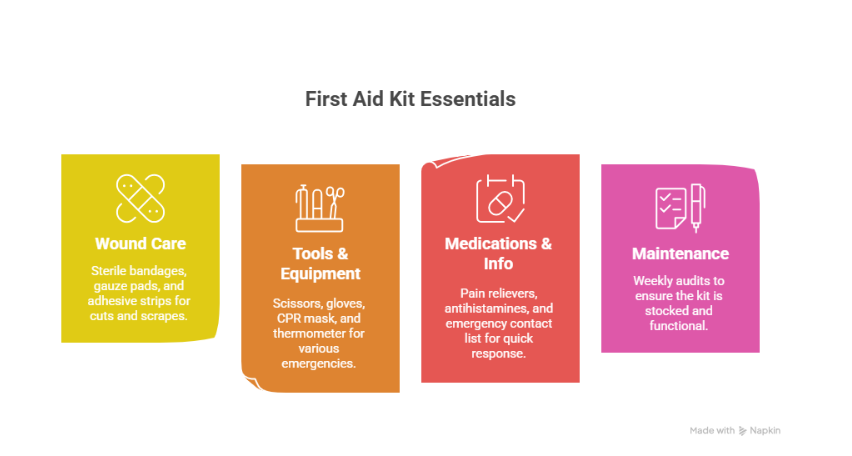
A well-stocked, waterproof, and easily accessible first aid kit — paired with a Standard First Aid certification — is crucial for handling poolside emergencies. Regular weekly audits ensure the kit remains fully stocked and that supplies are in good condition. The right tools can make all the difference during an emergency, so ensure your swimming pool first aid kit is always ready.

Poolside First Aid Kit Essentials

Wound Care & Bandages

Your swimming pool first aid kit should contain various sizes of sterile bandages, gauze pads, and adhesive strips for cuts, scrapes, and abrasions. Use these to clean wounds and apply pressure to stop bleeding. Continuously monitor for infection and be prepared to treat more serious injuries with antiseptic solutions. If an injury is severe, follow Pool First Aid directions for further care.

Tools & Equipment

Essential tools include scissors for cutting bandages, gloves for sanitation, a CPR mask for performing drowning CPR, and a thermometer to monitor body temperature, especially if someone shows signs of heat exhaustion. These tools are necessary for performing sprain first aid or addressing other poolside injuries, ensuring you’re prepared for emergencies.

Medications & Emergency Info

Your kit should include pain relievers, antihistamines for allergic reactions (such as from eye chemical exposure), and a comprehensive emergency contact list. Ensure all medications are clearly labeled and up-to-date. Keep an emergency plan with essential health information for pool guests, such as medical conditions or allergies, to guide treatment when necessary.

Maintenance & Auditing Protocol

Regular audits ensure your poolside first aid kit remains stocked and functional. Set a weekly schedule to check for expired supplies, replace used items, and verify everything works. This includes checking items like the enzyme-based clarifier or additional medical supplies for specific poolside emergencies.

Chemical “Pool First Aid- Water Treatment

An enzyme-based clarifier is a water treatment solution that breaks down organic contaminants like oils, lotions, and debris in pool water. It helps to improve water clarity and filtration, ensuring the pool is safe and pleasant for swimmers. Understanding its purpose and proper usage is key to maintaining pool health.

How It Works & Key Benefits

An enzyme-based clarifier breaks down organic matter, such as oils, dirt, and dead algae, into smaller particles that the pool filter can remove. This improves water clarity and reduces the frequency of cleaning. It also helps prevent clogged filters and uplifts the swimming experience by maintaining clean water.

Directions for Use

The recommended dosage for the enzyme-based clarifier is 2 oz per 1,000 gallons. Distribute the clarifier evenly across the pool’s surface while the circulation system runs to ensure proper mixing. Avoid pool shock during treatment, and ensure the water temperature is within the recommended range for optimal results.

How Long to Wait Before Swimming?

After applying an enzyme-based clarifier, wait at least 30 minutes before swimming to allow the treatment to mix with the water and begin working fully. This ensures the pool is free of contaminants and safe for swimmers. Always check water clarity before allowing anyone to enter the pool.

Troubleshooting Common Issues

If the pool water remains cloudy after using an enzyme-based clarifier, it may be due to improper distribution or insufficient circulation. Double-check the dosage and ensure proper water flow. If issues persist, check for an overuse of chemicals or contamination levels beyond what the clarifier can handle.

Preventive Measures & Pool Safety Protocols

Maintaining a safe swimming environment requires regular inspections, consistent staff training drills, and meticulous record-keeping. These preventive measures ensure prompt response to emergencies and help minimize accidents at the pool. Clear safety protocols are vital for creating a safe, enjoyable experience for everyone.

Lifeguard & AED Maintenance

Ensure that lifeguards are trained in CPR and AED usage, and regularly inspect and maintain the AED units. Lifeguards should undergo regular drills to stay prepared for emergencies. Ensuring that lifesaving equipment is always functional and accessible is key to adequate poolside safety and emergency response.

Bloodborne Pathogen Cleanup Kit Guidelines

A bloodborne pathogen cleanup kit should be readily available at the pool. It must include gloves, disinfectants, biohazard bags, and other essential supplies to clean up blood or bodily fluids safely. Proper protocols for using the kit are necessary for all pool users.

Consulting with risk management professionals ensures the pool complies with safety standards and regulations. Regular reviews and consultations help minimize liability and maintain a safe environment. Stay updated on local health codes, and consider periodic inspections to ensure your pool meets or exceeds all safety and sanitation requirements.

Compliance & Risk Management Consultation

Wrapping Up

Swimming pool first aid combines medical response and chemical management, ensuring safety for swimmers and maintaining healthy pool water. From handling drowning incidents to treating cuts, sprains, or chemical exposure, preparation is key. Equally important is understanding how to use enzyme-based clarifiers properly for clean and safe water. A well-stocked poolside first aid kit, trained personnel, and strict safety protocols can make all the difference in preventing accidents and saving lives. To strengthen your skills and be fully prepared, check out SimpleCPR online certification—because confidence and knowledge are the best tools in any emergency.