
Author Archives: Stephen Huffman

The Signs of Drowning: They Aren’t What You Think

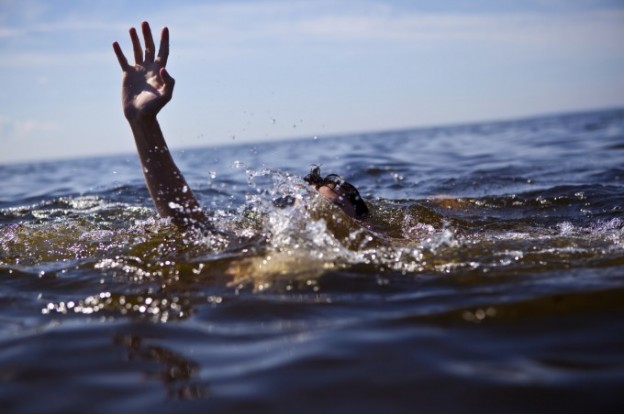
A few years ago, Slate posted a very enlightening article about identifying the signs of drowning, and they aren’t what you think. In TV and film, a drowning victim may wave their arms and shout for help, but in reality, the signs are much more subtle.

Drowning is silent. Though you might expect a drowning victim to call out for help, many victims can’t even get their heads above the water to do so. In addition, since the body is working so hard to keep breathing and stay to the surface, it’s also unlikely that a drowning victim would be able to get someone’s attention before passing out.

While many life guards are trained to identify the signs, it’s important for anyone planning to be in or near the water to be able to identify them — much like recognizing how heart attack symptoms differ in men and women can help you act fast in a different kind of emergency. Especially in a situation where there are many children and a lot of commotion, it’s very easy to misinterpret a quiet child for one that is actively drowning.

According to Slate, these are signs to look for:

  • Head low in the water, mouth at water level
  • Head tilted back with mouth open
  • Eyes glassy and empty, unable to focus
  • Eyes closed
  • Hair over forehead or eyes
  • Not using legs—vertical
  • Hyperventilating or gasping
  • Trying to swim in a particular direction but not making headway
  • Trying to roll over on the back
  • Appear to be climbing an invisible ladder

Drowning is the No. 2 cause of accidental death among children and is entirely preventable — a good reminder that many health risks, from drowning to heart disease, can be reduced through preventive habits like dieting without salt. It’s important to know the signs of drowning in order to prevent it, but it’s also important to know the life-saving skill of CPR, which you can learn in an Adult CPR + AED course.

Now that you are one step ahead of the game and can identify a drowning victim, make sure to hone up on your CPR skills with a SimpleCPR online certification, which can drastically increase the chance of living after a child or adult has been submerged in the water.
Why Learn CPR?

Style Snapshot

  • Learning CPR gives you the power to save lives. With cardiac arrest being a leading cause of death in the U.S., knowing how to respond quickly can mean the difference between life and death for someone you love. CPR training is simple, effective, and accessible online through SimpleCPR.

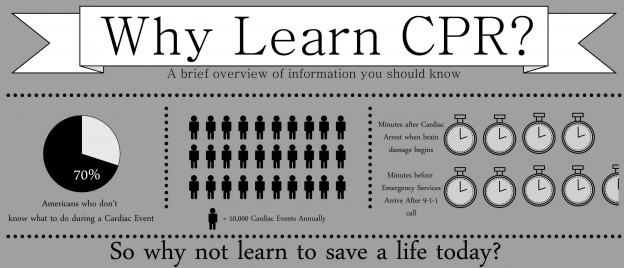
CPR infographic

(click to enlarge)

Can you believe that only 70% of the American public knows how to perform CPR. Especially considering how many people go into cardiac arrest annually, and how effective CPR can be if administered to a cardiac arrest victim, it’s a very discouraging number, especially when there are so many reasons you need BLS training beyond just cardiac arrest.

Think about it this way: in your lifetime, someone you know and love is likely to suffer from cardiac arrest and require CPR to save their life. The more people who know how to administer CPR, the more likely this person will make a full recovery. Even if you know how to do CPR, you should also encourage others to learn as well. It’s quite a useful tool when done correctly and swiftly, which is why healthcare workers pursue Healthcare Provider BLS certification to keep their skills sharp.

And learning CPR is easy peasy with Simple CPR. Just a few hours and you’ll be ready to be the local hero! ONline CPR has never been easier! Don’t be one of the 70% of Americans who can’t step in and save a life! Learn CPR with Simple CPR today!

Summer Safety and CPR

Style Snapshot

  • Summer safety requires vigilance, especially near bodies of water. Prevent drowning incidents by installing safety gates, supervising children closely, enforcing poolside safety rules, and learning CPR. CPR can make the difference between life and death in water emergencies.

During the summer, more outdoor activities occur and danger abounds. A casual swim in the lake or an accidental fall into a family pool can be fatal for small children and adults. We don’t mean to ruin your summer fun, but we do have a few tips to keep you and your family safe through the summer.

Put a gate on it.

We have read an unfortunate amount of tragic stories about drownings because a toddler wondered away for a moment and fell into a pool. In situations like that, moments can mean life or death. Putting a gate around your pool will give you some peace of mind as well as allow for children to know that the pool is unsafe for them to visit alone.

Supervise children closely near bodies of water.

A child can drown in even just a few inches of water, so it’s important that an adult is around at all times to be able to retrieve a child from the water in case of emergency. Community pools and some beaches have life guards on duty, but it’s easy for a drowning child to go unnoticed in a group setting.

Enforce speed/safety near the pool.

In addition to maintaining supervision of young children at the pool, enforcing strict rules is also vital. Children should not be allowed to run or rough house near a pool because hard surfaces make it easy for an injury or fall near the pool. Set rules early so children know the importance of pool safety.

Learn CPR

Perhaps the most important safety lesson you can have this summer is learning how to perform CPR properly. We read a news article recently about a mother who saved a stranger’s toddler in a community pool because she was the only one of the adults there who knew CPR. In fact, some of the adults were sticking their fingers down the child’s throat in hopes to get the water out. The woman, Jennifer Richardson of Boca Raton, FL, got to the child in time and began chest compressions immediately. Fortunately, the water came pouring out after chest compressions commenced and the girl made a full recovery.

CPR, when done correctly (or at all) can truly mean the difference between life and death. So, learn how to do CPR, and urge others to do the same. You never know when you’ll need to save a life.