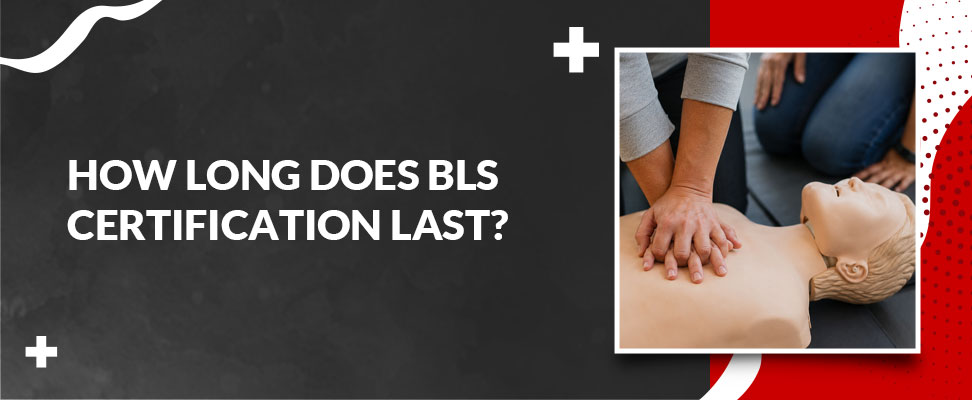
Basic Life Support (BLS) certification is valid for two years from the date you complete your course. After two years, it expires, and you must recertify to stay current. The American Heart Association no longer offers a grace period, so the safest move is to renew before the expiration date printed on your card.
Key Takeaway
- We hear from people who are months past their expiration date, hoping there is some kind of loophole. There rarely is. Below is exactly how the two year window works, when you still qualify for the shorter renewal course instead of the full one, and how to set yourself up so this question never catches you off guard again.
Key Highlights
- BLS certification is valid for two years from your course completion date, not the day you enrolled or the day your card arrived.
- The American Heart Association does not recognize an official grace period anymore. A 30 day cushion used to exist, and a lot of older articles still describe it, but it is gone.
- Renewing 30 to 90 days before your expiration date keeps you eligible for the shorter renewal course instead of the full BLS Provider course.
- Renewing early does not shorten your certification. Your new two years begin on the day you complete the renewal, so renewing ahead of schedule adds runway instead of costing you any.
- Research on CPR skill retention shows hands on competency can start fading within weeks of training, which is the real reason the certification cycle resets every two years.
- Simple CPR’s Healthcare Provider / BLS Professional CPR course is fully online, usually takes 30 to 60 minutes, and lets you print your card the moment you pass.
How Long Is BLS Certification Valid
Basic Life Support certification is good for two years from your course completion date. That rule holds across the American Heart Association and the accredited alternatives that build their training on AHA guidelines, including Simple CPR’s own Healthcare Provider / BLS Professional CPR course.
The American Heart Association issues its certification as a digital eCard. That eCard lists your completion date, an expiration date set two years out, and a unique code an employer can use to confirm your status. One detail that trips people up: AHA cards expire on the last day of the month two years from when you finished, not on the exact calendar date. Complete your course on March 14, 2024, and the card is good through March 31, 2026, not March 14. AHA’s own course card documentation spells this out directly.
The two year rule is the same whether this is your first certification or your fifth renewal. Every successful recertification resets the clock for another full two years.
When Does Your BLS Certification Actually Expire
Your expiration date is set by the day you finished your course, not the day you registered or started studying. You can confirm it in three ways.
- Check the date printed on your card or digital certificate.
- Use your provider’s certification lookup tool if one is available.
- Contact the organization that issued your course directly.
A simple system works well here. Set a reminder 90 days before your expiration date and another at 30 days. The first gives you time to compare renewal options and check what your employer actually requires. The second is your final prompt to get it done before the shorter renewal window closes for good.
BLS Renewal vs Retaking the Full Course
This is where timing actually matters. A renewal course, sometimes called recertification, is shorter and cheaper than the full initial class, but you only qualify for it if your certification has not lapsed. Once it expires, the standard requirement is to start over with the full BLS Provider course.
|
Certification Status |
What You Qualify For |
What To Do Now |
|
Current, expires in 90+ days |
Standard renewal course |
Schedule your renewal 30 to 90 days out so you keep the shorter option. |
|
Current, expires within 30 days |
Standard renewal course |
Renew now. You still qualify, but the window is closing. |
|
Expired, under current AHA policy |
Full initial BLS Provider course |
Enroll in the full course. The shorter renewal is no longer available to you. |
|
Expired, but your provider or employer allows leniency |
Sometimes a renewal course |
Get this confirmed in writing by both your provider and your employer before relying on it. |
A note on the 30 day grace period you may have read about elsewhere. It is one of the most repeated pieces of outdated information in this space. The American Heart Association did offer a short grace period in the past, and several older articles still describe it as current, but it was discontinued, and the AHA does not officially extend any grace period today. Some individual training centers and some employers still build in their own short cushion as a matter of internal policy, and that policy can vary for non-AHA certifications, so never assume you have extra time. Confirm with both your provider and your employer before your card expires, not after.
Does Renewing Early Cost You Time
No, and this is one of the more common misunderstandings about recertification. Your new two year period begins on the day you complete your renewal course, not on your old expiration date. That means renewing a month or two ahead of schedule does not shave anything off your certification. If anything, it adds a little extra runway, since your new two years start counting from a date that is earlier than your original deadline would have allowed.
Most professionals renew 30 to 60 days before their card expires for exactly this reason. There is no downside to going early, and it removes any risk of a lapse caused by a busy calendar or limited course availability.
Can BLS Certification Ever Last for Life
You may have seen offers for lifetime certification and wondered what that actually means. A BLS credential itself is never valid for life. To stay compliant and accepted by employers, it still has to be renewed on the standard two year cycle.
What a lifetime certification option actually provides is unlimited free renewals. You pay once up front and recertify at no additional course fee every cycle after that, rather than receiving a card that never expires. Simple CPR’s Lifetime Certificate works this way, and it can be a genuine savings if you renew faithfully every two years for the rest of your career. If a provider implies their card never needs renewing at all, treat that as a red flag. A card that ignores the two year standard will not reliably satisfy a healthcare employer.
Who Needs to Keep BLS Certification Current?
BLS shows up across a wide range of roles, and what happens when it lapses depends on the field.
- Healthcare professionals. Nurses, physicians, respiratory and physical therapists, dental staff, and home health aides typically need a current BLS card for employment, clinical privileges, and licensing.
- First responders and public safety. EMTs, paramedics, firefighters, and many police and security personnel must hold active certification, and in most cases cannot work in these roles with an expired card.
- Community and workplace roles. Teachers, childcare and daycare providers, coaches, lifeguards, camp staff, and workplace safety officers often need or benefit from current BLS or CPR training even when it is not strictly required.
Always check your specific employer’s policy. Some require certification from a particular provider or in a particular format, and many run automated tracking that flags an upcoming expiration before it becomes a problem. Our piece on why BLS training matters goes deeper into who benefits most from staying current.
BLS Versus CPR Certification: Are They the Same
Not exactly, and the difference matters when you are choosing a course. BLS is the more advanced, provider level credential built for healthcare workers and professional rescuers. It covers high quality CPR for adults, children, and infants, AED use, bag mask ventilation, choking relief, and team based resuscitation. A general CPR or Heartsaver course is aimed at the public and workplace responders and goes into less clinical detail. Both follow the same two year renewal cycle, but healthcare employers almost always specify BLS rather than a basic CPR card. If your employer just says CPR certification is required, it is worth asking whether they actually mean BLS, since the two are not interchangeable for most clinical roles.
Our piece on CPR vs BLS covers this comparison in full, and Heartsaver vs BLS is worth a look if you are choosing between the two for the first time.
How to Renew Your BLS Certification
Renewing is straightforward once you know your status. The process usually looks like this.
- Confirm your expiration date and check whether you still qualify for the renewal course.
- Choose a course format that fits your schedule, whether that is fully online, blended with a brief hands on check, or in person.
- Complete the coursework and pass the required exam.
- Receive your updated card, valid for another two years.
Because acceptance varies by employer and by state, it is worth confirming that your chosen format meets your workplace’s requirements before you enroll, especially if a hands on skills verification is specifically mandated for your role.
Simple CPR built its CPR Recertification Online course around this exact problem. It follows AHA and OSHA aligned guidelines, takes about 60 minutes or less, comes with unlimited free retakes, and gives you a printable card the moment you pass. If you are managing renewals for a whole team, our group rates make that considerably easier to coordinate. And if you would rather never think about a course fee again, the Lifetime Certificate option lets you pay once and recertify free every cycle after.
Keep Your Next Two Years Easy
The two year cycle is not going anywhere, and that is a good thing. It is what keeps a BLS card meaningful when an employer, a patient, or a stranger is counting on it. The only real decision is whether you handle your next renewal on your own schedule or scramble for one on someone else’s.
Simple CPR’s Healthcare Provider / BLS Professional CPR course and CPR Recertification Online program make that decision easy, with a fully online format you can finish in under an hour, unlimited retakes, and a card you can print the second you pass. Get it done now, set your 90 day reminder for next time, and you will not have to ask this question under pressure again.