




First Aid Basics – RICE Treatment
For joint or muscular injuries that do not require immediate medical attention such as sprains and strains — including a sprained ankle — RICE treatment is the most effective form of care. The term “RICE” is an acronym for the individual treatment components: Rest, Ice, Compress, Elevate. Simply remember the term “RICE” and follow the steps below to give proper RICE injury treatment each time it is needed.
Style Snapshot
- RICE treatment—Rest, Ice, Compression, and Elevation—is the go-to first aid method for sprains, strains, and minor joint injuries. When applied quickly, it reduces swelling, eases pain, and speeds up recovery. Always rest the injured area and seek medical help if swelling or discoloration worsens.
Rest:
Immediately resting the injured area for at least 24 to 48 hours is extremely important. Working through the pain or ignoring the injury will only serve to make it worse, and can sometimes cause permanent damage in extreme cases. Always listen to your body: refrain from any particular movements or activities are causing you pain, and allow the injury time to heal. You might even need to use crutches or a sling to sufficiently rest the affected area, techniques covered in more depth in a Standard First Aid certification course.
Ice:
To continue with proper RICE treatment you will need to ice the sprain or strain about every 3 to 4 hours for 20 minutes at a time. This cycle should continue for at least 48 hours following the injury. There are many different ways to ice an injury, so you should simply choose the method that is the most comfortable for you. Popular methods are: frozen bags of vegetables, an ice pack wrapped in a thin towel, or a freezer bag of ice cubes. Never ice an injury for more than 20 minutes at a time. Excessive contact with extreme cold could cause tissue damage.
Compression:
You will need to compress the area during the elevation stage. An Ace bandage is the best compression tool; simply wrap it around the affected area making sure it overlaps the elastic by one half-width. The bandage should be snug, but it should not cut off any circulation. If your fingers or toes become cold or start to tingle, re-wrap immediately using less force, and if the skin is broken, it’s worth knowing how long bloodborne pathogens can survive on a surface before reusing any wraps or equipment.
Elevate:
Lastly, make sure that you comfortably elevate the sprain or strain during this last part of the RICE treatment. Elevate for as long as possible and try to keep the injury above the level of your heart for best results.
Remember to continue RICE injury treatment for at least 48 hours following the initial sprain or strain. If the injury worsens or you notice unnatural swelling or discoloration of the area, be sure to have it immediately examined by a medical professional.
To learn more about RICE treatment and other first aid related techniques, visit SimpleCPR to take your own standard first aid course today!

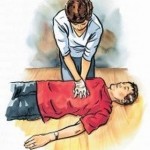

QUICK Q&A
What is the difference between CPR and BLS?
CPR is a life-saving technique involving chest compressions and rescue breaths, suitable for laypersons. BLS includes CPR along with advanced skills like airway management and AED use, intended for healthcare professionals.
Who should take CPR training?
CPR training is recommended for the general public, including teachers, coaches, and caregivers, to prepare for emergency situations.
Who should take BLS training?
BLS training is essential for healthcare providers, such as doctors, nurses, and emergency responders, to manage life-threatening emergencies effectively.
How often should CPR and BLS certifications be renewed?
Both CPR and BLS certifications should be renewed every two years to ensure skills and knowledge remain current.
Related Posts
How Long Does First Aid Certification Last? Renewal & Expiration Guide
Search "How long is a First Aid certification valid?" and you'll likely find several different answers. Some sources say one year, others say two years, and some mention three years, often referring to workplace requirements or certification standards in countries like the UK that don't apply to certifications earned in the United States or Canada. If you're looking for a […]

Be A Hero! Learn CPR. – CPR Blog
Soccer season is upon us and it’s a good time to make sure you know CPR. With dozens of kids running their little hearts out in the heat, there’s no telling what kind of emergency could happen. Most youth organizations don’t require their volunteer coaches to be CPR certified, which is why parents really need […]

Toddler Survives With CPR
When a toddler drowned in waist-high water, her mother didn’t hesitate to react. She started CPR immediately. By the time the rescue crew arrived, the child was breathing. “We see incidents like this during the summer months every year,” said Sheriff William Earl Hilton. “It only takes a split second for a fun day at […]

How Much is The Gift of Life Worth?
An anonymous donor must be having cardiac growing pain. This big-hearted donor gifted nearly $15,000 in CPR training kits for high schools in Illinois. The Regional Superintendent accepted the 25 training kits and 25 Friends and Family kits to distribute to area schools. Due to recent legislation, high school students must now be trained in […]

What Is Pronator Drift? FAST Stroke Assessment Method Explained
Maybe a nurse mentioned it during a hospital visit. Maybe you read it in a textbook, or heard it on a medical show, and now you are wondering what pronator drift actually means. Here is the short version. Pronator drift is a clinical test doctors and nurses use to catch subtle arm weakness, often as […]

Military Hero Saves Infant with CPR
One would think that after earning two Purple Hearts for his military service, now NYPD officer wouldn’t be phased by saving a life with CPR. But the officer said, “Nothing that I’ve ever done in my life, in my military career or on this job can compare to what happened to me today.” The officer […]