Author Archives: Stephen Huffman

CPR Recertification Online: When and How to Renew Your Card

Your CPR card has an expiration date for a reason. Guidelines change, skills fade, and most employers treat an expired card the same as no card at all. The good news: CPR recertification online does not have to mean booking a weekend class or hunting down a manikin session. You can renew 100% online, finish in about an hour, and print a new card the same day.

This guide covers when to renew, what changes if your card is already expired, the exact online steps, notes for BLS and healthcare renewals, cost and time, and what to do after you pass. SimpleCPR has been in business since 2004 and has certified over 1 million people. Courses are based on AHA (American Health Association) and OSHA guidelines, nationally accepted, and start at $19.95.

When to renew your CPR certification

Most CPR and BLS cards are valid for about two years. The exact window is printed on your card, so that date — not a guess — is what your employer or licensing board will check. Put the expiration on your calendar and aim to renew 30–60 days early. That buffer keeps you covered if HR asks for a copy, if a shift swap eats your weekend, or if you need a short skills check on top of online training.

For a deeper look at timing and what happens when a card lapses, see when CPR certification expires and how long a CPR certification lasts. Healthcare providers renewing BLS should also read how long BLS certification lasts.

  • Still valid, renewing early: enroll in the same course level you currently hold and print the new card when you pass.
  • Expiring this month: renew now so you are never offline between shifts or clinicals.
  • Already expired: take the full course at the right level; do not assume a shorter “refresher” path if your card is fully out of date.

Expired vs. almost expired — what changes

If your card is still current or only a few weeks from expiring, online renewal is straightforward: pick the matching course, complete the modules, pass the exam, and print. Employers usually just need a current card with a new expiration date.

If the card is fully expired, treat renewal as a fresh certification at the correct level:

Online training covers the knowledge and the card. It does not replace an in-person skills check when your employer, school, or board requires one. Many workplaces accept online certification as-is; hospitals and some licensed settings are more likely to want hands-on verification. Confirm before you buy. For the honest employer picture, see Is Online CPR Certification Accepted by Employers?

Online CPR recertification steps

Renewing with SimpleCPR follows the same path as a first-time certification. You do not need to find an instructor date or wait for a classroom seat:

  1. Choose the right course. Match your job or licensing requirement: standard CPR/AED, CPR + First Aid, or BLS. Browse all online CPR certification courses if you are unsure, or start from the CPR recertification online hub.
  2. Enroll and pay. Courses are 100% online and self-paced. CPR/AED, BLS, and Bloodborne Pathogens are $19.95; CPR + First Aid combos are $34.95.
  3. Complete the modules on any device. Most CPR courses take 60 minutes or less; CPR + First Aid combos typically take 60–90 minutes.
  4. Pass the exam. Unlimited retakes are included, so you can review and try again without buying a second seat.
  5. Print your card immediately. Download and print the moment you pass, then send a copy to HR, your clinical coordinator, or your licensing board.

New to online training? Walk through the full flow in how to get CPR certified online.

BLS and healthcare renewal notes

If you work in patient care, your renewal is usually BLS (Basic Life Support) / Healthcare Provider CPR, not a community CPR/AED card. BLS covers adult, child, and infant CPR, AED use, and team / two-rescuer skills that clinical settings expect.

A few healthcare-specific tips:

  • Ask about skills checks. Hospitals, some dental boards, and many nursing programs accept online BLS for the knowledge portion but still require an in-person skills demonstration. Online gets you the card and the cognitive content; the skills session, if required, is separate.
  • Match the level on your badge or policy. If the posting or handbook says BLS or HCP, take BLS — renewing a lay CPR card will not satisfy a clinical requirement.
  • Watch the two-year clock. BLS cards also typically last about two years. Details: how long BLS certification lasts. Not sure if you need lay CPR or BLS? See lay rescuer CPR vs. BLS.

SimpleCPR’s BLS / Healthcare Provider CPR course is $19.95, 100% online, and usually finished in about an hour. Print the card immediately after you pass.

Cost and time for online renewal

Online renewal pricing at SimpleCPR is the same as a new certification — there is no separate “refresher” upcharge:

Course Best for Price Typical time
Adult CPR/AED Adult-only workplaces, gyms, offices $19.95 ~60 minutes or less
Adult-Child-Infant CPR/AED Teachers, coaches, anyone around kids $19.95 ~60 minutes or less
BLS / Healthcare Provider CPR Nurses, CNAs, dental, clinical staff $19.95 ~60 minutes or less
Bloodborne Pathogens Exposure risk roles (often alongside CPR) $19.95 ~30 minutes
Adult CPR/AED & First Aid Adult CPR + first aid on one card $34.95 60–90 minutes
Adult-Child-Infant CPR/AED & First Aid Childcare, camps, schools needing both $34.95 60–90 minutes

Compare that with many in-person refresher classes that still take a half day once you add travel and waiting for a seat. Online means you train between shifts, on a phone or laptop, and print the card as soon as you pass. Full refund within 14 calendar days of purchase if you change your mind before you are done (hard-copy wallet card and wall certificate add-ons, if you choose them later, are non-refundable).

After you renew: resume, calendar, and next steps

Once the new card is in your hands:

  1. Update your resume and HR file. List the new expiration date, not just “CPR certified.” See how to mention CPR on your resume correctly.
  2. Set a calendar reminder 60 days before the new expiration so you are never scrambling again.
  3. Keep a PDF and a printed copy in your bag or locker for audits, clinicals, and onboarding.
  4. Tell your manager or clinical coordinator the same day so scheduling software and compliance trackers stay current.

Training a whole team whose cards expire on different dates? Group accounts let an administrator track completions and expirations in one place — see group CPR training for staff.

FAQ

How often do I need CPR recertification?

Typically every two years. Always check the date printed on your card, because that is what employers and boards use.

Can I renew an expired CPR card online?

Yes. If the card is fully expired, take the full course at the correct level online, pass the exam, and print a new card. Confirm whether your employer also wants an in-person skills check.

Is online CPR recertification accepted by employers?

Many employers and industries accept it. Some hospitals, dental boards, and licensed childcare settings require a hands-on skills check in addition to (or instead of) a fully online path. Ask HR or your board before you enroll. More detail: employer acceptance of online CPR.

Do I need BLS or standard CPR to renew?

Clinical and patient-care roles usually need BLS. Most non-clinical jobs mean standard CPR/AED, sometimes with first aid. When a posting just says “CPR,” ask which level — renewing the wrong one wastes time and money.

How long does online renewal take?

Most CPR and BLS courses take 60 minutes or less. CPR + First Aid combos typically take 60–90 minutes. You print the card immediately after passing.

How long will my new card last?

Usually about two years from the issue date. See how long CPR certification lasts and when certification expires rather than rehashing the full timeline here.

What does online CPR recertification cost?

SimpleCPR courses start at $19.95 for CPR/AED, BLS, and Bloodborne Pathogens. CPR + First Aid combos are $34.95.

Renew your CPR card today

Check the date on your card, pick the right course level, and you can be renewed before your next shift — 100% online, self-paced, with a printable card the moment you pass.
AEDs and LUCAS Devices: What They Are & How They Work

LUCAS Devices: What They Are & How They Work

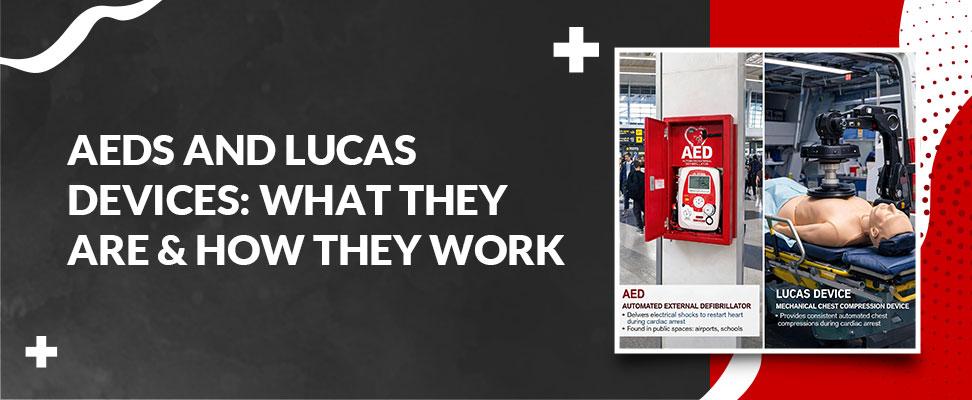
AEDs and LUCAS devices are two of the most commonly used pieces of medical equipment in emergency situations. Many people are familiar with automated external defibrillators (AEDs), but not everyone is familiar with the LUCAS device.

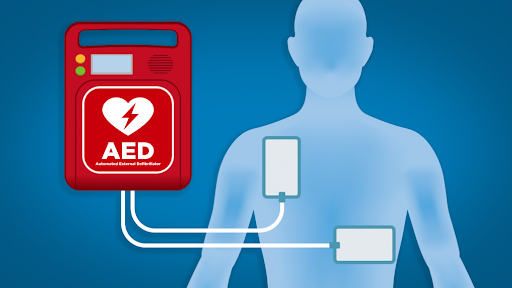
AEDs, or automated external defibrillators, are portable devices that deliver electrical shocks to the heart in order to restart it. They’re often used in cases of cardiac arrest when the heart stops beating. AEDs can be found in many public places, such as airports and schools.

Style Snapshot

  • AEDs and LUCAS devices are crucial tools in emergency CPR. AEDs deliver electrical shocks to restart the heart, while LUCAS devices provide high-quality, continuous chest compressions. Understanding the difference between these devices and their roles in life-saving efforts can significantly impact survival rates in emergencies.


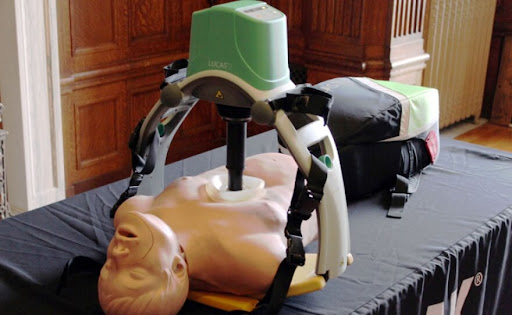
LUCAS devices, or mechanical chest compressions devices, are used to provide chest compressions in CPR. They’re often used in combination with AEDs. LUCAS devices are placed on the patient’s chest and provide continuous compressions, which help to circulate blood and oxygen to the brain. Both AEDs and LUCAS devices are easy to use and can be lifesavers in an emergency situation.

 In this blog post, we’ll briefly explain what the LUCAS device is and how it works. We’ll also compare and contrast the LUCAS device with AEDs so you can better understand the difference between the two.

What Does The LUCAS Device Stand For?

The LUCAS CPR machine is a device that helps deliver continuous chest compressions during CPR. It was developed by Lund University in Sweden and is now used in hospitals and ambulances all over the world. The brand name stands for “Lund University Cardiac Arrest System.”

The LUCAS machine attaches to the chest of the patient and provides consistent, even compression throughout the entire CPR process. This helps improve blood flow and increases the chances of survival for the patient.

How Does The LUCAS Device Work?

The LUCAS device is an automatic CPR machine that provides high-quality chest compressions. It is easy to use and can be deployed in a variety of settings, making it ideal for first responders and medical professionals.

The LUCAS device consists of a silicone sleeve that is placed over the patient’s chest and a hand-held unit that delivers the compressions. Once activated, the device will deliver compressions at a rate of 100 per minute. 

The machine can be adjusted to deliver either shallow or deep compressions, depending on what is appropriate for the patient’s situation. The LUCAS device has been shown to improve survival rates and is an important tool for saving lives

How Should LUCAS Be Positioned On The Chest?

When performing CPR on an adult, it is important to position the LUCAS chest compression machine correctly. The patient should be laid flat on their back on a firm surface. The LUCAS device should be placed in the center of the patient’s chest, directly above the sternum. The patient’s head should be tilted back slightly, and their chin lifted to open the airway. Once the machine is in position, the operator should press the start button to deliver automatic compressions.

How Much Does A LUCAS CPR Machine Cost?

The cost of the LUCAS Chest Compression System varies depending on the model and accessories, but the average price is around $16,000.

There are a variety of Lucas CPR machines on the market, and the price will vary depending on the model you choose and the accessories.

The most basic model starts at around $8,000, while the more advanced models can cost up to $25,000. Of course, you also need to factor in the cost of supplies and maintenance. However, many hospitals and other medical facilities lease or rent these machines, so it is definitely worth investigating all your options before making a purchase.

Ultimately, the best way to determine how much a Lucas CPR machine will cost is to get in touch with a representative from the company. They will be able to provide you with a quote based on your specific needs.

Is The Lucas Cpr Device Effective?

The LUCAS CPR is designed to be easy to use, and it has been proven to be effective in providing chest compressions that are of high quality and consistent with international guidelines. The LUCAS machine has a number of advantages over manual chest compression techniques.

  • The machine can provide continuous compressions, which is not possible with manual techniques. It can also deliver consistent, high-quality compressions regardless of the operator’s fatigue level.
  • The LUCAS machine is simple to operate and can be used by a single rescuer, and it does not require special training to operate.
  • It is the smallest and lightest device of its kind and can be easily transported to the patient’s side. and can be used in a variety of settings, it comes with a carrying case for easy transport. It is durable and can withstand multiple uses and is also backed by a strong warranty from the manufacturer.
  • It can be used in a range of prehospital and hospital settings including ambulances, hospitals, and homes.
  • The machine can be used on adults and children of all ages and it comes with an instruction manual that is easy to follow.
  • The LUCAS CPR machine has been proven to be effective in a variety of clinical studies and has been shown to improve survival rates in out-of-hospital cardiac arrest patients. It is recommended by leading resuscitation organizations such as the American Heart Association.

Does The LUCAS Device Break Ribs?

There is currently no evidence that the LUCAS device breaks ribs. In a study of 100 patients who underwent chest compressions with the LUCAS device, there were no reports of broken ribs. Another study looked at 300 patients who received chest compressions with the LUCAS device and found that only one patient had a broken rib. These studies suggest that the LUCAS device is unlikely to break ribs. However, it is possible that the device could cause other injuries, such as contusions or abrasions.

Understanding The Difference Between An AED And The LUCAS Devices

When it comes to Cardiopulmonary Resuscitation (CPR), every second counts. If CPR is not administered immediately, the victim’s chance of survival decreases significantly. As a result, it is important to have the proper equipment on hand in case of an emergency. Two devices that can be used for CPR are automatic external defibrillators (AEDs) and LUCAS chest compression machines.

AEDs are automatic CPR machines that can be used by anyone, regardless of training level. They are relatively simple to use; once the victim’s clothing is removed, pads are placed on their chest and the machine is turned on. The AED will then give step-by-step instructions on how to properly administer CPR, though rescuers should be aware of a few special considerations when using an AED, such as pad placement on wet skin or around implanted devices. Prices for AEDs range from $800 to $1,500.

LUCAS chest compression machines are designed for use by trained medical professionals. Unlike AEDs, they do not provide instructions on how to administer CPR; instead, they deliver a set number of compressions per minute. The LUCAS device is also more expensive than an AED, with prices starting at $8,000. However, some experts believe that the LUCAS machine is more effective at delivering CPR compressions, making it worth the extra cost.

Conclusion:

AEDs and LUCAS devices are both important pieces of equipment for use in CPR situations. While AEDs are simpler to operate and can be used by anyone, the LUCAS machine is more effective at delivering chest compressions. It is important to understand the difference between these two machines in order to make the best decision about which one to use in an emergency situation.

CPR Courses & First Aid Training & Certifications

Adult-Child-Infant CPR/AED & First Aid Training

Adult CPR/AED & Standard First Aid Training

Adult-Child-Infant CPR/AED Training

Online Adult, Child, Infant CPR Classes & First Aid Training

Online First Aid Course & Certification

CPR Online Classes

BLC CPR Certification Online

Online First Aid Course & CPR Certification Canada

Check out our other CPR & First Aid Related Articles:

INFANT CPR CERTIFICATION & ITS IMPORTANCE

THE IMPORTANCE OF TAKING BLS TRAINING

WHAT IS THE DIFFERENCE BETWEEN CPR AND AED TRAINING?

WHEN TO USE A MANUAL OR AUTOMATIC EXTERNAL DEFIBRILLATOR

10 THINGS YOU DIDN’T KNOW ABOUT CPR

THE AMERICAN HEART ASSOCIATION OR RED CROSS: WHICH IS BEST FOR CPR CERTIFICATION?

=================================================================

Meta title: LUCAS Devices: What They Are & How They Work

Meta description:AEDs and LUCAS devices are two of the most commonly used pieces of medical equipment in emergency situations. Many people are familiar with automated external defibrillators (AEDs), but not everyone is familiar with the LUCAS device.

=====================================================================

CPR or BLS Certification? How to Choose the Ideal CPR Class

If you are in the healthcare field, then you know that part of your job is to be certified in CPR. But with so many different classes and options available, how do you choose the ideal CPR class for you? Here are a few things to consider when making your decision.

What Type Of Certification Do You Need?

When most people think about CPR classes, the first thing that comes to mind is learning how to do chest compressions and rescue breaths. However, there are different types of CPR classes available, depending on your needs.

Do you need a basic CPR class or a certification for healthcare providers?

Basic life support (BLS) and cardiopulmonary resuscitation (CPR) courses serve different audiences and therefore teach different procedures. Basic life support courses are typically more in-depth and complex and are based on working in teams with other professional rescuers in the medical field. 

CPR training, on the other hand, is geared more towards teaching individuals the essentials of performing CPR on a family member or coworker as a single rescuer. Although both BLS and CPR certification can be obtained online, it is important to note that the level of training and detail provided in each course will differ depending on the intended audience.

Do you need a basic CPR class or a certification for healthcare providers?

If you are only required to have a basic CPR certification, then any reputable class should suffice. However, if you need a more advanced certification, such as for healthcare providers, then you will need to find a class that offers that specific certification.

What Format Of The Class do You Prefer?

While CPR classes used to be exclusively offered in person, nowadays you can also find them online. If you have the time and ability to attend an in-person class, that may be the best option for you. You will get hands-on experience and be able to ask the instructor questions. However, if you are short on time or unable to attend a class in person, then an online class may be a better option. 

Online classes are usually shorter and more flexible. You can also find classes that are specifically designed for your needs, such as classes for healthcare professionals or for parents of small children.

What Is Your Budget For The Course?

There are many different types of healthcare classes available, from CPR training to certification courses. Some of these classes are free, while others may charge a fee. If you are on a budget, then you may want to find a free class. However, if you are willing to pay for a class, then you may be able to find a more comprehensive or advanced class. For example, some classes may offer healthcare providers the opportunity to earn continuing education credits. When choosing a healthcare class, it is important to consider your needs and goals. That way, you can make sure that you select a class that is right for you.

Can You Choose A Provider?

Do you need to be certified in CPR for work or personal reasons? If it is for work, then your employer may have a preferred provider. If not, then you have more flexibility in choosing a provider. 

Check with your employer to see if they have a preferred provider. Many healthcare organizations have agreements with specific providers, so it’s worth checking to see if your employer has a preferred provider. If not, then you have more flexibility in choosing a provider. There are many reputable providers of healthcare CPR training and certification, so do your research to find the one that best meets your needs. 

How Much Time Do You Have To Complete The Course?

Some courses can be completed in as little as 4 hours, while others may take up to 16 hours.

 The American Red Cross healthcare provider CPR training can be completed in as little as four hours. You can take the course in two parts, or complete it all at once. The course provides you with the skills and knowledge needed to perform CPR correctly on an infant, child, or adult. After completing the course, you will receive a certificate of completion that is valid for two years. 

Do You Want To Get Certified In Other Areas Such As First Aid Or Aed Use?

If you’re looking for a way to improve your resume and make yourself more marketable, getting certified in CPR is a great place to start. And, if you’re already certified in CPR, you may want to consider getting certified in other areas as well.

The most common type of CPR certification is BLS (Basic Life Support). However, there are also AED (Automated External Defibrillator) and First Aid certifications. Many providers offer combo courses that include certification in multiple areas.

By getting certified in more than one, you’ll be able to show potential employers that you’re a well-rounded individual with a range of skills.

Be sure to check with your employer to see what type of certification they require. 

Is Online Training An Approved Way To Receive Cpr Or First Aid Certification?

There are many online courses that offer CPR and First Aid certification, but it is important to check with your local authorities to see if these are approved. In some cases, online training may be accepted, but you may need to take a practical exam in order to receive your certificate. In other cases, online courses may not be accepted at all. 

If you are unsure, it is always best to check with your local authorities before enrolling in an online course. However, even if online courses are not accepted for certification purposes, they can still be a great way to learn about CPR and First Aid. By taking an online course, you can familiarize yourself with the basics of CPR and First Aid before taking a more comprehensive course.
There are a lot of factors to consider when choosing a CPR class, but by taking the time to figure out what you need — and taking a moment to compare our CPR certification course options — you can find the ideal course for you.

No matter what CPR class you choose, make sure that it is reputable and that it offers the certification you need. With so many options available, you should be able to find the perfect class for your needs.

CPR Courses & First Aid Training & Certifications

Adult-Child-Infant CPR/AED & First Aid Training

Adult CPR/AED & Standard First Aid Training

Adult-Child-Infant CPR/AED Training

Online Adult, Child, Infant CPR Classes & First Aid Training

Online First Aid Course & Certification

CPR Online Classes

BLC CPR Certification Online

Online First Aid Course & CPR Certification Canada

Check out our other CPR & First Aid Related Articles:

INFANT CPR CERTIFICATION & ITS IMPORTANCE

THE IMPORTANCE OF TAKING BLS TRAINING

WHAT IS THE DIFFERENCE BETWEEN CPR AND AED TRAINING?

WHEN TO USE A MANUAL OR AUTOMATIC EXTERNAL DEFIBRILLATOR

10 THINGS YOU DIDN’T KNOW ABOUT CPR

THE AMERICAN HEART ASSOCIATION OR RED CROSS: WHICH IS BEST FOR CPR CERTIFICATION?

CPR CERTIFICATION : DO I HAVE TO GIVE CPR OR FIRST AID?

4 WAYS TO PREPARE BEFORE YOU LEARN HOW TO GET A FIRST AID CERTIFICATE

3 REASONS YOU NEED BLS TRAINING