




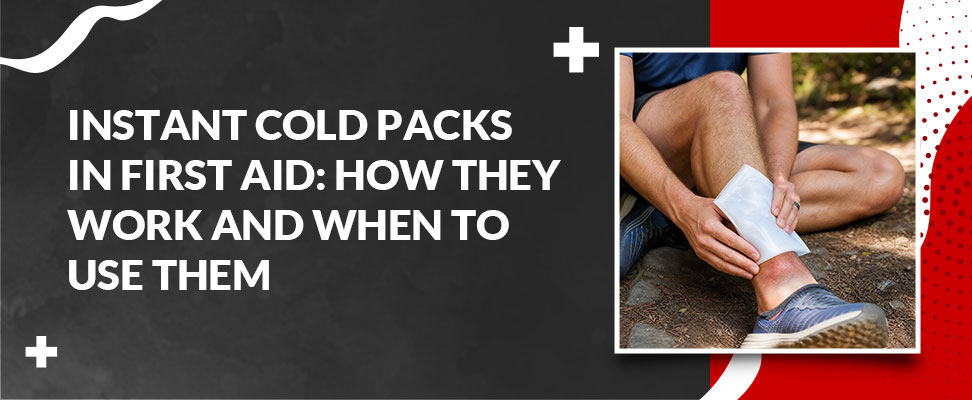
Instant Cold Packs in First Aid: How They Work and When to Use Them
You twist an ankle halfway through a trail run, or your kid takes a hard fall at Saturday practice, and the nearest freezer is a twenty-minute drive away. That gap between “I need ice now” and “I have ice” is exactly what an instant cold pack was built to close. Here is how these packs actually work, when one earns a spot in your kit over a regular ice pack, and the safety limits that matter once you crack one open.
Key Takeaway
- Instant cold packs provide immediate cold therapy without a freezer, making them ideal for sprains, strains, bruises, and minor swelling. Activate the pack, wrap it in a cloth, and apply it for 15–20 minutes to reduce pain and inflammation. Do not use an instant cold pack directly on burns or bare skin, and keep a few in your first aid kit, car, or sports bag for emergencies.
How Does an Instant Cold Pack Work?
An instant cold pack contains two separate compartments: one holds water, and the other contains a dry chemical, such as ammonium nitrate, calcium ammonium nitrate, or urea. As long as these compartments remain separated, the pack stays at room temperature. When you firmly squeeze or strike the pack, the inner pouch breaks, allowing the water and chemical to mix.
This mixture triggers an endothermic reaction, a chemical reaction that absorbs heat instead of releasing it. As the chemical dissolves in the water, it draws heat from the pack and the surrounding area, causing the temperature to drop within seconds. That’s why the pack feels cold immediately, without needing a freezer, electricity, or ice.
This built-in chemical reaction is what makes instant cold packs so convenient for first aid. Unlike reusable ice packs, which must be frozen in advance, instant cold packs are activated only when needed, making them ideal for emergency kits, sports bags, workplaces, and travel.
When to Reach for an Instant Cold Pack
Instant cold packs are most effective for minor soft tissue injuries during the first 24–48 hours, when reducing pain and swelling is the primary goal.
|
Use an Instant Cold Pack For |
Why It Helps |
| Sprains and strains | Helps reduce pain and limit swelling after the injury. |
| Bruises and minor bumps | Cools the injured area and helps minimize swelling and discomfort. |
| Minor swelling | Helps control inflammation during the early stages of recovery. |
| Situations without access to ice | Provides immediate cold therapy without requiring a freezer or electricity. |
If you want the full breakdown of how icing fits into a complete recovery routine, our post on treating a sprained ankle with RICE walks through the entire protocol step by step.
Where Are Instant Cold Packs Most Useful?
Because they don’t require refrigeration, instant cold packs are ideal for places where traditional ice isn’t available, including:
-
Sports bags and athletic sidelines
-
Cars and glove compartments
-
Hiking and camping gear
-
Job sites and construction trailers
-
School nurse’s offices
-
Emergency preparedness and first aid kits
Important: Don’t Use an Instant Cold Pack on a Fresh Burn
For a thermal burn, cool the affected area under cool running water as soon as possible. Applying ice or an instant cold pack directly to a fresh burn can damage the skin and worsen the injury. Once the burn has been cooled appropriately, a wrapped cold pack may help reduce residual swelling if recommended by a healthcare professional. Our post on first aid for burns covers that distinction in more detail.
Instant Cold Pack vs Regular Ice Pack Which Should You Use
Neither option is universally better, they solve different problems.
| Instant Cold Pack | Reusable Gel Ice Pack | |
| Needs a freezer | No | Yes |
| Ready to use | Seconds after activation | Only after freezing time |
| Reusable | No, single use | Yes, repeatedly |
| Best for | Portability, no freezer settings, kits, cars, sports bags | At home or planned use where a freezer is available |
| Cost per use | Higher, replaced each time | Lower over repeated use |
Think of it this way: an instant pack buys you readiness and portability, while a reusable pack buys you a lower cost per use once you are back somewhere with a freezer. Plenty of well-stocked kits carry both, an instant pack for the unpredictable moment and a gel pack at home for everyday aches.
How to Use an Instant Cold Pack Safely
Follow these guidelines to use an instant cold pack safely and effectively.
|
Safety Tip |
Why It Matters |
| Wrap the pack in a thin cloth or towel. | Avoid placing the pack directly on bare skin to help reduce the risk of cold-related skin injury and to provide a barrier if the pack leaks. |
| Limit each application to 15–20 minutes. | Prolonged exposure to cold may damage the skin or underlying tissue. |
| Stop using the pack if you notice unusual symptoms. | Remove the pack immediately if you experience excessive numbness, skin discoloration, or irritation. |
| Use extra caution if you have certain medical conditions. | People with diabetes, poor circulation, vascular disease, or reduced sensation should consult a healthcare professional before using cold therapy. |
| Do not puncture or reuse the pack. | Instant cold packs are designed for a single use. Dispose of the pack according to the manufacturer’s instructions after activation. |
For the Best Results
For the complete icing cycle, how long to ice, how often to repeat it, and how it fits alongside rest, compression, and elevation, our post on the full RICE treatment protocol covers that timing in detail, so we will not repeat it here.
Stocking Instant Cold Packs in Your First Aid Kit
A first aid kit is only as useful as what is actually in it when you need it, and instant cold packs are an easy thing to overlook until the moment you wish you had one. Keep a couple in your car, in a sports bag, and in any travel kit, and check the expiration date every few months along with the rest of your supplies, since the chemical inside can lose potency over time even in an unopened pack.
For the rest of what belongs alongside it, our post on what to keep in a stocked first aid kit rounds out the full list.How does an instant cold pack work?
Ready for the Skills Behind the Kit
Knowing which product to reach for is only half the picture. A First Aid certification from SimpleCPR walks you through exactly when and how to use tools like this one, alongside every other skill your kit is built to support, for $19.95 and about an hour of your time. Print your certificate the moment you finish, and carry that knowledge right alongside the cold pack in your bag.



QUICK Q&A
How does an instant cold pack work?
Squeezing or striking the pack breaks an inner pouch, letting water mix with a chemical such as ammonium nitrate. That reaction absorbs heat from its surroundings, called an endothermic reaction, which is why the pack turns cold within seconds instead of needing to be frozen first.
Are instant cold packs as effective as regular ice?
For short-term swelling and pain relief, yes. The main difference is convenience rather than cooling power; an instant pack activates instantly with no freezer, while a gel pack needs hours in the freezer but can be reused many times over.
How long can you leave an instant cold pack on an injury?
Roughly fifteen to twenty minutes per application, always with a thin cloth between the pack and your skin. Remove it sooner if you notice excessive numbness, discoloration, or irritation.
Can you put an instant cold pack directly on skin?
No. Always wrap it in a cloth or towel first to protect your skin from both the intensity of the cold and any risk if the internal seal were compromised.
How long do instant cold packs stay cold?
Most stay cold for around fifteen to twenty minutes, which lines up well with a single recommended application.
Should I keep instant cold packs in my first aid kit?
Yes, especially for cars, sports bags, and travel kits where a freezer is not an option. Check expiration dates periodically since the chemical inside can weaken over time.
Related Posts
How to Check Pupils for Concussion: Signs of Head Injury Not to Ignore

Which Is Better, the American Red Cross Or American Heart Association?
Style Snapshot Choosing between the American Red Cross and the American Heart Association (AHA) depends on your professional needs. The AHA is ideal for healthcare professionals requiring advanced, evidence-based training, while the Red Cross offers practical, user-friendly courses for both healthcare providers and the general public. Which Is Better, the American Red Cross Or American […]

Which Bloodborne Pathogens Have Vaccines? HBV, OPIM and Workplace Risk Guide
Hepatitis B is the only bloodborne pathogen with a vaccine you can get today. Hepatitis C and HIV do not have one, and that gap is exactly why workplace prevention, protective equipment, and fast reporting still carry so much weight. If your job puts you anywhere near blood or other potentially infectious materials, knowing this […]

Get Your CPR Certification On the Go!
If you thought receiving your CPR certification entirely online was convenient enough, you might have to think again! With SimpleCPR’s new upgrade to mobile devices, you can now learn CPR and first aid anywhere and at any time on your smartphone or tablet. We all lead busy lives, which is why SimpleCPR understands that maximizing […]

2 Hours of CPR Saves Life
When a young athlete named Christine Newman went missing on a hiking expedition deep in the snow-covered mountains of Squamish, a series of fortunate events led to her survival. The story really is amazing. Newman met a group of strangers in a cabin, but when she went to use the outhouse in the middle of […]