




How to Remove a Bandage That Is Stuck to a Wound Safely
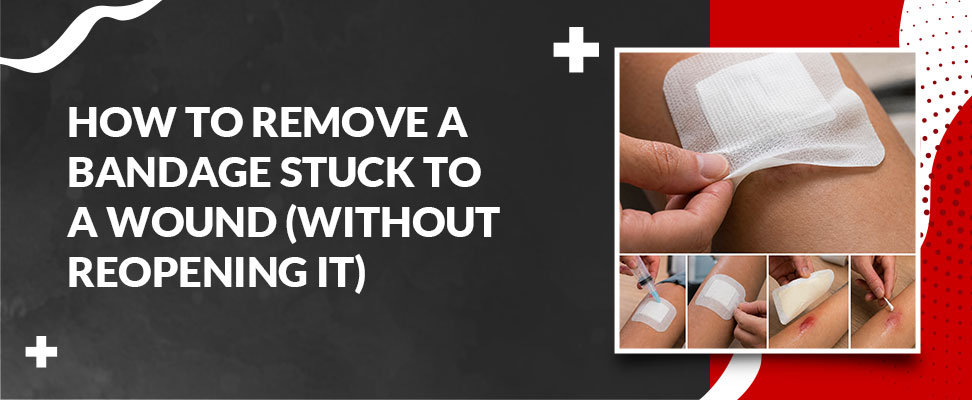
A bandage can stick when dried blood or wound fluid bonds the dressing to healing skin. The safe response is patience, not force. Moisten the dressing, give it time to loosen, and remove it slowly. Pulling off a dry, stuck bandage can disrupt fragile healing tissue and make the wound bleed again.
This guide is for a minor wound with a dressing that has become stuck. It does not replace instructions from a clinician who is treating the wound.
Key Takeaway
- Removing a stuck bandage safely helps prevent pain, skin damage, and disruption to the healing wound. Gently soak the bandage with warm water or saline until it loosens, then peel it back slowly without pulling or forcing it. If the bandage remains stuck, continue soaking and seek medical advice if needed. After removal, check the wound for signs of infection, such as increasing redness, swelling, warmth, or pus, and seek medical attention if the wound bleeds heavily or shows signs of infection./li>
Start with moisture, not pulling
Wash your hands thoroughly with soap and water before touching the dressing or wound. Dry them with a clean towel.
Use clean water or saline to wet the stuck part of the dressing. A clean, damp cloth or gauze pad placed over the bandage can help keep it moist while it loosens. If the location of the wound allows, soaking the area in clean water may also help.
Wait before testing an edge. The dressing should begin to release with gentle movement. If it remains attached, wet it again and allow more time. Do not pull through resistance, even if only a small area seems stuck.
Remove the dressing low and slow
Once an edge has loosened, hold the nearby skin steady with one hand. With the other, draw the bandage back slowly along the surface of the skin, almost folding it back over itself. Avoid lifting it straight up and away from the wound.
This low-angle technique reduces tugging on the skin and the wound beneath it. Move a little at a time. If you feel resistance, pain increases, or the wound starts to pull, stop. Re-moisten the area and wait again before continuing.
For an adhesive border that is stuck to intact skin, gently stretching the edge horizontally along the skin can help release the adhesive. Keep adhesive-removal products away from an open wound unless a healthcare professional or the product instructions specifically say they are appropriate.
After the bandage comes off
Discard the used dressing and wash your hands again. Take a moment to look at the wound without rubbing or scrubbing it.
For a minor wound, follow any existing care instructions. Do not routinely use harsh cleaning agents on the wound. If you were given specific directions after a procedure or injury, those directions take priority over general first-aid information.
A small amount of dried drainage on an old dressing can happen. New bleeding, a wound that has separated, or worsening pain deserves closer attention.
When a stuck bandage needs medical help
Stop trying to remove the dressing yourself and seek medical advice promptly if any of the following apply:
-
Bleeding is heavy or does not stop with direct pressure.
-
The wound opens meaningfully, separates, or begins bleeding again during removal.
-
The dressing remains firmly attached after repeated moistening and gentle attempts.
-
You notice increasing redness, swelling, warmth, worsening pain, pus or unusual drainage, fever, or feel unwell.
-
The wound is surgical, has stitches, staples, skin glue, packing, a drain, or a specialized dressing.
-
A clinician gave instructions about when or how the dressing should be removed.
Call emergency services for severe bleeding, or if the person feels faint, confused, has trouble breathing, loses consciousness, or has a serious injury. Do not remove an object embedded in a wound.
Avoid another stuck dressing
The right dressing depends on the wound, how much it is draining, and any instructions from a clinician. For minor wounds where a dressing is appropriate, a non-adherent pad may be less likely to stick than standard woven gauze.
Change a dressing according to its product instructions or the directions you were given. If a wound is draining, a dressing that becomes saturated, loose, or uncomfortable may need attention sooner. Surgical wounds and wounds managed by a clinician should be handled exactly as directed.
Build practical first-aid confidence
A stuck bandage is usually manageable when you slow down, moisten it, and refuse to force it. Knowing when to stop is part of good first aid, too.
For broader first-aid training, explore our online first aid courses. They cover how to respond calmly when an injury needs more than a simple dressing change.
Quick answers
How do you remove a bandage stuck to a wound without reopening it?
Moisten the dressing with clean water or saline, wait for it to loosen, then peel it back slowly along the skin while supporting the surrounding skin. Stop and re-moisten if there is pain or resistance.
Should you pull a stuck bandage off quickly?
No. Removing a dry dressing quickly can pull on healing tissue, cause pain, and restart bleeding. Moisture and time are safer than force.
What if the bandage will not come off?
Do not keep pulling. If repeated moistening does not loosen the dressing, contact a healthcare professional for guidance, especially if the wound is surgical, closed with stitches or glue, or has clinician-specific care instructions.
What are signs of infection after a dressing is removed?
Concerning changes include increasing redness, swelling, warmth, worsening pain, pus or unusual drainage, fever, or feeling unwell. Seek medical advice if these occur.


QUICK Q&A
How do you remove a bandage stuck to a wound without reopening it?
Moisten the dressing with clean water or saline, wait for it to loosen, then peel it back slowly along the skin while supporting the surrounding skin. Stop and re-moisten if there is pain or resistance.
Should you pull a stuck bandage off quickly?
No. Removing a dry dressing quickly can pull on healing tissue, cause pain, and restart bleeding. Moisture and time are safer than force.
What if the bandage will not come off?
Do not keep pulling. If repeated moistening does not loosen the dressing, contact a healthcare professional for guidance, especially if the wound is surgical, closed with stitches or glue, or has clinician-specific care instructions.
What are signs of infection after a dressing is removed?
Concerning changes include increasing redness, swelling, warmth, worsening pain, pus or unusual drainage, fever, or feeling unwell. Seek medical advice if these occur.
Related Posts

Get Your CPR Certification On the Go!
If you thought receiving your CPR certification entirely online was convenient enough, you might have to think again! With SimpleCPR’s new upgrade to mobile devices, you can now learn CPR and first aid anywhere and at any time on your smartphone or tablet. We all lead busy lives, which is why SimpleCPR understands that maximizing […]

CPR Saves Drowning Child
Children are attracted to the water like a magnet to the North Pole, and sadly, summer time gives rise to many unnecessary drowning deaths. Besides always making sure your child can swim, and wears a life vest, knowing CPR can reverse a horrible accident. Last week, a little boy was found in a retention pond. […]

How to Mention “CPR Certified” on Your Resume Correctly?
Including certifications on your resume shows employers you have the skills and training needed for the job. One important credential, especially in healthcare, education, fitness, and public safety roles, is CPR certification. Knowing how to write CPR certified on resume documents helps you present this qualification clearly and professionally. Whether you’re applying for a job […]
How Long Does First Aid Certification Last? Renewal & Expiration Guide
Search "How long is a First Aid certification valid?" and you'll likely find several different answers. Some sources say one year, others say two years, and some mention three years, often referring to workplace requirements or certification standards in countries like the UK that don't apply to certifications earned in the United States or Canada. If you're looking for a […]

BLS vs ACLS: Key Differences, Who Needs Each, and Which to Get First
What Is BLS (Basic Life Support)? Key Takeaway Basic Life Support is the foundational emergency care certification required for virtually every healthcare provider who works in a clinical setting. BLS prepares you to respond in the first critical minutes of a cardiac or respiratory emergency, before advanced care arrives or takes over. A standard BLS […]

When does CPR Certification Expire? What You Need to Know Before It’s Too Late
CPR certification is essential for anyone needing to respond to a medical emergency, but many wonder: Does CPR certification expire? The answer is yes. Most CPR certifications are valid for two years, after which they must be renewed to ensure skills remain current. Style Snapshot Most CPR certifications expire every two years, requiring renewal to […]