




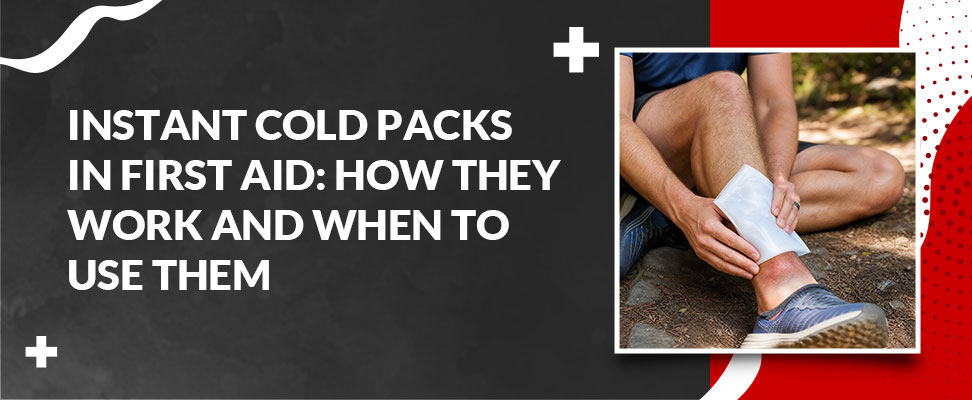
How to Choose an Instant Cold Pack for a First Aid Kit
An instant cold pack is a practical first-aid supply when an injury happens away from a freezer. It stays at room temperature until activated, then provides short-term cooling for a minor bump, bruise, sprain, strain, or localized swelling. That makes it especially useful in a car, travel kit, sports bag, workplace kit, or outdoor pack.
Key Takeaway
- Instant cold packs are a valuable addition to any first aid kit, helping relieve pain and reduce swelling from minor injuries. Use them according to the manufacturer’s instructions to protect the skin and ensure safe application. Keep them accessible at home, school, work, and during travel, and seek medical attention for severe or worsening injuries./li>
There is no single best instant cold pack for every kit. The right choice depends on the body areas you expect to treat, how the pack is made, whether it will survive storage and transport, and whether the label gives clear safety and disposal instructions.
Start with the injury location and pack coverage
Pack size matters because a cold pack should cover the affected area without being so large that it is awkward to hold in place. Compact instant cold packs are convenient for small joints and targeted areas, such as a wrist, hand, elbow, ankle, or the area around a minor bump. They also take up less room in a portable first aid kit.
A larger pack can be more useful for broader areas, including a knee, shoulder, thigh, or larger area of swelling. It can also be a better fit for a general sports or workplace kit, where the likely injury is unknown.
Avoid treating a particular dimension as universally best. Compare the pack's stated coverage area with the injuries most likely in your setting, and remember that body size, injury location, and the pack's shape all affect fit. A small kit may benefit from compact packs, while a larger kit may reasonably carry more than one size.
Why instant cold packs belong in portable first aid kits
Instant cold packs do not need a freezer. Most contain separate internal compartments that mix only when the pack is activated according to its instructions. The resulting reaction makes the pack cold within a short time.
That ready-when-needed design is the main advantage over a reusable gel pack in places where freezer access is uncertain:
● Cars and roadside emergency kits
● Travel bags and field kits
● Hiking, camping, and outdoor activity gear
● Sports sidelines and team bags
● Worksites, school activity kits, and community spaces
For a sprain or swelling that occurs away from home, the value is availability. An unactivated instant pack can be kept with the rest of the kit instead of relying on someone to find ice.
Choose materials and construction with safe use in mind
Read the product label before purchasing, not after an injury. Look for clear instructions on activation, skin protection, storage, disposal, and what to do if the outer pouch leaks or is damaged.
If someone who may use the kit has a latex sensitivity or other material concern, confirm the pack's material information with the manufacturer. Do not assume that a pack is latex-free, non-toxic, or suitable for direct skin contact unless its labeling specifically says so.
The outer pouch deserves as much attention as the cooling mechanism. Select packs with intact, well-sealed packaging and avoid any pack that is swollen, punctured, damp, torn, or leaking. The contents of an activated or damaged pack are not meant for skin, eyes, or ingestion. If a leak occurs, stop using the pack, avoid contact with the contents, follow the manufacturer's first-aid and disposal directions, and seek further advice if exposure causes symptoms.
Use an instant cold pack safely for sprains and swelling
Cold can provide short-term comfort after a minor soft-tissue injury, but it is not a substitute for assessing the injury. The American Heart Association and American Red Cross first-aid guidance emphasizes recognizing the limits of first aid and seeking additional care when needed.[^1]
Place a thin cloth or towel between the cold pack and skin. Never apply an instant cold pack directly to bare skin, and do not use one on a fresh thermal burn. For a burn, cool running water is the appropriate immediate first-aid measure rather than ice or an instant cold pack.
Use the time limit printed on the product. SimpleCPR's first-aid guidance advises limiting an application to roughly 15 to 20 minutes and removing the pack sooner for excessive numbness, skin discoloration, or irritation.[^2] Check the skin and the person's comfort during use rather than leaving the pack in place unattended.
People with reduced sensation, poor circulation, diabetes, or vascular disease should get guidance from a healthcare professional before using cold therapy. Extra caution is also appropriate for young children and anyone unable to report discomfort.
Know when a cold pack is not enough
A cold pack may be reasonable for a minor injury while you monitor the person, but it should never delay emergency care. Call emergency services for abnormal breathing, unresponsiveness, new confusion, severe bleeding, severe pain, obvious deformity, or a suspected broken or dislocated limb or joint.[^1]
Professional evaluation is also appropriate when pain or swelling is severe, the person cannot bear weight or use the limb, numbness or weakness develops, the injured area looks deformed, or symptoms worsen instead of improving. When in doubt, treat the cold pack as a comfort measure while arranging appropriate care.
Store packs so they are ready to activate
An instant pack is only useful if its internal seal and outer pouch are still intact. Keep packs in a dry area of the kit where they are protected from sharp tools, crushing, and repeated bending. A small protective pouch can help separate them from scissors, tweezers, or other hard supplies.
During routine kit checks, inspect each pack for damage and read its expiration or replacement date. Replace any pack with compromised packaging, any pack past the manufacturer's date, and any pack that has been accidentally activated. Because instant cold packs are single-use supplies, replenish the kit after each use.
Instant cold pack versus reusable ice pack
Instant and reusable cold packs serve different situations. Neither is the right answer for every setting.
|
If you need… |
An instant cold pack is often the better fit |
A reusable ice pack is often the better fit |
|
Cooling without freezer access |
Yes |
No, it must be frozen in advance |
|
A supply for a car, travel kit, sports bag, or field kit |
Yes |
Only if reliable freezer access is available before departure |
|
Repeated use at home |
No, it is used once |
Yes, if it remains intact and is maintained as directed |
|
A compact emergency backup |
Yes |
It depends on available freezer space and planning |
Many households and organizations keep both. A reusable pack is useful where a freezer is dependable, while an instant pack covers the unexpected moment when it is not.
A quick buying checklist
Before adding instant cold packs to a first aid kit, confirm that each option:
● Fits the body areas and likely injuries for that kit
● Activates as described without needing refrigeration
● Has clear instructions for skin protection, use time, storage, and disposal
● Provides material information relevant to likely users, including latex considerations where needed
● Has sealed, undamaged packaging and a visible replacement date
● Can be stored without being punctured, crushed, or accidentally activated
● Is available in enough quantity to replace after use
The best instant cold pack for a first aid kit is the one that is appropriately sized, intact, clearly labeled, and available when no freezer is nearby. Pair it with basic first-aid knowledge, check it during routine kit maintenance, and seek medical help when the injury calls for more than short-term comfort.
Build confidence alongside your supplies with SimpleCPR's online first aid training, which covers how to recognize emergencies, provide initial care, and know when to get further help.



QUICK Q&A
How does an instant cold pack work?
Squeezing or striking the pack breaks an inner pouch, letting water mix with a chemical such as ammonium nitrate. That reaction absorbs heat from its surroundings, called an endothermic reaction, which is why the pack turns cold within seconds instead of needing to be frozen first.
Are instant cold packs as effective as regular ice?
For short-term swelling and pain relief, yes. The main difference is convenience rather than cooling power; an instant pack activates instantly with no freezer, while a gel pack needs hours in the freezer but can be reused many times over.
How long can you leave an instant cold pack on an injury?
Roughly fifteen to twenty minutes per application, always with a thin cloth between the pack and your skin. Remove it sooner if you notice excessive numbness, discoloration, or irritation.
Can you put an instant cold pack directly on skin?
No. Always wrap it in a cloth or towel first to protect your skin from both the intensity of the cold and any risk if the internal seal were compromised.
How long do instant cold packs stay cold?
Most stay cold for around fifteen to twenty minutes, which lines up well with a single recommended application.
Should I keep instant cold packs in my first aid kit?
Yes, especially for cars, sports bags, and travel kits where a freezer is not an option. Check expiration dates periodically since the chemical inside can weaken over time.
Related Posts

The Angel of CPR Strikes Twice
When Lizzy Stavers saw three people standing around a prostrate woman, she stopped to help. One of the standers-by said she thought the motionless woman in the street was dead. Lizzy felt for a pulse, and when she couldn’t find one she gave two breaths and started CPR until medics arrived and whisked the victim […]
Does Canadian Lifesaving Certification Work in the U.S.? Here’s What You Need to Know
When considering a career in lifesaving or aquatic safety in the United States, one critical question often arises for those trained in Canada: “Does Canadian lifesaving certification work in the US?” This query touches on the compatibility and recognition of lifesaving qualifications across borders, which is vital for professionals planning to work in different countries. […]

CPR Training for Everyone: Why It Is Important
Style Snapshot CPR (Cardiopulmonary Resuscitation) is a life-saving skill that can make the difference between life and death during cardiac emergencies. Immediate CPR performed by bystanders can drastically increase survival rates. This article explores the significance of CPR training, including what it involves, its importance, and the best methods to perform CPR, including hands-only CPR […]

Get Your CPR Certification On the Go!
If you thought receiving your CPR certification entirely online was convenient enough, you might have to think again! With SimpleCPR’s new upgrade to mobile devices, you can now learn CPR and first aid anywhere and at any time on your smartphone or tablet. We all lead busy lives, which is why SimpleCPR understands that maximizing […]

Firefighters Save Feline with CPR
When Columbia, South Carolina firefighters found the unresponsive feline amidst the burning house, they didn’t hesitate. They whisked Soldier outdoors and began chest compressions and CPR using an oxygen kit specifically for animals. The unit is called the Wagn’N O2 Fur Life, and was donated to the fire department by members of the community. The […]

What Indicates the Need For Mouth-To-Mouth Rescue Breaths?
Style Snapshot Mouth-to-mouth resuscitation is a critical technique in CPR, especially for situations like drowning, overdose, or respiratory failure. Knowing when to administer rescue breaths—such as when a person is not breathing or shows signs of respiratory distress—can significantly improve survival chances. What Indicates the Need For Mouth-To-Mouth Rescue Breaths? Mouth-to-mouth rescue breaths, also known […]