




Swimming Pool First Aid- Emergency Medical Response & Chemical Treatment
Swimming pool first aid is a crucial skill for the safety and well-being of swimmers. Accidents can occur anytime, and knowing how to respond effectively can make all the difference. Whether it’s a slip, a drowning incident, or an allergic reaction to pool chemicals, understanding emergency medical response and chemical treatment is essential for pool owners and lifeguards. In this article, we will learn the fundamental principles of swimming pool first aid, focusing on handling various emergencies, from physical injuries to exposure to harmful chemicals. Additionally, we will highlight the best practices for managing pool-related chemical treatments and the importance of preventative measures to reduce risks. Mastering swimming pool first aid can help save lives and ensure a safer, more enjoyable swimming experience for everyone involved.
Understanding “Swimming Pool First Aid”- Medical vs Chemical
Swimming pool first aid encompasses two vital areas: medical emergencies and chemical-related incidents. The first section focuses on physical injuries or health crises, where a well-stocked swimming pool first aid kit and knowledge of poolside emergency response are essential. Typical situations include cuts, sprains, and, most critically, drowning. In such cases, drowning CPR and immediate action are crucial to saving lives.
The second section addresses chemical emergencies due to exposure to pool cleaning agents or imbalanced water chemistry. Knowing how to handle chemical burns, irritations, or poisoning is a key aspect of swimming pool first aid. Both medical and chemical responses require preparedness, the right equipment, and a clear understanding of emergency protocols. By distinguishing these two categories, pool owners and operators can ensure they are fully equipped to handle any situation at the poolside.
Medical First Aid at the Pool
Poolside emergencies can happen unexpectedly, so it’s essential to understand how to respond to various medical situations. Prompt and effective medical care can prevent further harm and save lives. Below are the primary steps for handling common emergencies at the pool.
Emergency Response for Drowning & Near-Drowning
If a drowning or near-drowning incident occurs, call 911 immediately. Remove the victim from the water carefully, ensuring minimal movement. Begin drowning CPR with a ratio of 30 chest compressions to two rescue breaths. Keep providing CPR until professional help arrives or the person begins to breathe. Monitor vitals closely to ensure recovery.
Treating Cuts, Scrapes & Bruises
Minor injuries such as cuts, scrapes, or bruises should be cleaned first with water and mild soap to prevent infection. Apply direct pressure to stop any bleeding. Afterward, dress the wound with sterile gauze or bandages. Look for symptoms of disease, such as redness or swelling. Always have a swimming pool first aid kit ready for these injuries.
Managing Sprains, Strains & Heat Exhaustion
For sprains or strains, use the RICE method: Rest, Ice, Compression, and Elevation. Raise the injured limb to reduce swelling. For heat exhaustion, move the person to a cooler environment and encourage hydration. Get medical help if symptoms worsen or the injury involves significant pain or swelling.
Eye Injuries & Chemical Exposures
If you experience chemical exposure in the eye, flush the affected eye with clean, cool water for at least 15 minutes. If an object is embedded in the eye, do not attempt to remove it. Contact poison control and seek medical attention for chemical burns caused by enzyme-based clarifiers or other pool chemicals.
When to Call 911 or Seek Professional Help
If the injury or medical situation is severe—such as unconsciousness, heavy bleeding, difficulty breathing, or significant swelling—immediately call 911. For non-life-threatening situations like minor sprains, use sprain first aid, monitor the condition, and get professional help. Always follow Pool First Aid directions closely.
Poolside First Aid Kit Essentials
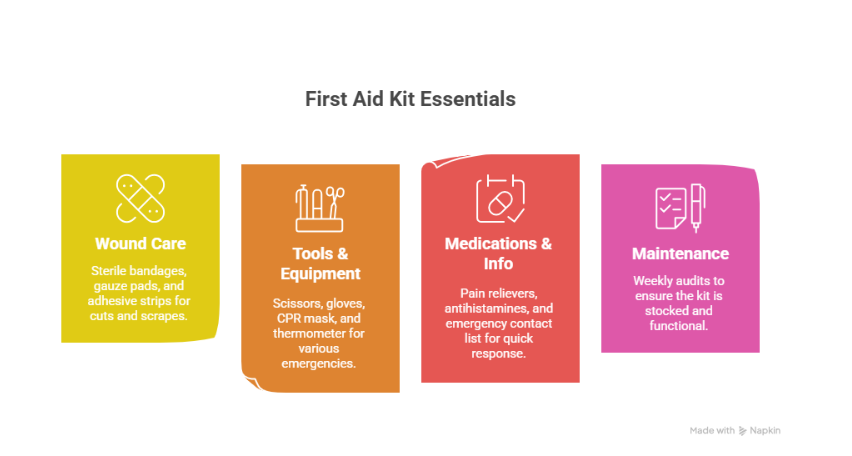
A well-stocked, waterproof, and easily accessible first aid kit is crucial for handling poolside emergencies. Regular weekly audits ensure the kit remains fully stocked and that supplies are in good condition. The right tools can make all the difference during an emergency, so ensure your swimming pool first aid kit is always ready.
Wound Care & Bandages
Your swimming pool first aid kit should contain various sizes of sterile bandages, gauze pads, and adhesive strips for cuts, scrapes, and abrasions. Use these to clean wounds and apply pressure to stop bleeding. Continuously monitor for infection and be prepared to treat more serious injuries with antiseptic solutions. If an injury is severe, follow Pool First Aid directions for further care.
Tools & Equipment
Essential tools include scissors for cutting bandages, gloves for sanitation, a CPR mask for performing drowning CPR, and a thermometer to monitor body temperature, especially if someone shows signs of heat exhaustion. These tools are necessary for performing sprain first aid or addressing other poolside injuries, ensuring you’re prepared for emergencies.
Medications & Emergency Info
Your kit should include pain relievers, antihistamines for allergic reactions (such as from eye chemical exposure), and a comprehensive emergency contact list. Ensure all medications are clearly labeled and up-to-date. Keep an emergency plan with essential health information for pool guests, such as medical conditions or allergies, to guide treatment when necessary.
Maintenance & Auditing Protocol
Regular audits ensure your poolside first aid kit remains stocked and functional. Set a weekly schedule to check for expired supplies, replace used items, and verify everything works. This includes checking items like the enzyme-based clarifier or additional medical supplies for specific poolside emergencies.
Chemical “Pool First Aid- Water Treatment
An enzyme-based clarifier is a water treatment solution that breaks down organic contaminants like oils, lotions, and debris in pool water. It helps to improve water clarity and filtration, ensuring the pool is safe and pleasant for swimmers. Understanding its purpose and proper usage is key to maintaining pool health.
How It Works & Key Benefits
An enzyme-based clarifier breaks down organic matter, such as oils, dirt, and dead algae, into smaller particles that the pool filter can remove. This improves water clarity and reduces the frequency of cleaning. It also helps prevent clogged filters and uplifts the swimming experience by maintaining clean water.
Directions for Use
The recommended dosage for the enzyme-based clarifier is 2 oz per 1,000 gallons. Distribute the clarifier evenly across the pool’s surface while the circulation system runs to ensure proper mixing. Avoid pool shock during treatment, and ensure the water temperature is within the recommended range for optimal results.
How Long to Wait Before Swimming?
After applying an enzyme-based clarifier, wait at least 30 minutes before swimming to allow the treatment to mix with the water and begin working fully. This ensures the pool is free of contaminants and safe for swimmers. Always check water clarity before allowing anyone to enter the pool.
Troubleshooting Common Issues
If the pool water remains cloudy after using an enzyme-based clarifier, it may be due to improper distribution or insufficient circulation. Double-check the dosage and ensure proper water flow. If issues persist, check for an overuse of chemicals or contamination levels beyond what the clarifier can handle.
Preventive Measures & Pool Safety Protocols
Maintaining a safe swimming environment requires regular inspections, consistent staff training drills, and meticulous record-keeping. These preventive measures ensure prompt response to emergencies and help minimize accidents at the pool. Clear safety protocols are vital for creating a safe, enjoyable experience for everyone.
Lifeguard & AED Maintenance
Ensure that lifeguards are trained in CPR and AED usage, and regularly inspect and maintain the AED units. Lifeguards should undergo regular drills to stay prepared for emergencies. Ensuring that lifesaving equipment is always functional and accessible is key to adequate poolside safety and emergency response.
Bloodborne Pathogen Cleanup Kit Guidelines
A bloodborne pathogen cleanup kit should be readily available at the pool. It must include gloves, disinfectants, biohazard bags, and other essential supplies to clean up blood or bodily fluids safely. Proper protocols for using the kit are necessary for all pool users.
Consulting with risk management professionals ensures the pool complies with safety standards and regulations. Regular reviews and consultations help minimize liability and maintain a safe environment. Stay updated on local health codes, and consider periodic inspections to ensure your pool meets or exceeds all safety and sanitation requirements.
Compliance & Risk Management Consultation
Wrapping Up
Swimming pool first aid combines medical response and chemical management, ensuring safety for swimmers and maintaining healthy pool water. From handling drowning incidents to treating cuts, sprains, or chemical exposure, preparation is key. Equally important is understanding how to use enzyme-based clarifiers properly for clean and safe water. A well-stocked poolside first aid kit, trained personnel, and strict safety protocols can make all the difference in preventing accidents and saving lives. To strengthen your skills and be fully prepared, check out Simple CPR’s certified courses—because confidence and knowledge are the best tools in any emergency.
FAQ
How soon can you swim after using Pool First Aid?
It’s recommended to wait at least one hour after applying Pool First Aid before swimming. This allows the product to circulate and start working effectively. Always ensure proper water circulation and carefully follow the manufacturer’s instructions.
What is first aid for pools?
First aid for pools has two meanings. It refers to medical first aid for handling accidents, injuries, or illnesses around pool areas. Additionally, it relates to “Pool First Aid,” an enzyme-based chemical treatment designed to break down organic contaminants and restore water clarity, keeping the pool safe and clean.
What should be in a first aid kit at a pool?
A poolside first aid kit should be waterproof and well-stocked. Essentials include adhesive bandages, gauze pads, antiseptic wipes, disposable gloves, scissors, a CPR mask, instant cold packs, pain relievers, and an emergency contact list. These supplies ensure a quick and effective response to poolside accidents or minor medical emergencies.
How long does Pool First Aid take to work?
Pool First Aid begins working immediately once added to the water, targeting and breaking down contaminants. However, noticeable results and complete water clarity usually take between 24 and 48 hours with continuous circulation. During this treatment period, avoid adding other chemicals like shock to prevent interference with effectiveness.

Related Posts

Hip-Hop CPR
CPR is going HIP-HOP, hitting the mash-up fans of DJ Earworm. Earworm agreed to team up with The AHA to promote CPR to his fans because of a horrible situation that left him feeling helpless. “I had to administer CPR and it didn’t turn out so well.The thing that I remember very distinctly was that […]
CAB is the new CPR
For those who haven’t had to get or renew their CPR certification for awhile, you might be surprised to know that In 2010, the American Heart Association updated the CPR guidelines. We once memorized Airway, Breathing and Compressions to administer CPR, but like most everything, advances give us reason to improve our methods. We’re now […]
Lightening Strike Kills Boy; CPR Brings Him Back to Life
He was technically dead.His heart had stopped beating.His clothes were burning. And two bystanders started CPR on the 12-year-old boy, saving his life. Today, Ken Nilson is a firefighter in Bremerton, Washington. “It was an experience that would profoundly change my life forever,” explains Nilson. He makes it a point to teach young children ways […]
First Aid Supplies List – What to Have on Hand
Having a first aid kit on hand for emergencies is very important. Whether you are at home, at work, or even in your car you should have access to first aid supplies in the event of an unexpected emergency situation. First aid kits can be purchased in stores or online, however it can often be […]

Longer CPR Times Doubles Survival Rate
6-7%. That’s the national average rate of survival for victims of cardiac arrest who receive CPR. When Wake County EMS responds to cardiac arrest calls, the victims chance of survival more than doubles. The insider information is simple; research shows that when CPR is provided in excess of 25 minutes, survival rates drastically increase. The […]
Be A Hero! Learn CPR. – CPR Blog
Soccer season is upon us and it’s a good time to make sure you know CPR. With dozens of kids running their little hearts out in the heat, there’s no telling what kind of emergency could happen. Most youth organizations don’t require their volunteer coaches to be CPR certified, which is why parents really need […]